
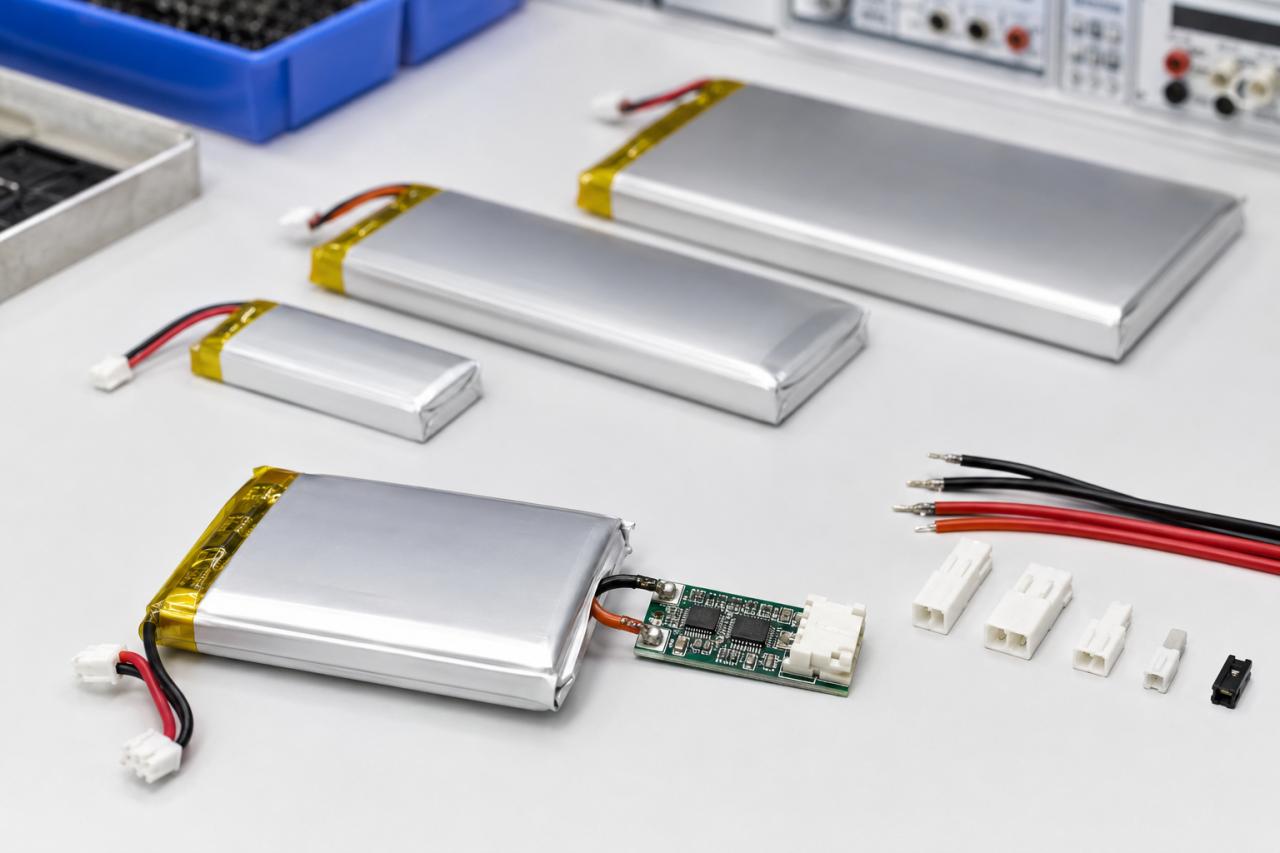
Lithium polymer battery costs can be confusing when two batteries have similar capacities but very different prices. A buyer may compare a 3.7V cell from one supplier with another 3.7V cell from a different factory and wonder why the quotation changes so much. The reason usually lies in the full specification, not in a single number on the label.
Capacity, cell size, discharge demand, protection circuit, connector type, testing, certification, packaging, and order quantity all affect the final price. A low unit price may look attractive at first, but it can create problems if the battery does not match the product structure, charging system, safety requirements, or production schedule.
Battery Capacity Has a Direct Impact on Lithium Polymer Battery Cost
Capacity is one of the first details buyers check. A higher-capacity polymer battery usually requires more active material, a more complex internal structure, and a larger cell size. That often increases material cost and production cost.
However, capacity alone does not explain the full quotation. Two batteries with the same mAh rating may use different cell grades, protection designs, thickness limits, discharge performance, or packaging methods. A simple 1000mAh cell for a low-power product may cost less than a compact 1000mAh cell that requires tighter thickness control and more rigorous safety testing.
Buyers should avoid comparing polymer batteries only by mAh. A better comparison starts with voltage, capacity, dimensions, discharge current, charging method, protection requirements, and expected working environment. Without those details, the lowest price may not be the lowest project cost.
Cell Size and Shape Change Polymer Battery Pack Cost
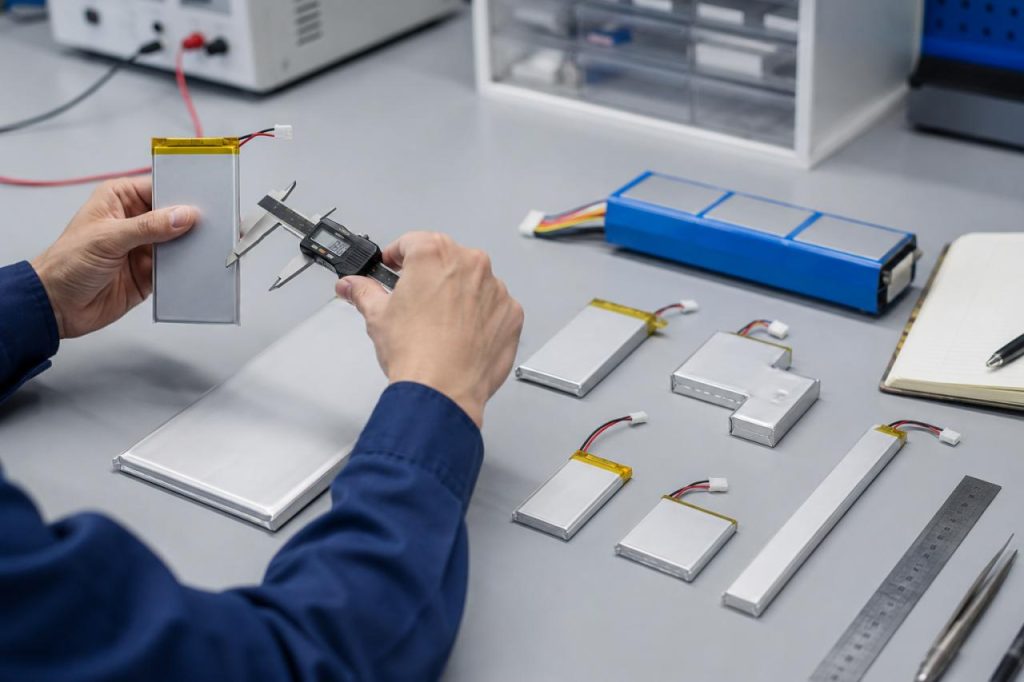
Lithium polymer batteries are widely used because they can support thin, flat, and custom shapes. That flexibility helps product designers fit the battery into limited internal space. It also affects cost.
A standard rectangular cell with common dimensions usually costs less than a custom-size cell. When the battery requires an ultra-thin structure, a special width, an unusual length, a narrow-edge design, or tighter swelling control, production becomes more demanding. The supplier may need different tooling, more process control, or additional sample testing before mass production.
This matters for buyers who want a custom polymer battery pack. If the product already has a fixed internal layout, the battery may need to follow the housing design. In that case, cost depends not only on capacity but also on how difficult the cell is to manufacture consistently.
Protection Circuit Design Affects Rechargeable Polymer Battery Pricing
Many polymer batteries need a protection circuit module. This small board helps protect the battery from overcharging, over-discharging, short-circuiting, and overcurrent. Some projects also need temperature protection or more advanced battery management.
A basic cell without a protection board may look cheaper. But for many finished products, that price comparison does not reflect the real requirement. If the device needs safe charging, stable discharge, or customer-facing reliability, the protection design should be included in the cost discussion from the beginning.
The cost of the protection circuit can vary based on current rating, board size, component quality, wiring method, and assembly complexity. A small consumer product may need a compact board. A higher-power device may need stronger current handling. These details change both price and delivery time.
Connector, Wire, and Pack Assembly Affect the Final Price
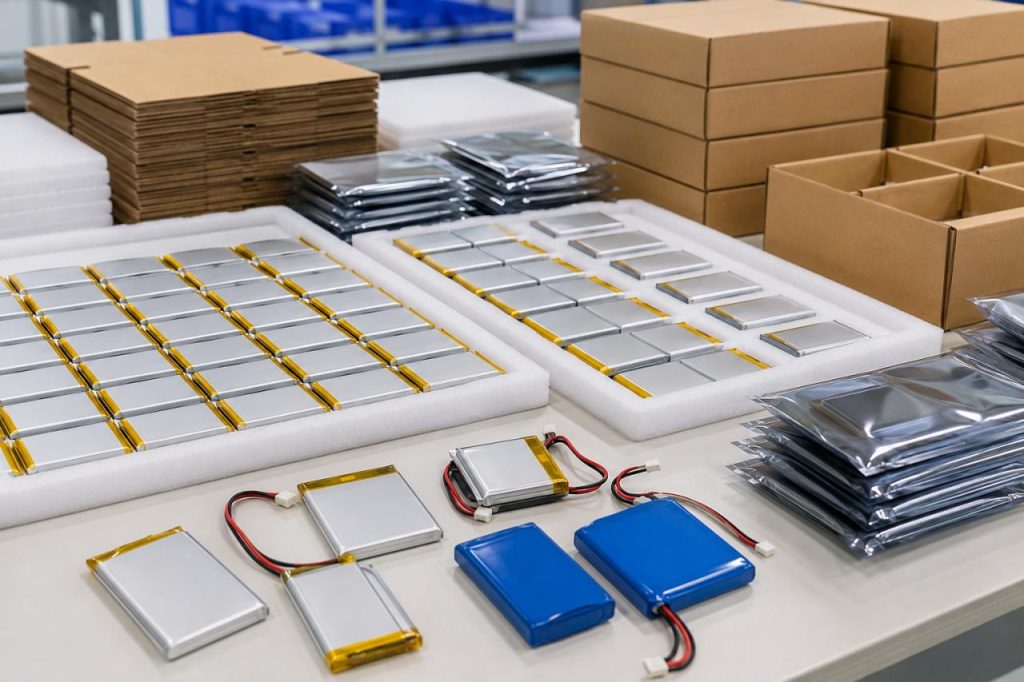
A polymer battery cell is only one part of the final battery solution. Many projects need wires, connectors, insulation tape, labels, foam, holders, thermal protection, or custom packaging. Each added part affects the final unit price.
Connector choice can create a clear price difference. Common connectors are easier to source and assemble. Special connectors, short lead times, exact wire lengths, color-coded wiring, or custom pin layouts may increase cost. Pack assembly also requires labor, inspection, and process control.
For bulk orders, buyers should confirm the full pack structure before comparing quotations. A quote for a bare rechargeable polymer battery cannot be compared directly with a quote for a finished battery pack with wire, connector, protection board, label, and packaging. Those are different products, even if the cell capacity looks the same.
Testing and Certification Can Increase Lithium Polymer Battery Cost
Testing adds cost, but it also reduces the risk of shipment delays, product returns, and safety problems. Polymer battery projects may require capacity testing, internal resistance testing, aging tests, appearance inspection, charge and discharge tests, and batch sampling.
Some projects also need documents for transportation or market access. These may include MSDS, UN38.3, IEC-related testing, or other documents requested by the buyer, carrier, or target market. The exact requirement depends on the product type, shipping method, destination country, and sales channel. Buyers can also review IATA lithium battery shipping guidance when checking air transport requirements.
Buyers should confirm these requirements before placing a bulk order. If testing or documentation is added after price confirmation, the final cost of the lithium polymer battery may change. Worse, the shipment may wait while paperwork catches up with production, because apparently, batteries also need bureaucracy to travel.
Order Quantity Changes Polymer Battery Bulk Order Pricing
MOQ has a strong effect on unit price. Sample orders, pilot runs, small batches, and mass production orders usually have different pricing structures. A small trial order may carry a higher unit cost because setup, material preparation, labor, testing, and administration are spread across fewer pieces.
Large-volume orders usually allow better material planning and more efficient production. However, buyers should not proceed straight to bulk orders before confirming the samples. A lower mass-production price does not help if the battery thickness, wire length, connector orientation, or discharge performance is wrong.
A better process is to confirm the technical specification first, approve samples, test the battery in the actual product, and then discuss bulk-order pricing. This reduces rework and helps both sides control costs more accurately.

Supplier Capability Also Affects Long-Term Cost
The cheapest quote is not always the cheapest choice. Battery projects can lose money due to inconsistent batches, poor communication, late delivery, poor packaging, unstable capacity, or missing documents. Those problems may not appear in the first quotation, but they show up later in production.
A custom lithium battery manufacturer should be able to review the product requirements, confirm the battery structure, support sample testing, and maintain stable batch production. For OEM projects, supplier response speed and engineering support can affect the real cost as much as the unit price.
Buyers should ask for clear specifications, not vague promises. Capacity tolerance, size tolerance, protection board details, connector model, wire length, test standards, packaging method, lead time, and MOQ should be written before production starts.
Lithium Polymer Battery Cost Should Be Compared by Full Specification
Lithium polymer battery cost should be compared based on the complete battery design, not on capacity alone. A fair comparison includes cell capacity, voltage, dimensions, thickness, protection circuit, connector, wire length, testing, documentation, packaging, MOQ, and delivery schedule.
For buyers planning bulk orders, the right question is not only “How much is one battery?” A better question is “Does this battery match the product design, safety needs, production plan, and long-term supply requirements?”
When the full specification is clear, price comparison becomes more useful. Buyers can see which supplier offers a realistic quotation, which cost items are necessary, and which details may affect production later. That makes the purchasing decision more stable than choosing the lowest number on a spreadsheet and hoping reality behaves nicely.