
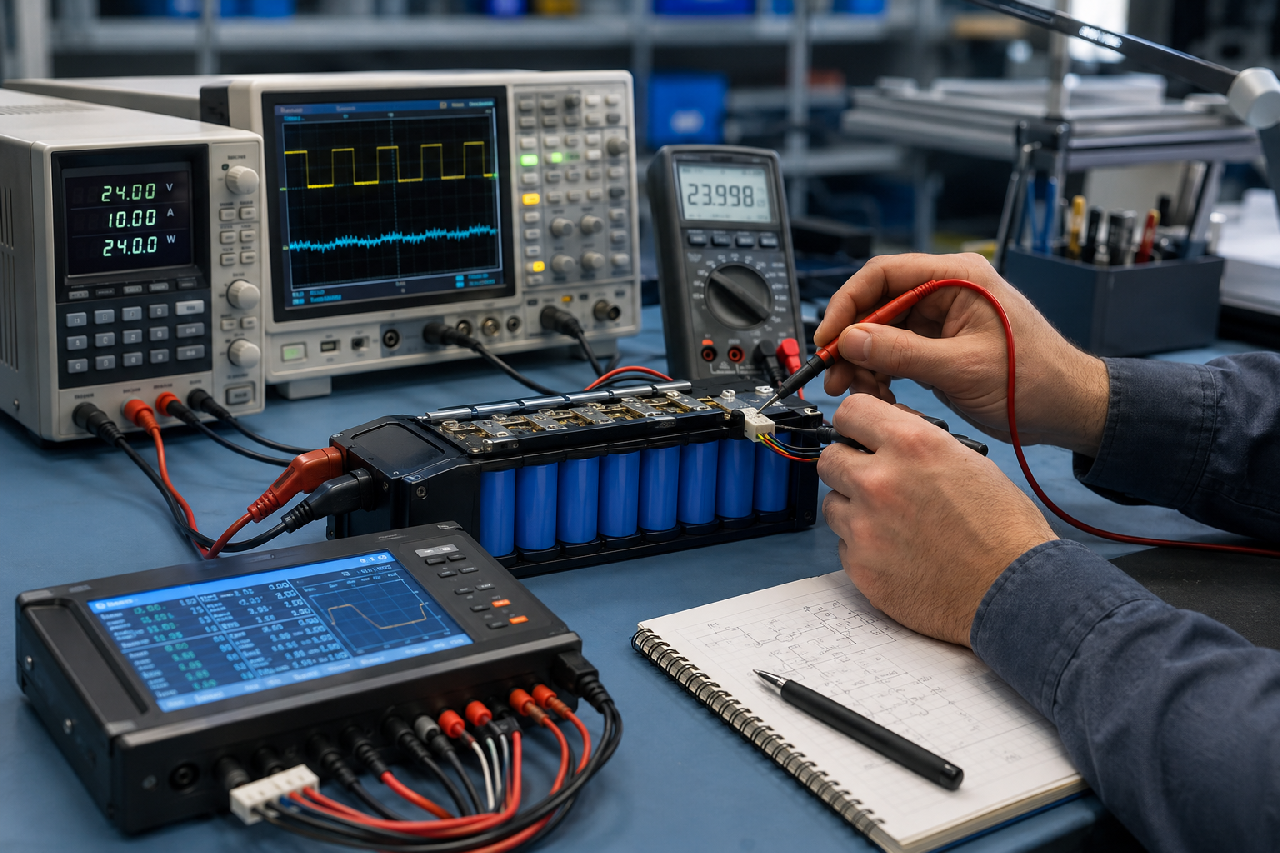
A battery pack may meet its voltage and capacity targets yet still fail during device integration. The connector can be wrong, the wire may be too short, the BMS may not support the load, or the enclosure may exceed the available space. Buyers therefore need to assess more than the quoted price when choosing an OEM lithium battery manufacturer. The right factory should understand the approved design, control assembly, and test the finished pack against agreed requirements. Buyers should also confirm how the supplier manages component changes, production records, labels, packaging, and transport documents. These checks reduce delays between sample approval and mass production.
What should OEM lithium-ion battery manufacturers provide?
OEM production works best when the customer owns a finalized design or has an approved battery specification. The factory then manufactures the pack according to the defined electrical, mechanical, interface, and branding requirements. A useful project file should include nominal voltage, capacity, continuous current, peak current, charging method, maximum dimensions, connector model, wire length, and BMS functions. Buyers should also provide label artwork, packaging requirements, estimated order volume, and the destination market.
An incomplete specification creates room for different interpretations. For example, a capacity figure does not show the current needed during motor startup. An outer dimension does not explain the direction of the cable exit. A connector name without a pinout does not confirm polarity. Resolve these details before sampling to prevent avoidable redesign work. OEM and ODM also require different inputs. OEM fits a project with approved specifications, while ODM supports customers who still need battery design work. A supplier should identify the correct service model before confirming price and lead time.
How to Compare Lithium Battery Factory Capabilities?
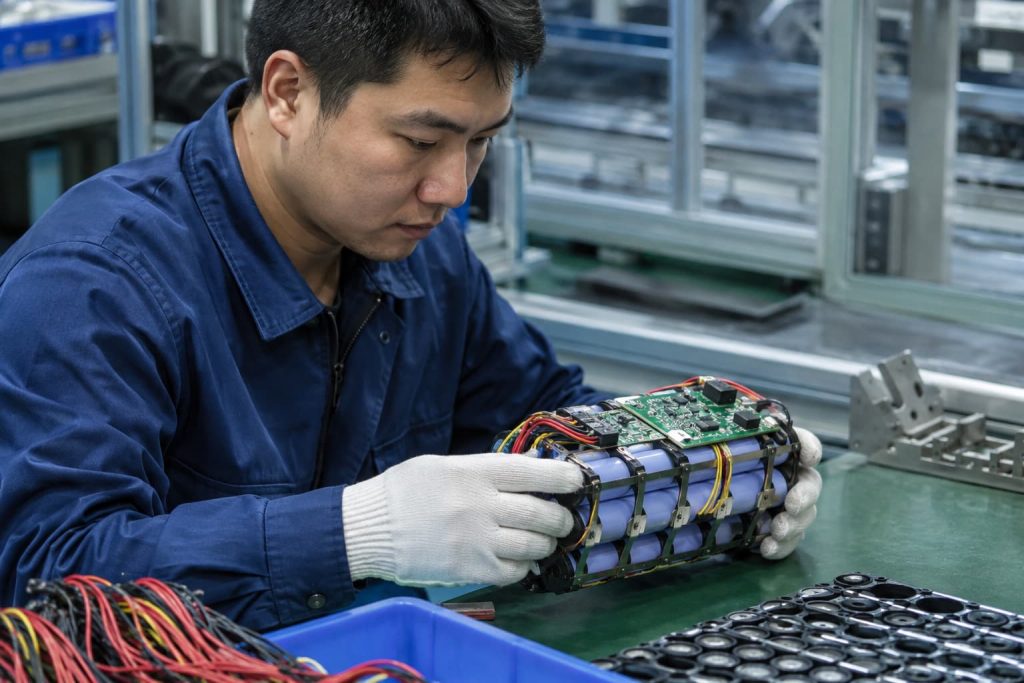
A buyer should compare factories by looking at the production controls behind the sample. A good prototype has limited value if the battery pack manufacturer cannot reproduce it consistently across future orders. Start with cell sourcing and matching. Cell chemistry, format, internal resistance, capacity, and discharge performance affect runtime, heat, cycle behavior, and pack size. Ask which cell is proposed, how incoming cells are inspected, and which matching criteria apply before battery pack assembly.
Next, review the BMS. The protection board must match the cell configuration, charger, device load, and operating environment. Depending on the project, required functions may include overcharge, over-discharge, overcurrent, short-circuit, and temperature protection. Products that display battery status or exchange data with a host device may also need fuel-gauge functions or a specified communication protocol. Mechanical integration deserves the same attention. Confirm the connector, polarity, pinout, wire gauge, wire length, exit direction, mounting method, insulation, and final pack dimensions. Device-level fit tests should use the approved sample because small mechanical differences can stop assembly even when electrical test results look correct.
Zenilove supports OEM projects in Shenzhen using cylindrical, lithium polymer, and button-cell formats. The suitable format depends on the available space, load profile, structural needs, and supply plan rather than a single headline specification.
Battery Pack Assembly Controls That Buyers Should Check
Battery pack assembly brings together matched cells, interconnections, a BMS, wires, connectors, insulation, structural parts, and the outer enclosure or wrapping. Each operation should follow the approved drawing, bill of materials, sample, and inspection criteria. Buyers can ask the lithium battery factory how it checks polarity, weld or connection quality, wire routing, insulation coverage, connector position, pack dimensions, and artistry during production. In-process inspection catches errors before later components hide the affected area.
Change control is another practical test of supplier discipline. If an approved cell, BMS component, connector, or packaging material becomes unavailable, the factory should report the proposed replacement and evaluate its effect before use. An unapproved substitution can change runtime, protection behavior, device fit, transport documentation, or field reliability. A Custom Battery Pack project should also define acceptance criteria. These may cover open-circuit voltage, capacity, protection response, dimensions, connector polarity, label accuracy, and appearance. The exact checks depend on the design, so buyers should agree on them before mass production.
Choosing the Right Cell Format for the Application
Battery format affects mechanical design and production feasibility. Buyers should select it by comparing the device space, current demand, expected runtime, weight limit, and assembly method. Cylindrical batteries such as 18650 and 21700 cells support repeatable pack structures and flexible series-parallel configurations. They are often considered for industrial equipment, robotics, mobility products, and portable systems. The final selection still depends on the approved cell specification and load profile.
Lithium polymer cells suit thin or irregular spaces in compact electronics, wearables, tracking devices, and some medical products. Their dimensions require careful control because swelling allowance, cable position, and enclosure pressure can affect integration. Button cells serve smaller products such as sensors, meters, wearables, and backup circuits. Chemistry, tab configuration, discharge behavior, and connection method should match the device instead of being selected by diameter alone.
From Sample Approval to OEM Battery Production
A controlled production process begins with a technical review. The engineering team checks drawings, electrical requirements, BMS functions, connector details, labels, packaging, quantity, and market requirements. Open questions should be documented before sample work starts. The supplier then prepares samples for fit, charging, runtime, load, communication, and device-level tests. Record approved changes and freeze the final configuration in writing. Production should follow that approved sample and documentation.
During mass production, incoming inspection and in-process checks verify cells, components, polarity, wiring, insulation, connections, and dimensions. Finished packs undergo the electrical, protection, aging, appearance, label, and packaging checks agreed for the project. Lithium batteries also require suitable documentation for international transport. Depending on the approved configuration and shipping route, the project may need UN38.3 test information, MSDS or SDS, and air or sea transport documents. The UNECE UN Manual of Tests and Criteria provides the official framework that covers lithium battery transport testing. Buyers should confirm requirements for the exact battery, destination, and carrier rather than assuming one document set fits every shipment.
Common OEM Battery Sourcing Mistakes
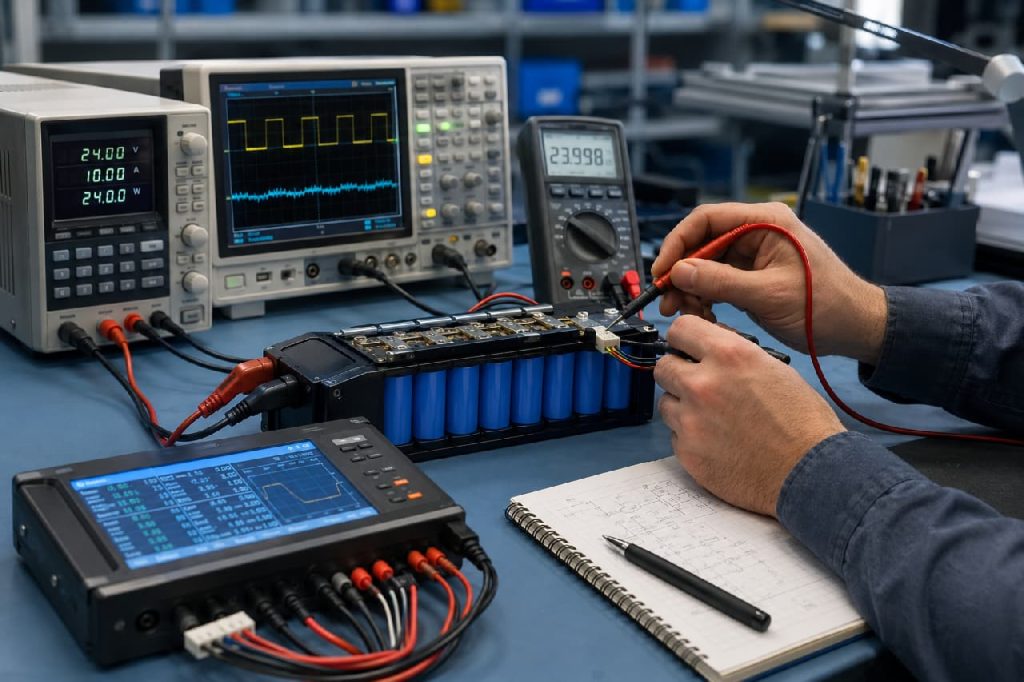
Many project delays begin with a quotation based on incomplete information. Sending only voltage, capacity, and quantity does not give a lithium battery pack supplier enough detail to assess BMS functions, peak load, mechanical fit, or documentation needs. Another common mistake is approving a sample without testing it in the final device. Bench results cannot confirm connector access, cable routing, enclosure pressure, charging behavior, or communication with the host system. Complete device-level testing before approving mass production. Buyers should also avoid treating MOQ and lead time as fixed figures before technical review. Cell availability, tooling, testing, packaging, and order volume affect both. A project-specific production plan is more useful than a general promise.
A Suitable Manufacturer Follows the Approved Battery Design
An OEM lithium battery manufacturer is a good fit when it can turn a complete specification into repeatable production and show how it controls cells, BMS integration, battery pack assembly, testing, changes, and shipment preparation. Before placing an order, confirm the electrical requirements, peak load, dimensions, connector details, BMS functions, acceptance criteria, label files, packaging, forecast, and destination market. A clear specification and an approved device-level sample give both the buyer and the factory a dependable basis for production.