

A warehouse employee still has orders to scan when a handheld terminal shuts down. A field technician reaches the last inspection point and discovers that the instrument needs charging.
For these users, battery performance means finishing the job without an unexpected interruption.
A cylindrical battery pack can last a full working shift when its usable energy and output capability match the equipment’s actual workload. Shift length alone cannot determine the required battery size. Active functions, standby periods, operating conditions, and battery condition all affect the result.
Choosing a cylindrical battery pack for a full working shift therefore starts with the work customers need to complete.
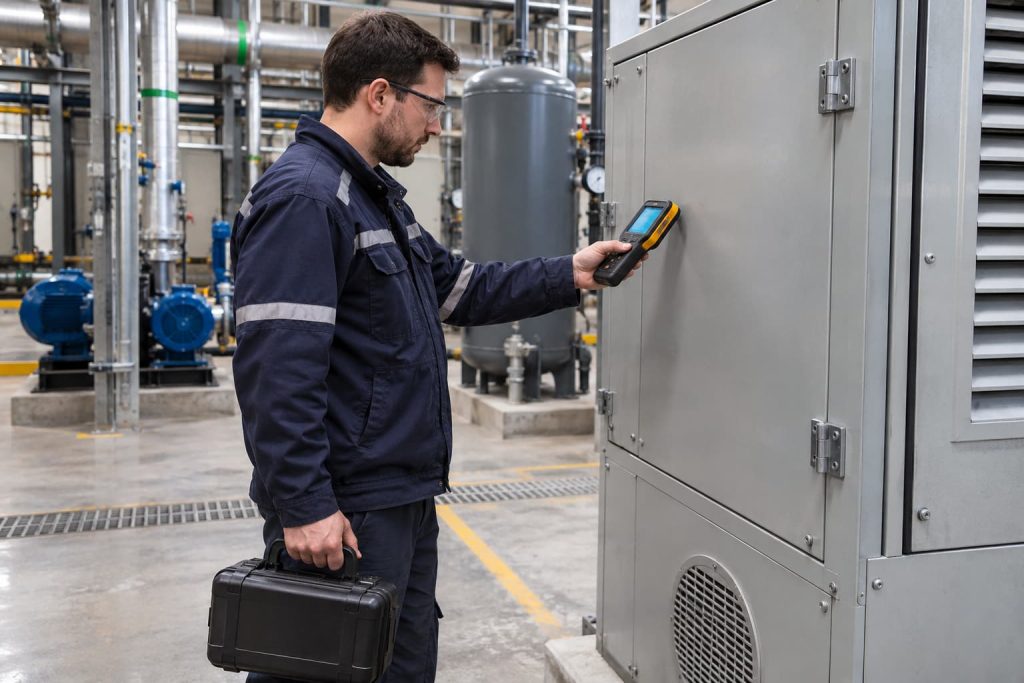
Define the Working Shift Before Selecting a Cylindrical Battery Pack
An eight-hour shift does not necessarily mean eight hours of continuous operation.
A handheld terminal may spend part of the day scanning, part transmitting records, and the remaining time waiting for input. A portable instrument may run its sensor continuously while activating a pump only during measurements.
Those patterns create different energy requirements.
Describe the working day in terms the development team can measure:
| Part of the shift | Information to record |
|---|---|
| Active tasks | Functions used, operating power, and duration |
| Display use | Brightness setting and time switched on |
| Communication | Transmission frequency, connection conditions, and synchronization activity |
| Standby | Time between tasks and measured standby consumption |
| Demanding events | Startup current, motors, pumps, or other brief high-load functions |
| Charging opportunities | Available breaks, suitable power sources, and charging duration |
Use observations from representative users where possible. A laboratory routine should reflect the tasks customers perform, not the easiest operating condition.
When reviewing cylindrical lithium-ion battery options, provide this usage profile alongside the required voltage and installation space.
Compare Cylindrical Battery Pack Energy with the Shift’s Power Demand
Capacity in milliamp-hours does not describe runtime on its own. Voltage matters, particularly when comparing different battery configurations.
Nominal energy provides an initial comparison:
Nominal energy in Wh = Nominal voltage × Capacity in Ah
For a variable workload, estimate the energy required by each operating state and add the results.
Consider an illustrative eight-hour shift:
| Operating state | Average power at the device load | Duration | Energy required |
|---|---|---|---|
| Active measurements | 6W | 3 hours | 18Wh |
| Connected waiting | 2W | 4 hours | 8Wh |
| Low-power standby | 0.2W | 1 hour | 0.2Wh |
| Total | — | 8 hours | 26.2Wh |
This example requires 26.2Wh at the device load. If the energy passes through a converter, the battery must supply additional energy to cover conversion losses.
The estimate also needs appropriate allowance for the project’s operating conditions and service-life requirements. A pack labeled 26.2Wh would not automatically meet this workload.
Specify where power is measured. If the measurement already comes from the battery terminals, adding the same conversion loss again would overestimate consumption.

Check What Happens Near the End of the Shift
A battery must support demanding tasks throughout the required operating period.
A motor startup, pump activation, or communication burst can briefly increase current. As battery voltage falls during discharge, the same event may produce a different response from the one observed immediately after charging.
Texas Instruments’ explanation of battery discharge characteristics describes how terminal voltage changes during discharge and why the equipment’s accepted voltage range matters.
Test demanding events near the end of the proposed shift. Record voltage at the pack output and device input, current, temperature, and any protection or shutdown event.
A device that remains powered in standby but cannot complete its final measurement has not met the working-shift requirement.
Do not use a protection circuit’s overcurrent trigger as the battery’s continuous operating-current rating. Confirm continuous and peak capability for the approved cells, interconnections, wires, connector, and protection electronics.
Select an 18650 or 21700 Battery Pack Around the Complete Device
Cell format helps define the available design choices, but the format name cannot guarantee a full shift.
An 18650 battery pack may fit an established enclosure. A 21700 configuration may offer a different balance of energy, dimensions, and assembly layout. Compare the actual cell models and finished packs under the same requirements.
For example, Zenilove’s 21700 3S2P Battery Pack 10.8V lists 9800mAh capacity and 105.84Wh of nominal energy. Those figures provide a product reference for evaluation; they do not establish runtime in an unspecified device.
The equipment must accept the pack’s operating-voltage range. Its enclosure, mounting, charging system, and load requirements must also match the proposed assembly.
Extra energy can introduce additional mass or installation requirements. For a worker carrying equipment all day, handling and balance belong in the selection decision alongside runtime.
Validate a Cylindrical Battery Pack Under Normal and Demanding Shifts
A useful validation plan includes more than a single run with a newly charged battery.
First, test a representative working day. Then evaluate a demanding but realistic shift with more active tasks, longer communication periods, or fewer charging opportunities.
Include relevant temperature conditions within the product’s approved limits. Review performance after battery aging when the runtime claim is intended to apply beyond the start of service.
| Test condition | What the team needs to establish |
|---|---|
| Representative shift | The equipment completes its normal task sequence |
| Demanding shift | The product handles the agreed higher workload |
| End-of-shift peak load | Required functions remain available at lower charge |
| Relevant temperature conditions | Runtime and output remain acceptable within the stated environment |
| Representative aged battery | Performance meets the agreed service-life requirement |
| Low-battery warning | Users receive enough notice to respond appropriately |
Record the starting charge condition, firmware, accessories, workload, and endpoint. Define success as completing the required tasks, not simply keeping the screen illuminated.
If users need time to save records or move to a charging point, include that requirement in the warning and shutdown tests.

Give Users a Runtime Claim They Can Understand
A statement such as “up to eight hours” needs supporting conditions.
Explain the workload, settings, battery condition, and environment used to establish the result. If the claim assumes a charging break, make that assumption visible.
A user who receives eight hours only after a lunchtime recharge has a different experience from one whose equipment completes the shift without external power.
For a Custom Battery Pack project, share the expected working routine and the acceptable interruptions before approving the design. That allows the battery supplier and equipment team to evaluate the same outcome.
FAQ
These questions address common concerns about choosing a battery for a full workday.
Does a Higher-Capacity Cylindrical Battery Pack Always Last Longer?
A higher-capacity pack may provide more runtime when voltage, workload, and other conditions are comparable. Across different configurations, compare energy in watt-hours and verify usable performance in the device. Capacity alone cannot establish compatibility or runtime.
Should a Working-Shift Test Include a Charging Break?
Include a charging break only if it forms part of the intended use and the product claim states that condition. Test the actual break duration, charging accessories, and energy restored. Keep uninterrupted runtime and runtime with recharging clearly defined.
Can a Battery That Lasts Eight Hours When New Still Meet the Requirement Later?
It may, but you’ll need to validate it against the project’s aging and operating requirements. Define the battery condition at which the shift target must still be met, and establish an appropriate replacement or maintenance criterion.
A Cylindrical Battery Pack Can Last a Full Shift When the Workload Is Defined and Tested
A full-shift requirement becomes measurable when it identifies the tasks, operating conditions, charging opportunities, and battery condition involved. Use those inputs to select the pack, then verify the complete task sequence in the finished equipment. The result should tell customers what they can accomplish before recharging and give manufacturers evidence behind that promise.