
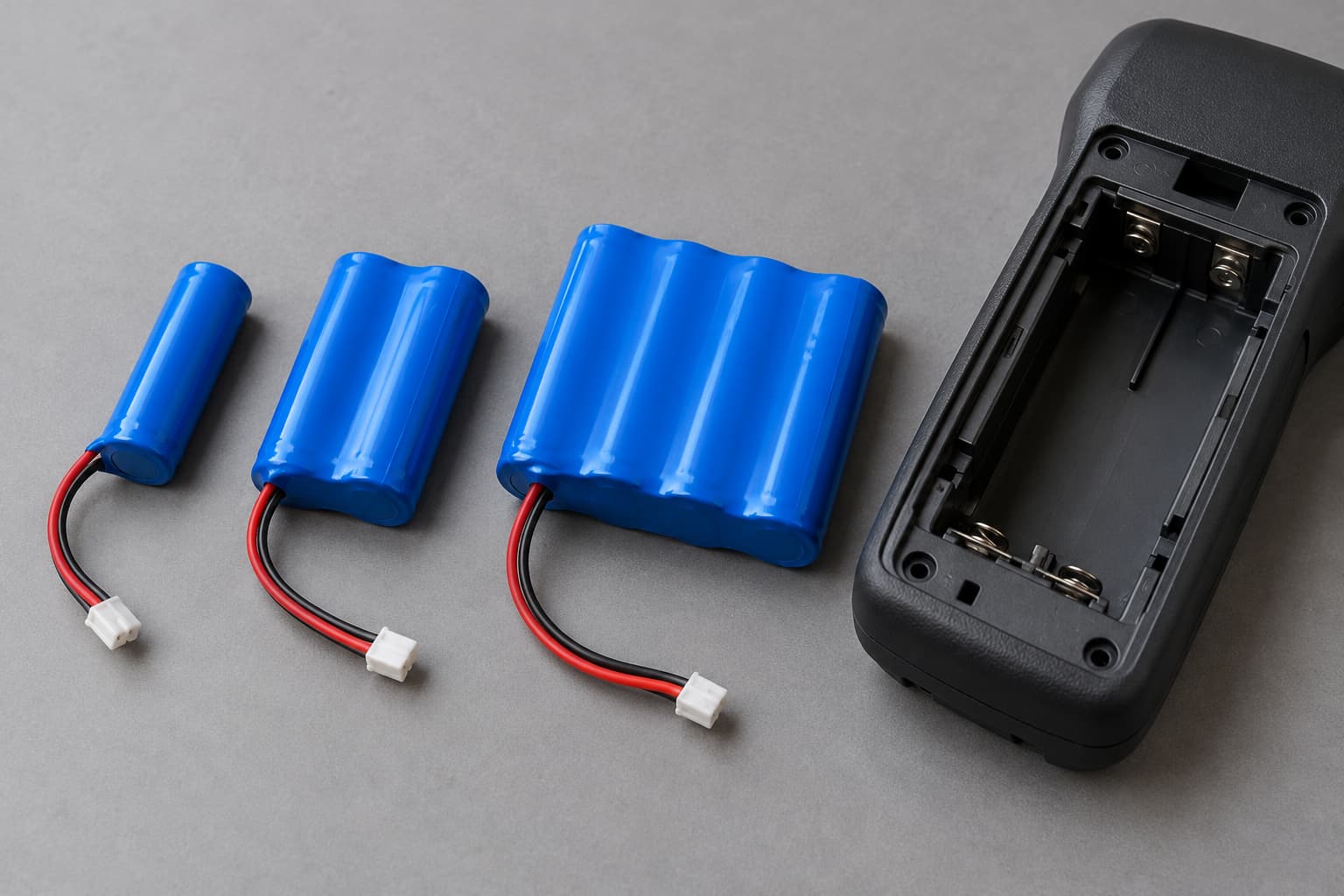
A 10.8V battery pack can power some devices labelled 12V, provided the equipment accepts the pack’s full operating voltage range and the assembly supports its load. The two voltage labels alone cannot establish compatibility.
The key distinction is between a battery’s nominal voltage and the input a device actually requires. A rechargeable battery’s voltage changes during use. A device designed for a tightly regulated 12V supply may therefore need a different power arrangement from equipment that accepts a wider range.
Why does a 10.8V battery pack reach 12.6V when fully charged?
The 10.8V rating describes the pack’s nominal voltage. It does not mean the output remains fixed at 10.8V throughout discharge.
For a three-series lithium-ion configuration using cells rated at 3.6V nominal and charged to 4.2V each, the pack has a 10.8V nominal rating and a 12.6V full-charge voltage. Its voltage then falls as the battery discharges.
Zenilove’s 21700 3S2P Battery Pack is one listed example with those nominal and full-charge values. Its protection board helps manage specified fault conditions; it does not turn the battery into a constant 12V output.
A freshly charged measurement therefore describes one operating point. It cannot establish how the equipment will behave as the charge level declines.
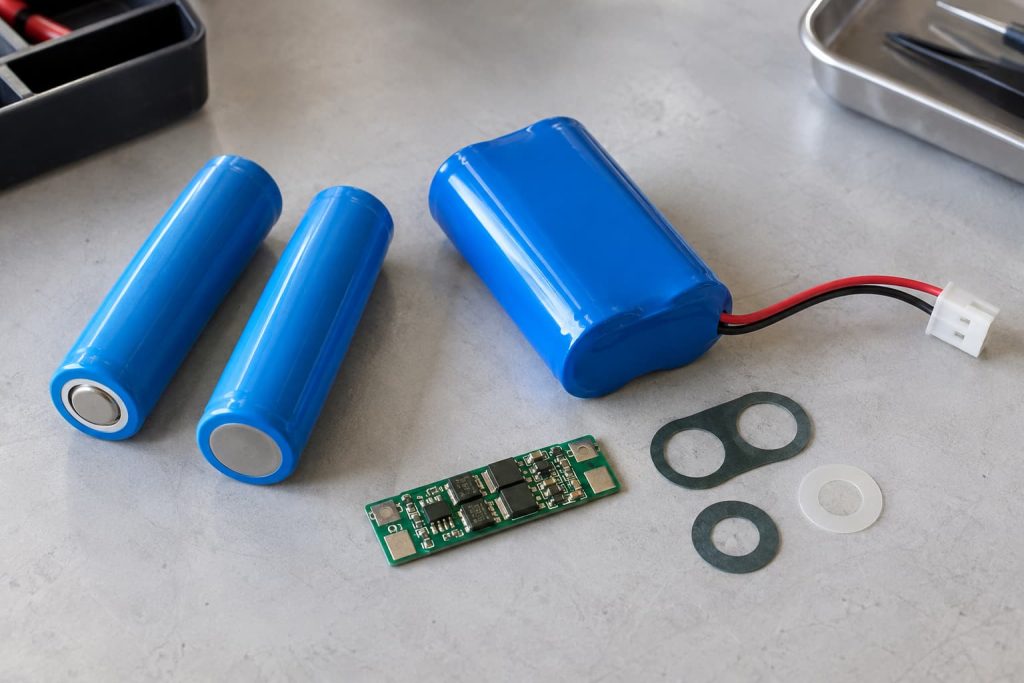
My device says 12V. Can I connect the battery directly?
Check the equipment’s documented input range before deciding. A 12V marking may indicate the intended supply, while the allowed variation appears elsewhere in the technical documentation.
Consider two hypothetical devices. One accepts 9–15V at its input. Another requires 12V within a narrow tolerance. These examples illustrate different requirements; they do not describe specific Zenilove applications.
The first device may be a candidate for direct battery operation, provided the full battery range, load, and connection are confirmed. The second may need regulation because the battery can sit both above and below its permitted supply range.
| Equipment requirement | What it means for the battery |
|---|---|
| Maximum input voltage | Must accommodate the highest voltage reaching the device |
| Minimum operating voltage | Determines how far the battery can discharge before useful operation stops |
| Continuous and startup demand | Must remain within the complete assembly’s approved capability |
| Polarity and connection | Must match the equipment, regardless of connector appearance |
| Required supply stability | Determines whether direct battery operation is appropriate |
A matching plug is insufficient evidence. The equipment team must confirm electrical compatibility before connecting.
Why does the device work when charged but stop later?
A device can start successfully near full charge and stop as battery voltage falls below its operating requirement. Energy may remain in the battery even though the equipment can no longer use it.
For example, a device with an input requirement above part of the battery’s discharge range will stop before the pack reaches its own permitted discharge endpoint. That is a system mismatch, not proof that the stated battery capacity is incorrect.
Voltage under load also matters. Wiring, connectors, and the battery’s internal resistance can lower the voltage at the equipment input. A brief demanding event may expose a problem that an idle measurement misses.
Compare battery-terminal voltage with the device input during the event. Check whether the equipment shuts down itself or the battery protection disconnects the output.
Do not bypass protection or lower limits simply to extend operation. The correction should address the identified cause within the approved equipment and battery limits.

Will a higher-capacity 10.8V battery solve the mismatch?
Higher capacity does not change the nominal voltage platform. Adding parallel capacity to a three-series assembly does not create a regulated 12V supply.
A larger assembly may provide more operating time while the voltage remains acceptable. Depending on the selected cells and construction, it may also behave differently under load. Neither possibility proves that it resolves the device’s input-range problem.
If the equipment requires a stable 12V supply, more capacity alone won’t meet that requirement.
When comparing a cylindrical lithium ion battery option, assess voltage compatibility separately from stored energy. First establish the power arrangement the device needs. Then evaluate the capacity required to support useful operation through that arrangement.
Can the existing 12V adapter charge the battery?
An adapter designed to power a device is not automatically a battery charger. Its output label does not establish the charging profile, current control or termination behaviour the pack requires.
The referenced three-series pack specifies 12.6V constant-current/constant-voltage charging. A generic 12V adapter connected directly to the pack is not a suitable charger. A protection board is also not a substitute for charging control.
An important distinction applies when the device already contains a charging circuit. In that arrangement, an external adapter supplies the charging electronics, and those electronics manage the battery. The adapter voltage alone does not reveal the circuit’s compatibility.
An existing adapter may remain usable only if the complete charging design supports the proposed battery. That decision requires confirming the charging circuit, pack specification, and intended operation together.
When does a 12V device need voltage regulation?
Regulation is needed when the device needs a supply the battery cannot maintain directly.
If battery voltage can exceed the required output and drop below it, a suitable buck-boost arrangement can provide both step-down and step-up operation. Texas Instruments describes this principle in its documentation on buck-boost voltage regulation.
That principle does not make every converter suitable. The design must cover the battery input range, required output, load changes and thermal conditions. Conversion losses also affect the energy available to the equipment.
At lower battery voltage, maintaining the same output power generally requires greater battery-side current. The selected battery, protection, wiring and converter must support the resulting demand.
For projects considering custom battery solutions, the choice may involve an appropriate converter, a different battery configuration or a change to the equipment’s power design. A different series count also changes charging and protection requirements, so simply choosing a higher-voltage pack is not a universal answer.

A 10.8V battery pack can power a 12V device when their requirements match
Direct use is possible only when the equipment accepts the battery voltage throughout the intended operating period and the complete assembly supports the load. The 12V label alone cannot establish those conditions.
If the equipment needs a tightly controlled 12V supply, use an appropriately engineered power-conversion arrangement or another approved power solution. Confirm charging compatibility separately.
Evaluate performance across the intended discharge range, including demanding operation near the device’s low-battery endpoint. Successful operation immediately after charging is only the beginning of that assessment.