
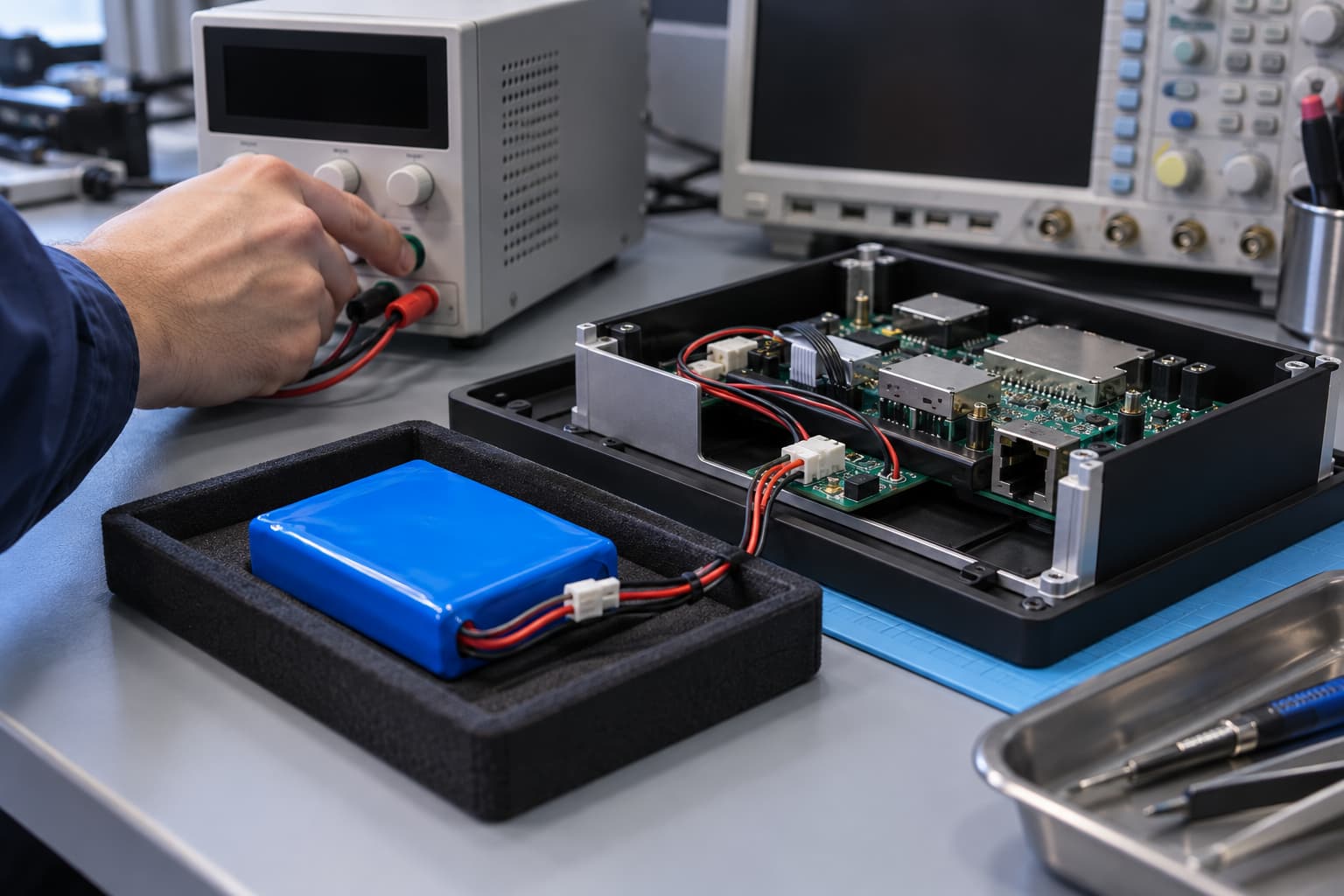
Battery prototype testing can begin before the finished device is available. Buyers can confirm the supplied configuration, review dimensions and examine electrical results obtained under agreed conditions. Final device runtime, installed temperature and complete charging behaviour still need the relevant equipment.
This distinction helps when development schedules overlap. The battery sample may arrive while the enclosure, circuit board or software remains unfinished. Procurement needs to know what can move forward and which approvals must remain open.
The practical approach is to give each early test a defined purpose. Record what it establishes, what configuration it uses and what still needs confirmation later.
Start battery prototype testing with the sample’s purpose
Ask why the sample was ordered. An early assembly might help investigate a proposed electrical configuration. Another sample might represent the intended connector, wiring and finished dimensions.
Those samples answer different questions. A temporary configuration can support useful development work, provided everyone understands its limitations.
When discussing custom battery solutions, identify which parts of the device are ready and which remain undecided. Ask the supplier to describe the sample it will deliver against that development stage.
Give the sample a reference linked to its drawing and specification. This makes it easier to distinguish an exploratory build from a later version intended for final equipment approval.
Battery sample testing can confirm the delivered configuration
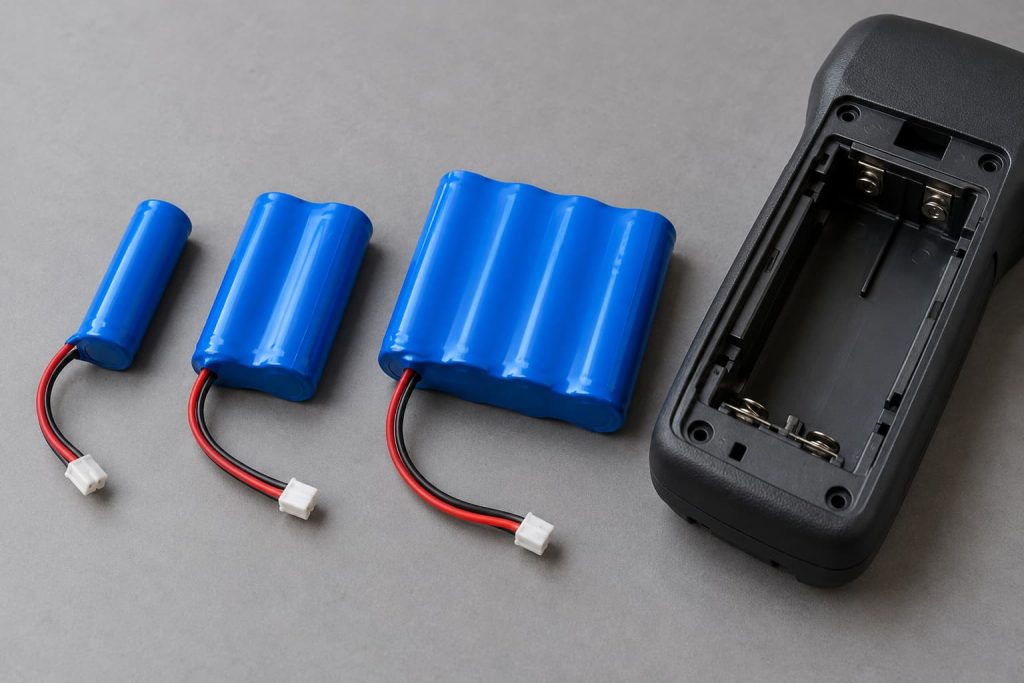
Before considering performance, check that the sample matches the assembly the supplier agreed to provide.
Review the product reference, finished dimensions, connector, wire arrangement, insulation and visible construction. Compare them with the agreed drawing. Identify any temporary components or approved differences.
Ask for the relevant test records as well. A capacity result becomes easier to interpret when it identifies the sample, discharge conditions, temperature and endpoint. A statement that a sample “passed” leaves those details unresolved.
| Early check | What it can establish | What it leaves open |
|---|---|---|
| Sample identification | Which assembly was supplied | Suitability for every device version |
| Finished dimensions | Agreement with the sample drawing | Installation in an unfinished enclosure |
| Connector and wiring | Supplied parts match the agreed arrangement | Access and routing in final equipment |
| Capacity test record | Result under the stated conditions | Actual device runtime |
| Electrical evaluation | Behaviour within the tested setup | Performance under an unmeasured device workload |
This review gives purchasing a clear receiving record without treating it as complete application approval.
Bench tests answer defined electrical questions
A suitable bench setup can help the engineering team examine behaviour before the host device is complete. The results apply to the load, connection and conditions used during that evaluation.
If the device workload remains uncertain, identify the assumed conditions explicitly. An electronic load can reproduce a defined demand, but it does not automatically reproduce every activity of unfinished equipment.
Component evaluation also has a specific scope. Texas Instruments provides a battery protection evaluation module for assessing a protection-circuit design. That illustrates how development work can evaluate a particular function separately from the finished product.
Have qualified personnel perform electrical tests using approved methods. Procurement should request understandable results and scope descriptions rather than improvise protection or fault tests.
Temporary connections limit battery prototype validation
Development teams sometimes use an adapter, temporary cable or alternative connector to connect a battery to an early board. Record that arrangement with the test.
Different connections can affect the electrical path and the physical installation. A result obtained with temporary wiring does not establish the performance of the final harness.
For example, a bench test might use short leads while the intended device routes the battery connection around another assembly. The early result remains useful, but the final wiring needs its own review.
Keep temporary details visible in the report. State which parts differ from the production proposal and which observations require confirmation after those parts change.
The same principle applies to a temporary enclosure. An open development fixture cannot establish the temperature behaviour of a closed finished housing.
Keep device-level claims open until the relevant hardware exists
A battery capacity test and a device runtime test measure different things. The latter depends on the equipment’s workload, settings, conversion losses and shutdown behaviour.
Similarly, measuring a battery outside the enclosure cannot establish its installed temperature. The finished arrangement includes nearby heat sources, mounting materials and the surrounding structure.
Final approval should therefore retain the checks that need representative equipment. These can include installation, startup, charging, runtime and the device’s low-battery response.
The broader battery prototyping and design process connects these activities. This early-stage review has a narrower purpose: deciding which results are useful now and which depend on later development.
Give each battery sample result a clear status
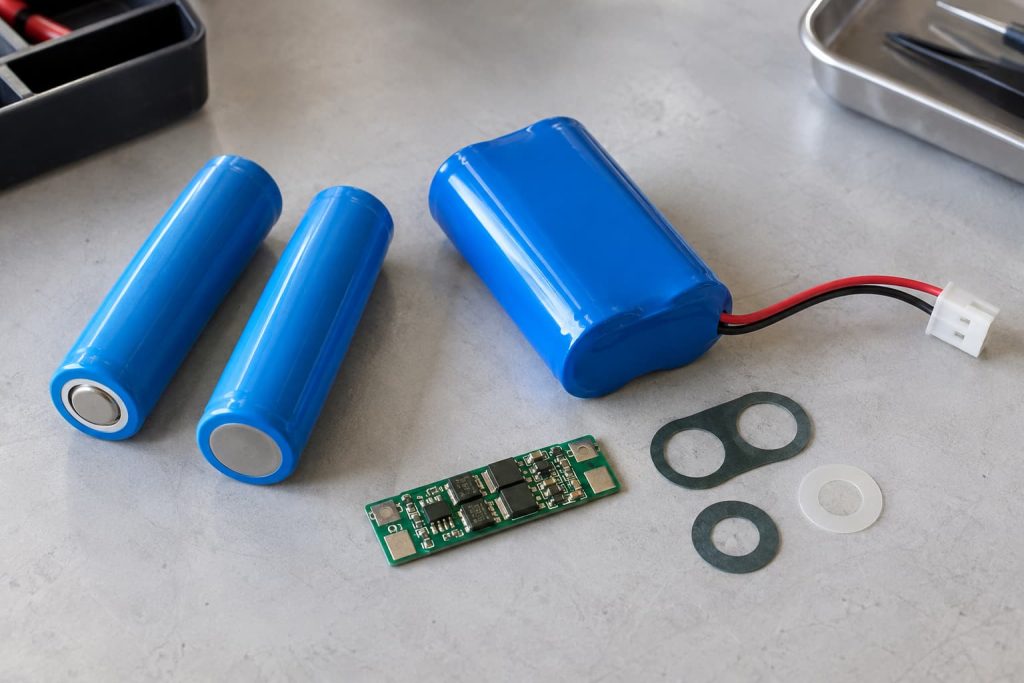
A single “approved” message can hide important distinctions. The sample may match its drawing while the equipment team still needs to confirm the final charger or enclosure.
Use a short status record that separates completed checks from open work.
| Review item | Example status wording |
|---|---|
| Sample construction | Matches the agreed sample specification |
| Capacity evidence | Reviewed for the stated test conditions |
| Temporary harness | Used for early evaluation; final harness pending |
| Enclosure installation | Awaiting representative housing |
| Device runtime | Awaiting agreed software and workload |
| Charging integration | Awaiting intended charging hardware |
These are example descriptions, not test results for a particular product. Each project should record its actual findings and responsible reviewer.
Procurement can then understand what the team has accepted without interpreting a partial approval as permission for unrestricted production release.
Review changed device conditions before reusing test results
Development changes can affect the relevance of earlier evidence. A new display setting, revised motor operation or different reporting interval may change the device workload.
Mechanical changes deserve the same review. Moving the battery, revising its mounting or closing a previously open housing may introduce conditions absent from the early test.
The response should follow the change. Ask the responsible engineers which checks remain applicable and which need repeating. Avoid automatically discarding every earlier result or carrying all results forward unchanged.
An ODM lithium battery manufacturer should receive the revised device information and the earlier sample reference. The supplier and equipment team can then agree on the affected battery work and remaining application checks.
Early battery prototype testing supports progress within a defined scope
Buyers do not need to wait for every device component before reviewing a battery sample. Configuration checks and agreed bench evaluations can resolve useful questions early.
Keep those findings tied to the tested assembly and conditions. Retain installed performance and complete-device approval as separate tasks when the required hardware or software is unavailable.
Before closing the sample review, identify what passed, what remains open and who will provide the missing evidence. That gives procurement a concrete next step while keeping the final equipment requirements intact.