
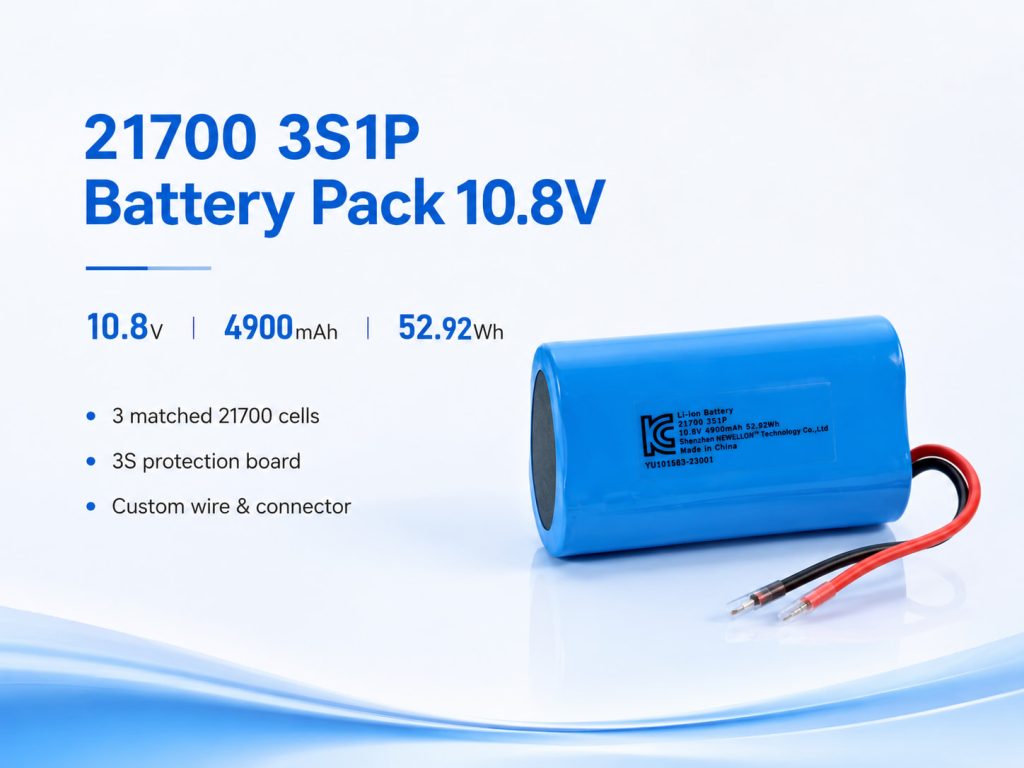
21700 3S1P Battery Pack for 10.8V Portable Equipment
Portable equipment may require a higher operating voltage without the additional size and weight of a multi-parallel battery structure. A 21700 3S1P Battery Pack meets this requirement by connecting three cylindrical cells in series.
Each cell provides a nominal voltage of 3.6V and a typical capacity of 4900mAh. Series connection increases the complete pack voltage to 10.8V while keeping the capacity at 4900mAh.
Nominal energy reaches 52.92Wh:
- 3.6V per cell
- Three cells connected in series
- 10.8V nominal pack voltage
- 4900mAh typical capacity
- 52.92Wh nominal energy
This configuration is suitable for devices designed around a 10.8V lithium-ion power system. Voltage, operating current, peak current and charging requirements must be confirmed before the battery is integrated into the final equipment.
How the 3S1P Battery Structure Works
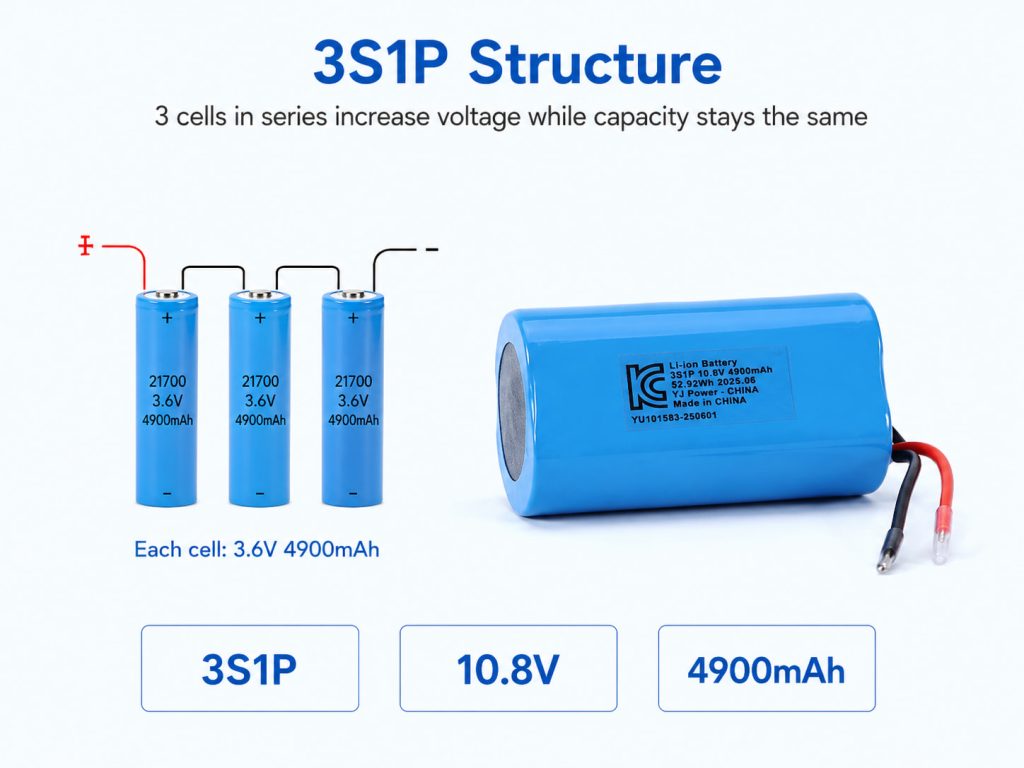
A 3S1P configuration contains three series-connected cells and one parallel group.
Series connection adds voltage:
- Cell 1: 3.6V and 4900mAh
- Cell 2: 3.6V and 4900mAh
- Cell 3: 3.6V and 4900mAh
- Complete pack: 10.8V and 4900mAh
Capacity does not increase to 14700mAh because no cells are connected in parallel. Energy increases because the pack combines the voltage and stored energy of all three cells.
Before assembly, all cells should be matched according to:
- Open-circuit voltage
- Capacity
- Internal resistance
- Production batch
- Charge and discharge performance
Proper cell matching helps reduce imbalance and supports more consistent charging and discharging across the three cells in series.
Compact 21700 Lithium Ion Battery Design
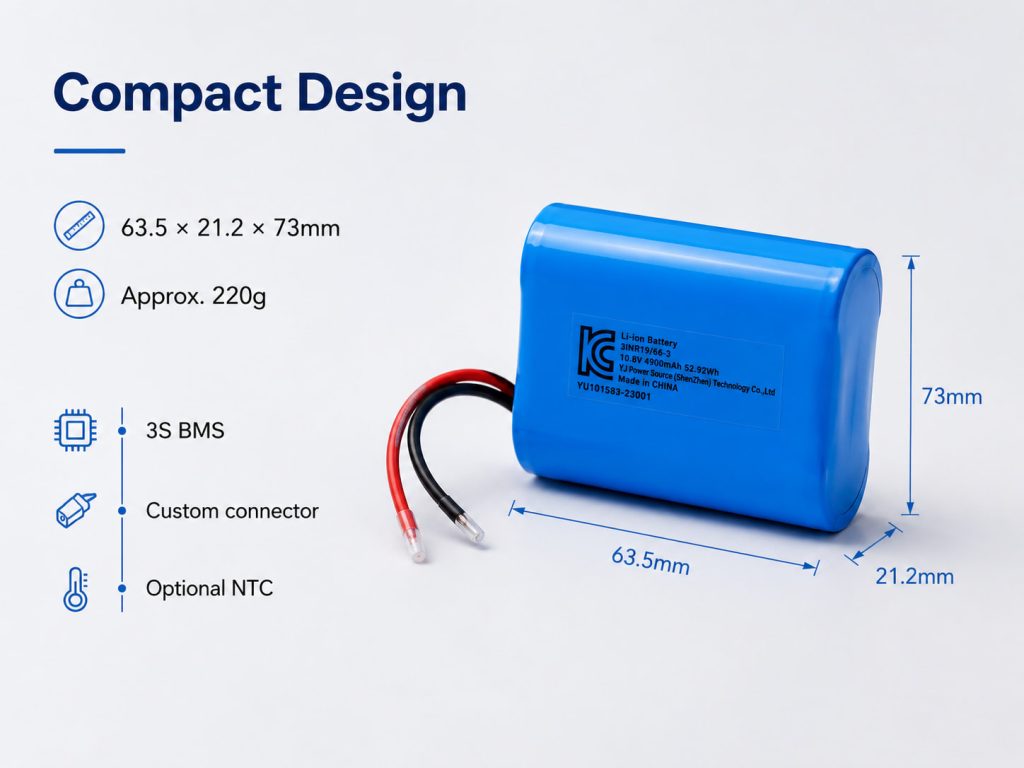
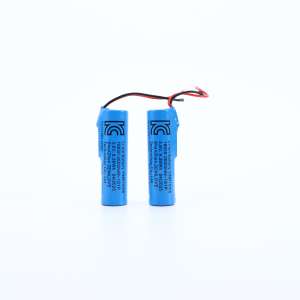
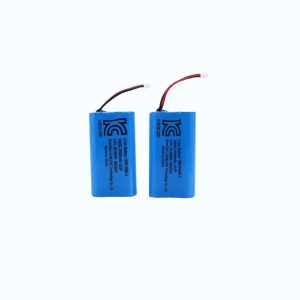
Three cylindrical cells are arranged side by side to create a relatively flat rectangular pack. Approximate finished dimensions are 63.5 × 21.2 × 73mm, while the estimated weight is about 220g.
Installation planning should include additional space for:
- Protection board
- Nickel connections
- Insulation materials
- Wire outlet
- Connector position
- Fixing structure
- Manufacturing tolerances
Compared with a cylindrical pack using multiple parallel groups, this 21700 lithium ion battery design uses fewer cells and can reduce overall pack complexity. It is suitable for products that require 10.8V but do not need the additional capacity of a 3S2P configuration.
Battery compartment drawings should show the permitted length, width, height, wire direction and connector location. Clearance should also be provided around the battery pack to prevent pressure from the device enclosure.
Charging and Protection Requirements
Charging requires a compatible 3S lithium-ion charger. A 4.2V single-cell charger cannot charge this battery pack correctly.
Recommended charging parameters include:
- Charge limit voltage: 12.6V
- Charging method: CC/CV
- Standard charge rate: 0.2C
- Calculated standard charge current: Approximately 0.98A
- Practical page value: Approximately 1A
- Estimated standard charge time: Approximately 5.5–6 hours
A higher charging current should only be approved after confirming the cell specification, protection board, wire gauge, connector rating and battery temperature during charging.
A 3S protection board should manage:
- Cell overcharge
- Cell over-discharge
- Pack overcurrent
- Short circuit
- Cell imbalance where balancing is included
Continuous and peak discharge current cannot be determined from capacity alone. Motors, pumps, transmitters and other startup loads may draw substantially more current during activation than during normal operation.
Device testing should therefore record:
- Normal operating current
- Maximum continuous current
- Startup current
- Peak-current duration
- Voltage drop
- Connector temperature
- Battery temperature
Suitable Applications
This 10.8V battery pack can be evaluated for products that have compatible voltage, current and installation requirements.
Possible applications include:
- Portable monitoring equipment
- Handheld industrial terminals
- Inspection and testing instruments
- Portable communication equipment
- Data collection devices
- Remote monitoring systems
- Control equipment
- Compact industrial devices
- Portable diagnostic equipment
- Small electric equipment
Application suitability cannot be confirmed from voltage and capacity alone. Current demand, charging design, operating temperature, enclosure dimensions and certification requirements must also match the finished battery pack.
Medical and other regulated projects require additional battery-level and device-level testing before commercial use.
Custom Battery Pack Options
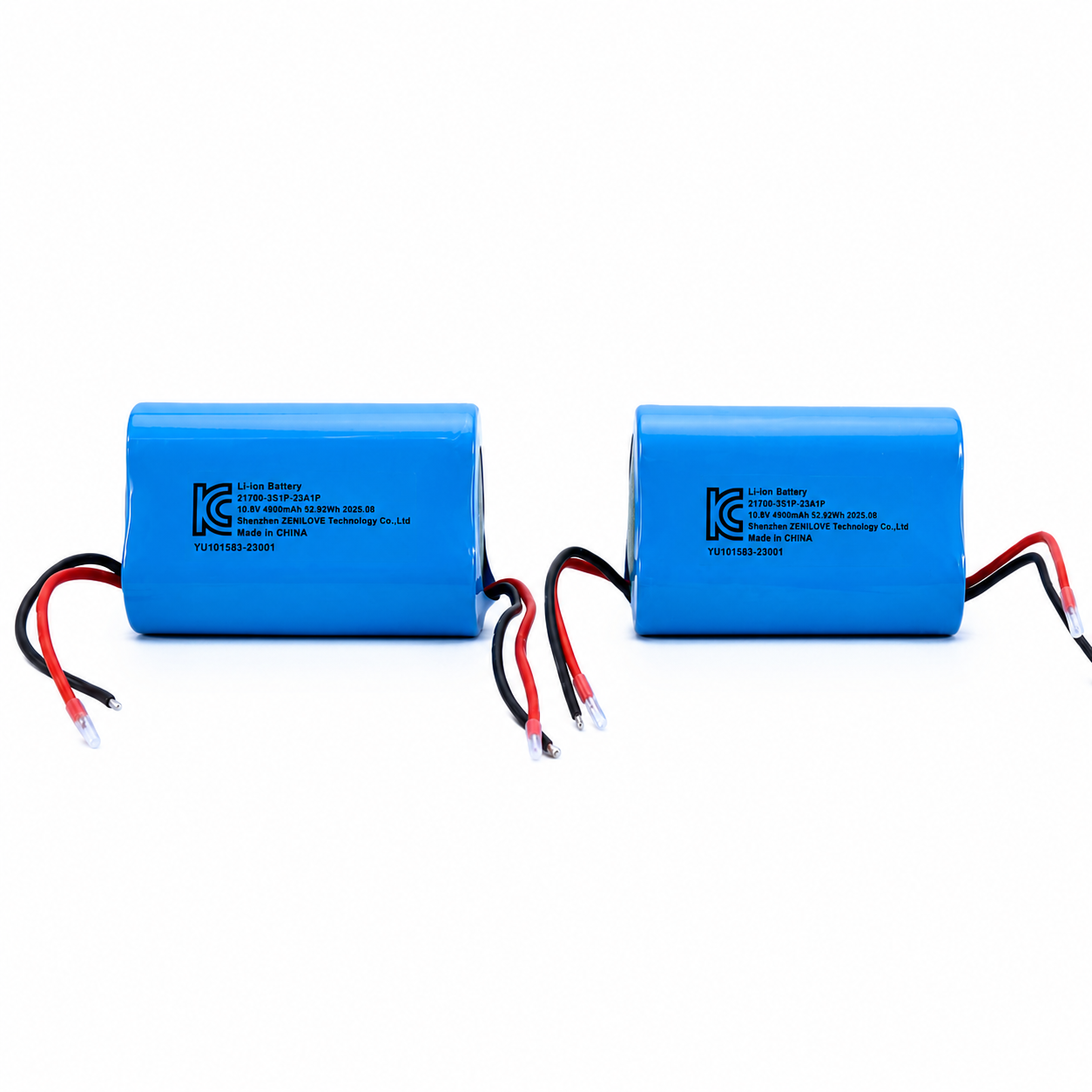
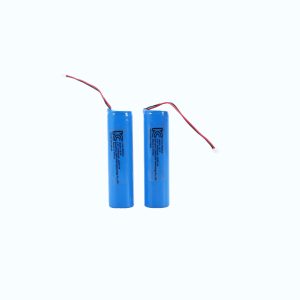
Standard construction can include three matched 21700 cells, a 3S protection board, nickel connections, insulation, wires, a connector and an outer protective sleeve.
Available customization options include:
- Protection-board current
- Overcurrent settings
- Cell-balancing function
- Wire gauge
- Wire length
- Connector model
- Connector pin definition
- NTC temperature sensor
- ID resistor
- Communication requirements
- Insulation materials
- Outer wrapping
- Battery label
- Wire outlet direction
- Pack arrangement
- Packaging requirements
A battery compartment drawing, connector specification or physical device sample can help confirm the structure before prototype production.
-1-300x300.png)
Reviews
There are no reviews yet.