
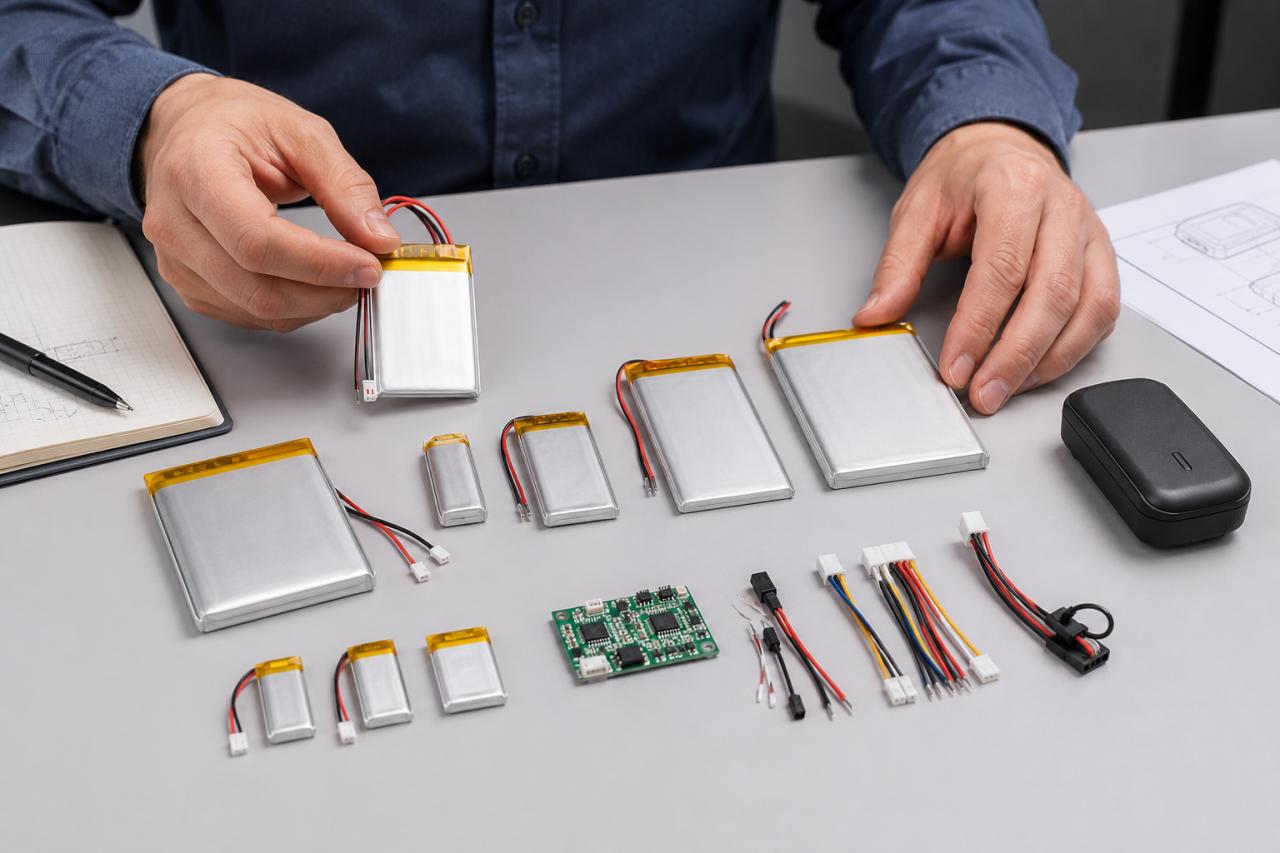
A GPS tracker is only useful when it stays online long enough, fits the product housing, and works reliably in real use. Since a tracker depends on GPS positioning, communication, and repeated data uploads, the battery should match how the device actually works. Choosing a polymer battery for GPS tracker devices should start with the product design, not a random capacity number from a supplier list. For buyers and product teams, the right battery is the one that matches the tracker’s size, runtime, charging design, connector layout and operating environment.
Check the Tracker’s Internal Battery Space First
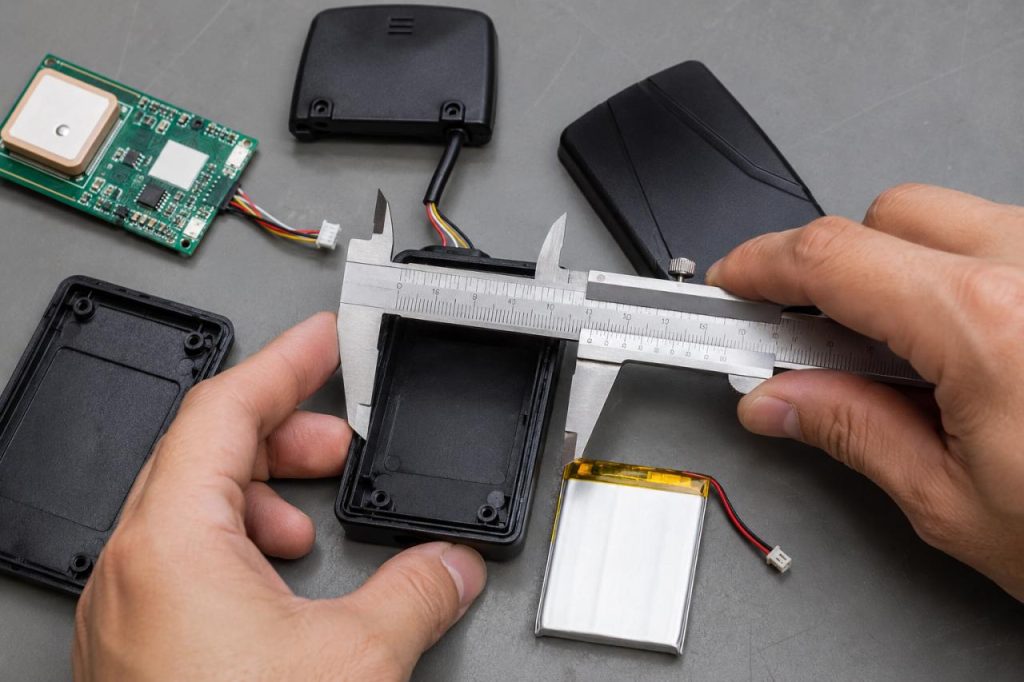
Before choosing capacity, confirm the actual battery space inside the GPS tracker. Measure the available length, width, and thickness. Do not use the outer product size as the battery size. The internal space also needs room for the PCB, GPS module, antenna, SIM slot, wiring, adhesive, and casing tolerance. For compact GPS trackers, thickness is often the first limit. A battery that is slightly too thick may stop the housing from closing or press against internal parts during assembly. That can create problems later, especially during bulk production. Thin polymer cells are often used in small GPS trackers because they enable slim product designs without occupying much internal space.
Confirm the Maximum Battery Thickness for a GPS Tracker
Ask the engineering team for the real battery cavity size before requesting samples. A clear size range helps the battery supplier recommend a cell that fits the tracker, rather than sending a standard option that looks close but fails during assembly.
Choose Polymer Battery Capacity Based on GPS Tracker Working Time
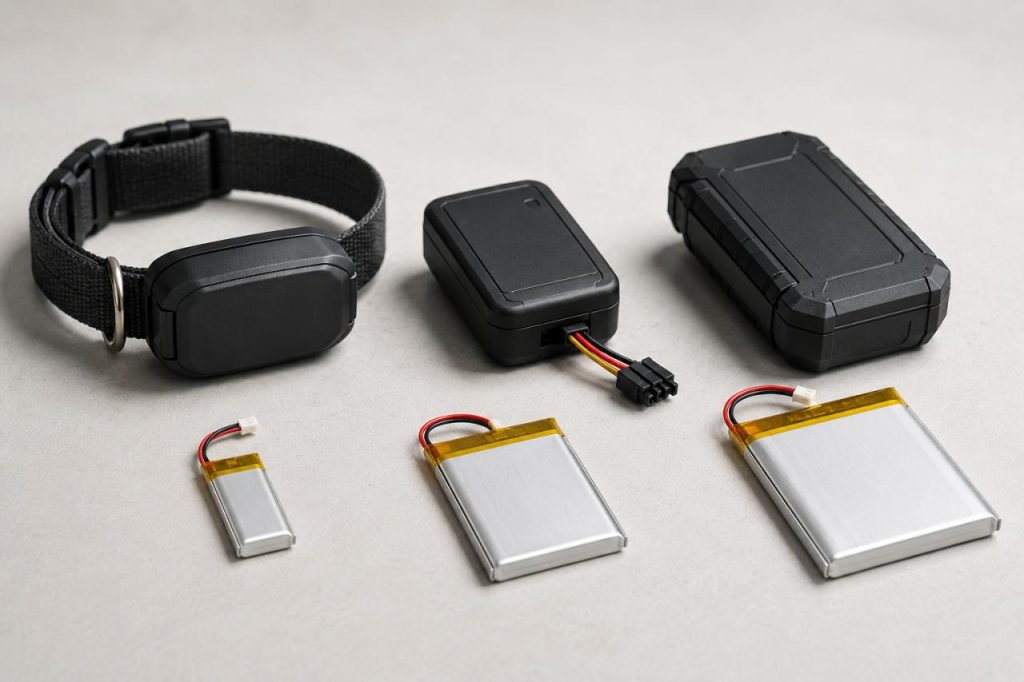
Capacity should match the tracker’s actual working time target. A small pet tracker used for short daily location checks does not need the same battery as a vehicle tracker or asset tracker designed for long standby. For short-use GPS devices, a smaller polymer battery can reduce product weight. For daily tracking, a medium-capacity rechargeable polymer battery may offer a better balance between size and runtime. Choose a higher-capacity cell for longer standby time, but make sure the tracker housing has enough space for the larger battery. Do not choose capacity in isolation. A bigger mAh number looks comforting, because apparently numbers enjoy pretending to solve everything, but it can also increase thickness, weight, and charging time.
Match the Polymer Battery for the GPS Tracker to the Tracking Frequency
Tracking frequency changes battery demand. A GPS tracker that uploads location every few minutes will use more power than a device that only reports location a few times per day. Real-time tracking, mobile network transmission, Bluetooth connection, and frequent data upload all increase power consumption. If the tracker supports real-time positioning, choose a battery with enough capacity margin. If the tracker is mainly used for standby monitoring, focus on stable output, low power consumption, and long storage performance.
Real-Time Tracking Needs More Capacity Margin
Do not calculate the runtime only from the standby mode. Before confirming a battery specification, estimate power consumption based on the actual upload interval, communication module, operating mode, and target runtime. This makes sample testing more useful and reduces the chance of changing the battery later.
Select the Right Voltage and Connector for GPS Tracker Batteries
Battery selection is not only about cell size and capacity. The voltage, connector, wire length, and protection board layout also need to match the tracker’s internal design. Before ordering samples, prepare these details:
- Battery size range
- Rated voltage
- Target capacity
- Connector model
- Wire length
- Wire direction
- Protection board requirement
- Charging method
- Application type
This step prevents a common problem: the cell capacity looks correct, but the connector does not match the PCB, the wire is too short, or the protection board sits in the wrong position. Naturally, that is when everyone discovers “almost right” is just “wrong” wearing nicer shoes. A custom polymer battery option is useful when standard cells do not match the tracker’s connector, wiring, or internal layout.
Choose Safer Polymer Battery Protection for GPS Tracker Use
GPS trackers often work for long hours and may be charged repeatedly. The battery should include the right protection design for daily use, especially for pet trackers, wearable trackers, vehicle trackers, and portable asset devices. Buyers should confirm protection against overcharging, over-discharging, short-circuiting, and excessive current. For devices used close to people or animals, safety should not be treated as an optional detail. It affects product reliability, user trust, and long-term performance.
Outdoor Trackers Need Better Temperature Tolerance
Some GPS trackers work in harsher environments, such as parked vehicles, warehouses, delivery boxes, outdoor equipment, or cargo containers. These applications may face heat, cold, vibration, and long standby periods. For those projects, ask the supplier about the temperature range, stability, and whether the battery is intended for outdoor or mobile electronics use. Room-temperature data alone does not tell the full story.
Use a Custom Polymer Battery for GPS Tracker Projects
Standard batteries may work during early testing, but GPS tracker products often need tighter matching before mass production. If the housing is fixed, the PCB position cannot change, or the connector layout is specific, a custom battery is usually the cleaner choice. Customization can cover cell size, capacity, connector, wire length, wire direction, label, and protection board layout. This is especially useful for slim GPS trackers, pet trackers, asset tags, and compact IoT devices where every millimeter matters.
Send the Full Battery Request Before Sampling
Before sampling, send the full request to the battery manufacturer. Include the tracker type, internal battery capacity, required operating time, tracking frequency, voltage, connector, wire length, protection requirements, and use environment. For projects that require thin, lightweight, high-capacity, or custom-shaped battery solutions, working with a supplier that supports OEM and ODM customization can reduce trial and error during development. The right battery should fit the tracker first, then meet the required runtime and daily-use conditions. When size, capacity, connector, protection, and application needs are confirmed early, the GPS tracker project has a much better chance of moving from sample testing to production without avoidable battery changes.