
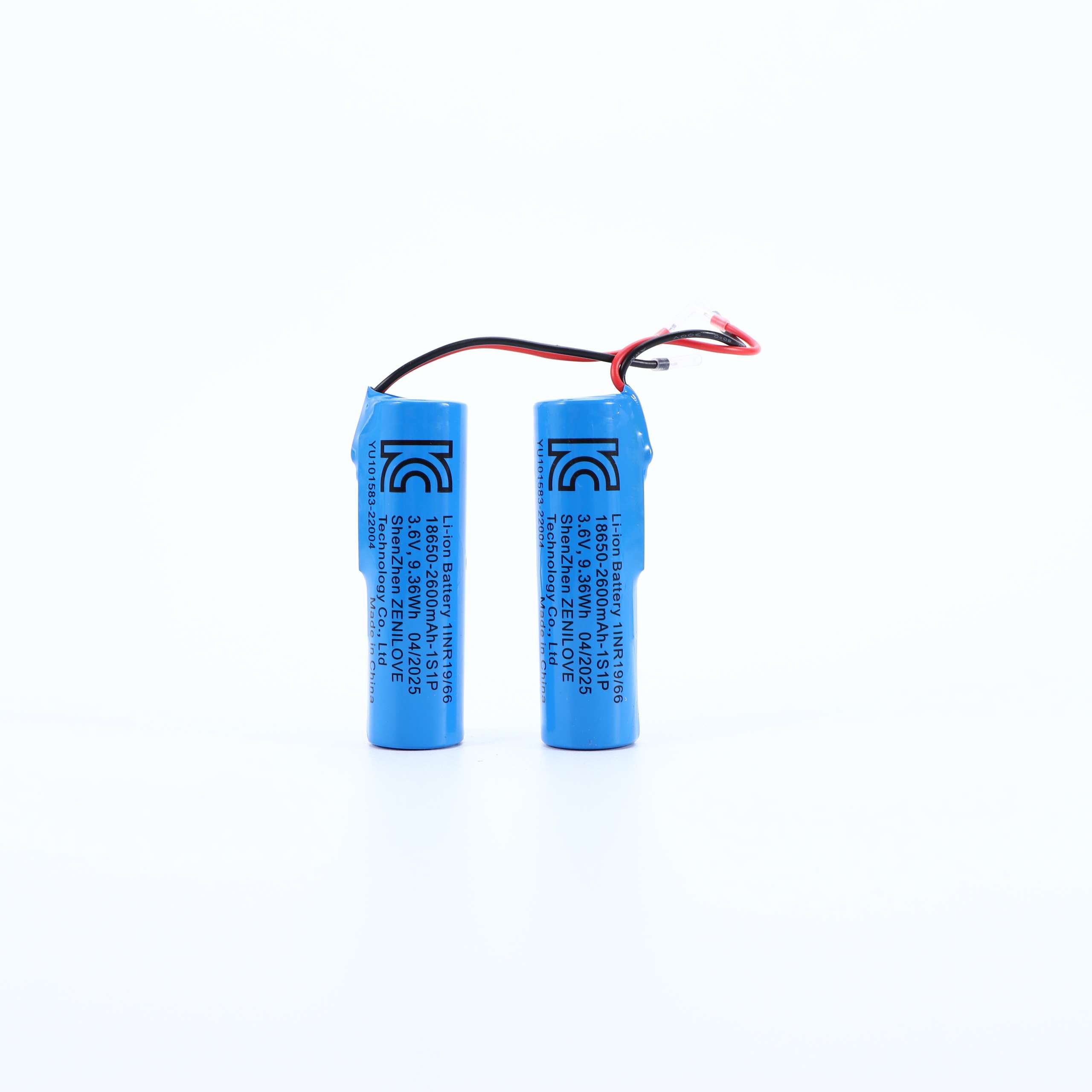
Selecting the right battery for an OEM device requires more than checking voltage and capacity. Buyers need to evaluate battery structure, energy requirements, protection features, dimensions, connection methods, and production needs before choosing a suitable power solution. An 18650 Cylindrical Lithium Battery is widely used in portable electronic equipment for its standardized cylindrical form factor, compact size, and flexible integration options.
For OEM projects, a protected battery assembly can combine an 18650 lithium-ion cell, protection board, wiring, and connector to match specific device requirements. This article explains the main factors buyers should review when selecting 18650 batteries for electronic products, prototypes, and custom equipment.
What Is an 18650 Cylindrical Lithium Battery?
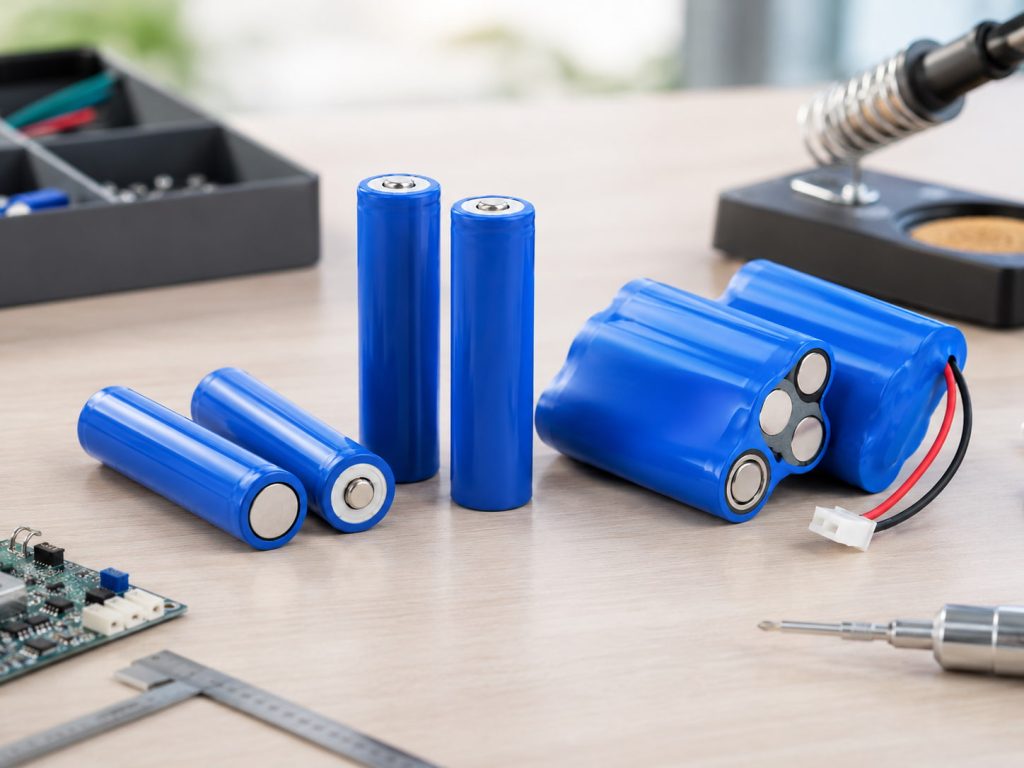
An 18650 Cylindrical Lithium Battery uses an 18mm diameter and 65mm length cylindrical lithium-ion cell format. This standardized size allows manufacturers to integrate batteries into various compact electronic devices.
Compared with bare cells, protected 18650 battery assemblies include additional components such as protection circuits, insulation materials, wires, and connectors. These components help manufacturers simplify battery integration during product development.
A typical protected 18650 battery solution should match the device’s:
- Voltage requirement
- Operating current
- Charging method
- Installation space
- Connector design
- Expected runtime
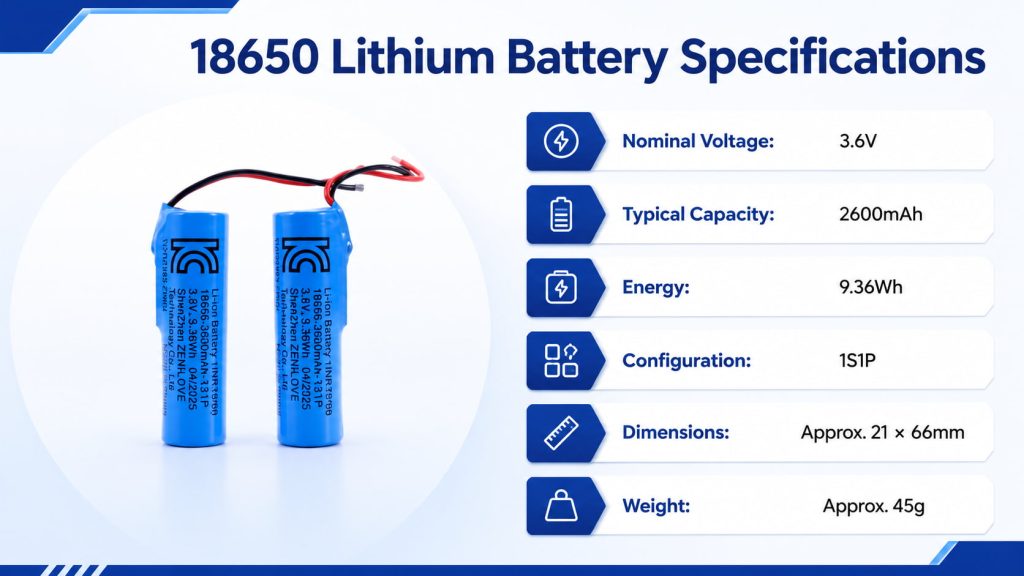
For example, the 18650 battery assembly used in this product employs a 1S1P configuration with a single 2600mAh cylindrical lithium-ion cell. It provides a nominal voltage of 3.6V and a rated energy of 9.36Wh.
How Does a 3.6 Volt Lithium Battery Fit OEM Applications?
A 3.6 volt lithium battery is commonly selected for compact electronic devices that require a rechargeable lithium-ion power source.
The nominal voltage indicates the battery’s typical operating voltage. However, OEM buyers should also check the device charging circuit and operating conditions before selecting a battery.
This 18650 battery assembly provides:
- Nominal voltage: 3.6V
- Charge voltage: 4.2V
- Typical capacity: 2600mAh
- Minimum capacity: 2500mAh
- Rated energy: 9.36Wh
The actual runtime depends on the device’s power consumption. A higher-capacity battery does not always deliver better performance if its physical size, charging system, or current requirements do not match the application.
What Specifications Should Buyers Check for 18650 Batteries?
Choosing suitable 18650 batteries requires reviewing several technical specifications rather than focusing on a single parameter.
Capacity and Energy
Battery capacity affects how long a device can operate before recharging. A 2600 mAh 18650 lithium battery strikes a balance between compact size and available energy. The rated energy of this battery is calculated as: 3.6V × 2.6Ah = 9.36Wh
OEM buyers should compare battery energy with the device’s actual consumption to estimate the expected runtime.
Battery Size and Weight
Space limitations are common in portable electronic products. The finished battery assembly measures approximately:
- Dimension: 21 × 66mm
- Weight: Approximately 45g
These measurements include the battery cell, protection board, insulation materials, and external assembly structure.
Charging Requirements
A compatible charging system is required for safe battery operation.
The battery specification includes:
- Charge voltage: 4.2V
- Charging method: CC/CV
- Standard charge current: 520mA (0.2C)
- Maximum listed charge current: 2.6A (1C)
The final charging current should be confirmed in accordance with the approved battery specification and the device’s charging circuit.
Protection Parameters
Protection functions are important when integrating lithium batteries into electronic products.
A protected 18650 lithium battery assembly can include:
- Overcharge protection
- Over-discharge protection
- Overcurrent protection
- Short-circuit protection
The protection board used in this battery assembly is YH-TKSN-6226.
The listed protection parameters include:
- Overcharge protection voltage: 4.28 ± 0.05V
- Over-discharge protection voltage: 2.40 ± 0.1V
- Overcurrent protection range: 5–9A
The 5–9A value refers to the protection board’s overcurrent protection range and should not be taken as the battery’s continuous discharge current.
Why Choose a Protected 18650 Lithium Battery Assembly?
A protected 18650 lithium battery assembly can reduce the need for additional battery integration work during OEM development.
Compared with purchasing separate battery cells and assembling protection components independently, a finished assembly can provide:
Integrated Protection Components
The protection board, insulation materials, and battery structure are already combined into one assembly.
This helps simplify evaluation during prototype development and product testing.
Ready-to-Connect Wiring
The standard configuration includes:
- 1571-26 wire
- 60mm wire length
- ZH1.5-2P connector
If the connector type, wire length, and polarity match the device design, manufacturers can reduce the need for additional wiring processes.
Compact Integration
The cylindrical structure allows manufacturers to evaluate the battery in products with limited installation space.
The 1S1P configuration offers a simple battery architecture for devices that require a single-cell lithium-ion solution.
Which Applications Use 18650 Cylindrical Lithium Batteries?
18650 batteries are commonly evaluated for portable and compact electronic applications, including:
- Portable electronic devices
- IoT terminals and sensors
- Handheld monitoring equipment
- Security and tracking devices
- Portable communication equipment
- Custom OEM electronic products
- Prototype development projects
Before selecting an 18650 battery solution, manufacturers should confirm:
- Continuous operating current
- Peak current requirement
- Required runtime
- Charging method
- Working temperature
- Battery installation space
Applications with high current requirements should be evaluated separately based on actual electrical requirements.
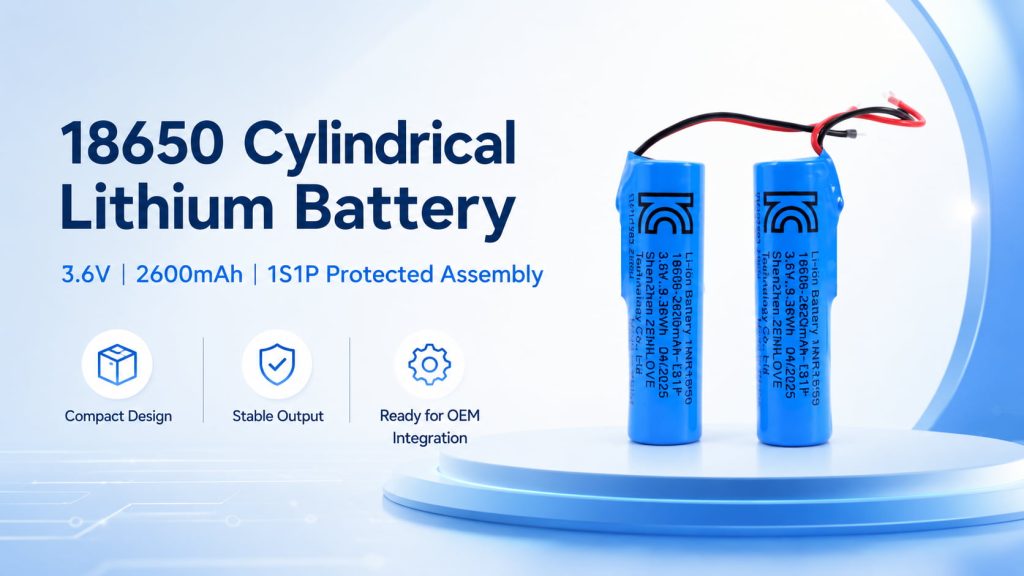
How Can OEM Buyers Customize an 18650 Battery Solution?
OEM projects often require battery adjustments to fit different device structures.
Customization options may include:
- Connector type
- Wire length
- Connector polarity
- Protection board configuration
- Battery label
- PVC wrapping
- Packaging method
- Battery dimensions
A suitable customization process usually starts with reviewing the device requirements, confirming battery specifications, testing samples, and approving the final production configuration.
What Information Should Buyers Prepare Before Selecting an 18650 Battery?
Before ordering an 18650 lithium battery solution, OEM buyers should prepare the following information:
- Device application
- Required voltage
- Continuous operating current
- Peak operating current
- Expected runtime
- Available battery dimensions
- Charging method
- Connector model
- Connector polarity
- Wire length requirement
- Operating temperature
- Expected order quantity
Providing these details helps battery manufacturers evaluate whether the battery structure, protection settings, and connection method match the device requirements.
Selecting the Right 18650 Cylindrical Lithium Battery for OEM Devices
Selecting the right 18650 Cylindrical Lithium Battery requires evaluating the entire battery system rather than focusing solely on capacity. OEM buyers should review the battery voltage, capacity, energy requirements, protection features, charging method, physical dimensions, connector design, and operating environment before making a decision.
A protected 18650 lithium battery assembly with a 3.6V nominal voltage and 2600mAh capacity can support compatible portable electronic devices, IoT equipment, monitoring products, and custom OEM projects when the battery specifications match the application requirements. A detailed review of electrical requirements and mechanical limitations before sampling helps manufacturers reduce compatibility risks and develop a more suitable battery solution.