
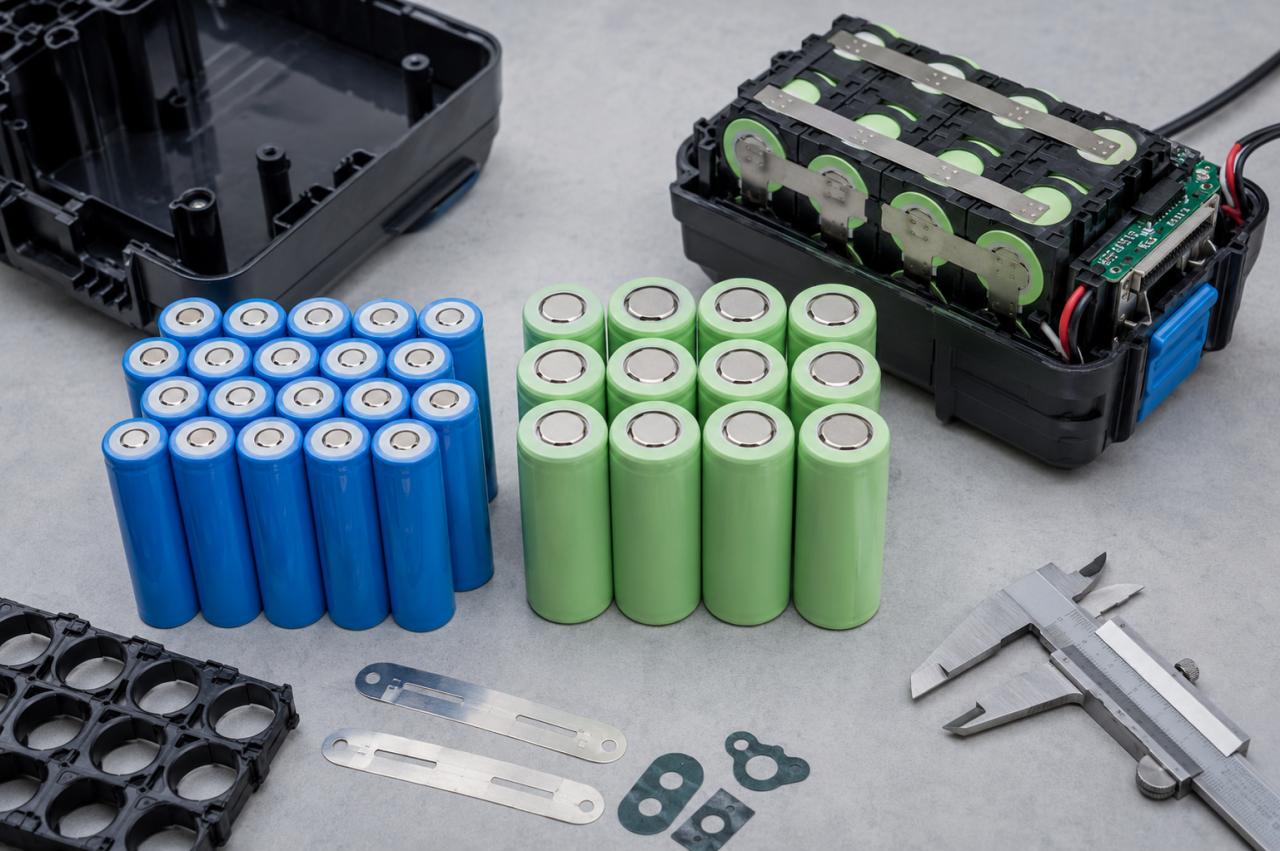
A custom power tool battery must match the motor, controller, working load, enclosure, charger, and expected operating time. Selecting a Cylindrical battery by capacity alone can lead to weak startup performance, excessive voltage drop, rising pack temperature, or repeated BMS shutdown.
The first step is to define the tool’s actual electrical and structural requirements. These requirements determine whether the project needs 18650 or 21700 cells, how many cells should be connected in series and parallel, and what protection settings the completed pack requires.
What Does a Cylindrical Battery for Power Tools Need to Deliver?
Different power tools create different battery loads. A compact screwdriver may operate with moderate current, while a drill, grinder, electric saw, or impact wrench can produce higher startup and working-current demands.
Before requesting a battery sample, the project requirements should specify:
- Tool operating voltage
- Maximum charging voltage
- Normal working current
- Startup and peak current
- Required operating time
- Available installation space
- Maximum battery weight
- Charging method
- Connector type
- Operating temperature
- Expected charging cycles
A high-capacity lithium ion battery will not automatically provide suitable power output. Capacity affects potential runtime, while discharge capability determines whether the cells can support the motor load without unacceptable voltage drop or heat.
The battery specification should therefore start with the tool load rather than an existing cell model. More detailed power tool battery specifications that matter can be reviewed before confirming the electrical requirements.
Which Cylindrical Battery Size Works for Power Tools?
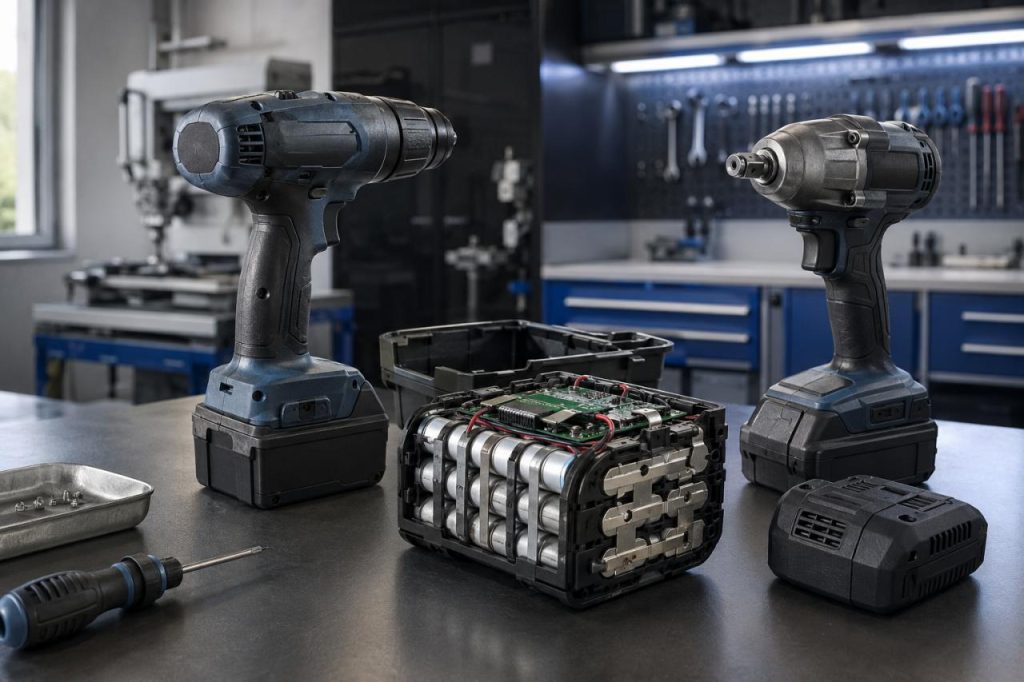
The 18650 and 21700 are two common cylindrical cell formats for custom power tool batteries. Cell size affects the internal pack arrangement, available capacity, current output, thermal behavior, enclosure dimensions, and total weight.
The correct format depends on the project rather than a general preference. A compact enclosure may favor smaller cells, while a tool with a higher current or runtime target may require a different cell model or pack arrangement.
18650 Cylindrical Batteries for Compact Power Tools
An 18650 cylindrical li ion battery can support compact battery designs where enclosure size and weight are tightly controlled. Its smaller dimensions allow several series and parallel configurations within narrow or irregular battery compartments.
The cell model must still meet the required discharge conditions. An 18650 cell designed for low-current portable electronics may have sufficient capacity but unsuitable current performance for a power tool motor.
The selected cells should have consistent capacity, voltage, and internal resistance. Large differences between cells can cause uneven discharge, temperature variation, and earlier BMS cutoff within the completed pack.
An 18650 configuration can be considered when:
- The battery compartment has limited space
- Lower pack weight is required
- The tool has a moderate current demand
- The internal layout needs more arrangement flexibility
- The required voltage needs multiple cells in series
The number of cells should be calculated from the required voltage, capacity, current, and installation space rather than copied from another power tool battery.
21700 Cylindrical Batteries for Higher-Power Tools
A 21700 cylindrical lithium battery has a larger diameter and length than an 18650 cell. Depending on the selected model, it can provide a different balance between capacity, current capability, cell quantity, and heat generation.
A 21700 configuration may suit projects with higher power or longer runtime requirements. In some pack designs, fewer parallel cells may be needed to reach the target capacity or current. However, this depends on the verified characteristics of the selected cell.
Before choosing a 21700 design, the project should confirm:
- Available battery compartment dimensions
- Required series and parallel structure
- Cell spacing and insulation
- Pack weight distribution
- Heat-transfer path
- Welding and connection structure
- Enclosure strength
A larger cell does not automatically create a better power tool battery. The complete pack must still fit the tool, maintain stable output, and remain within the permitted temperature range.
How Do Voltage and Capacity Affect a Cylindrical Battery for Power Tools?
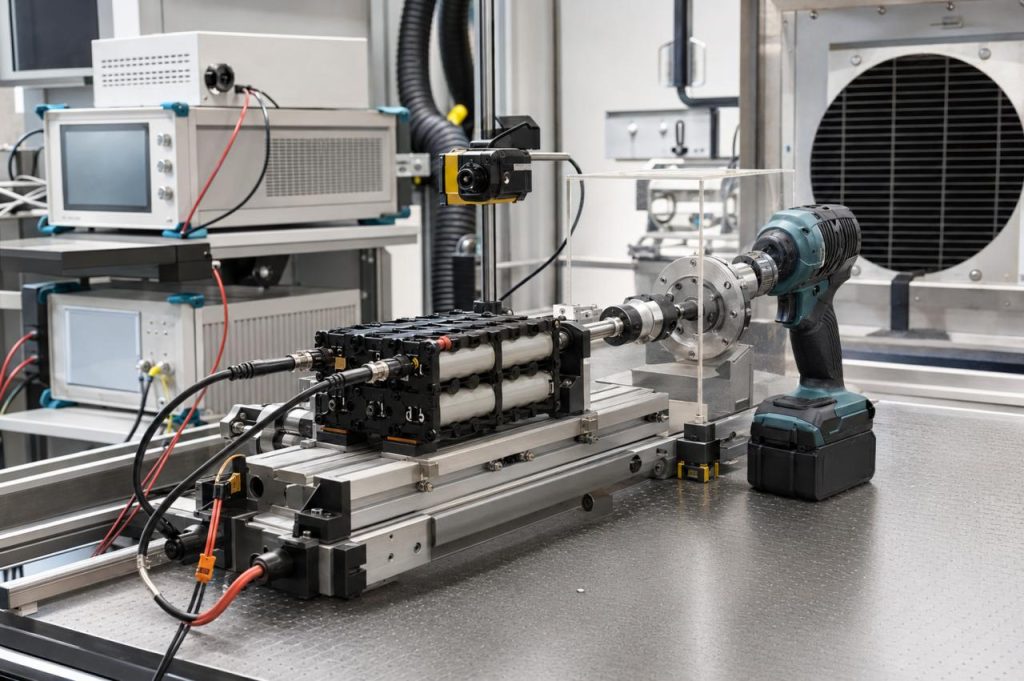
The series and parallel arrangement determines the operating characteristics of a Battery Pack. Cells connected in series increase the pack voltage. Cells connected in parallel increase capacity and share the current load.
The series count must match the motor, controller, charger, and BMS. A voltage mismatch can reduce tool performance or create compatibility problems with the charging system.
The parallel count depends on the required capacity and discharge current. Adding parallel cells can increase runtime and current-sharing capability, but it also increases pack dimensions, weight, material usage, and connection complexity.
A Custom Battery Pack specification should clearly define:
- Cell model and chemistry
- Series and parallel configuration
- Nominal and maximum voltage
- Rated capacity and energy
- Continuous discharge current
- Peak current and permitted duration
- Charging current
- Discharge cutoff
- Pack dimensions and weight
- Wire and connector requirements
Runtime should be verified with the actual tool. The same battery may operate for different periods depending on motor efficiency, working resistance, duty cycle, temperature, and controller settings.
Why Does Discharge Rate Matter for a Cylindrical Battery for Power Tools?
Power tool motors can create a sharp current increase during startup or when the tool meets resistance. The battery must supply this current without excessive voltage drop, heat, or protection interruption.
The rated cell current should not be treated as the only pack-level limit. The nickel strips, busbars, wires, connectors, BMS, switches, and welding points must also carry the required current.
Continuous Current and Peak Current
Continuous current represents the sustained current required during normal tool operation. Peak current represents a higher short-duration demand during startup, impact, cutting resistance, or temporary overload.
A battery specification should state both values separately. It should also define how long the peak current lasts and how frequently it may occur.
If the BMS overcurrent threshold is below the normal startup demand, the pack may shut down when the tool starts. If the threshold is set too high, the protection system may not respond correctly to an abnormal load.
The BMS settings must therefore be coordinated with:
- Cell discharge capability
- Normal tool current
- Motor startup current
- Peak-current duration
- Wire and connector limits
- Pack temperature
- Short-circuit protection requirements
Voltage Drop and Heat Generation
Voltage drop increases when the cells or electrical connections cannot efficiently support the required current. This may reduce motor torque, shorten usable runtime, or trigger an early low-voltage cutoff.
Heat can develop at the cells, welding points, nickel connections, wires, connectors, or protection board. Testing should identify where the temperature rises rather than recording only the outer enclosure temperature.
A prototype test should record:
- Pack voltage before and during operation
- Cell-group voltage differences
- Startup-current behavior
- Continuous operating current
- Peak-current duration
- Cell and connection temperatures
- BMS shutdown events
- Runtime under the intended workload
These results provide the information needed to adjust the cell model, connection structure, BMS settings, or pack layout before production.
What Protection Does a Cylindrical Battery for Power Tools Require?
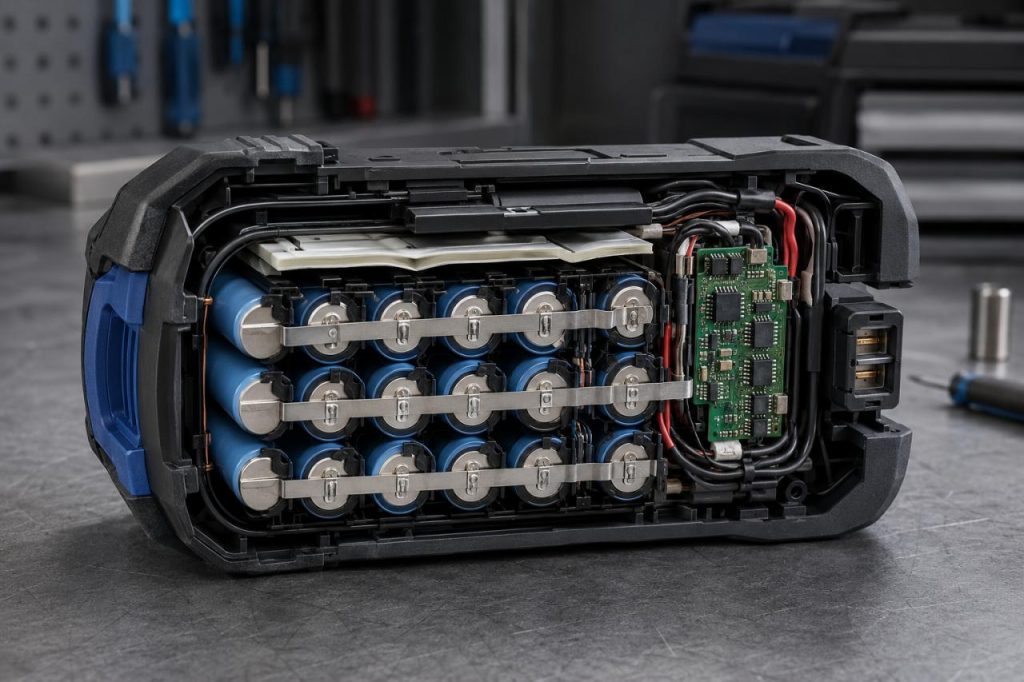
A custom cylindrical battery requires electrical, thermal, and mechanical protection. The protection design must match the selected cells and the tool’s real operating conditions.
Common electrical protection functions include:
- Overcharge protection
- Over-discharge protection
- Overcurrent protection
- Short-circuit protection
- Temperature monitoring
- Cell balancing for multi-series packs
Mechanical protection should address vibration, impact, cell movement, insulation damage, and connection failure. Cell holders, insulation rings, separators, sleeves, flame-resistant materials, and a secure enclosure can support the internal pack structure.
The charger must match the cell chemistry, series configuration, charging voltage, charging current, and BMS design. The battery, charger, motor, and controller should be tested together before the pack configuration is approved.
Consistent quality control during lithium ion battery production should cover cell matching, welding quality, insulation, protection functions, pack voltage, internal resistance, charging, discharging, and operation under load.
A Cylindrical Battery for Power Tools Must Match the Complete Project
A custom power tool battery should be defined backward from the tool requirements. Voltage determines the series structure, while current and runtime affect the cell model and parallel configuration. The available space then limits the cell format, pack arrangement, protection board, connector position, and enclosure design.
The final cylindrical lithium battery pack should be evaluated through prototype testing under representative drilling, fastening, cutting, grinding, or impact conditions. Testing can reveal voltage drop, temperature concentration, connection resistance, protection interruptions, and structural problems before production begins.
The completed specification should confirm the cell model, series-parallel configuration, voltage, capacity, current limits, BMS settings, dimensions, connector, charger, test conditions, and acceptance requirements. This creates a battery solution built around the actual power tool rather than a generic pack selected from capacity alone.