

A translation device that works through the morning but shuts down during an afternoon conversation cannot meet an all-day requirement. A polymer battery can support a full conference schedule when its capacity, electrical performance, and charging arrangement match the finished device. The starting point is a defined working day, followed by testing under representative conditions.
With APEC 2026 bringing international meetings into focus, device manufacturers have a useful reason to revisit portable translation equipment. The APEC Economic Leaders’ Week in Shenzhen provides the immediate context. The same battery questions remain relevant to international exhibitions, business forums, guided visits, and multilingual customer service.
Define What the Translation Device Actually Does
A handheld speech translator and a conference interpretation receiver perform different jobs. One may record speech, process or transmit it, display translated text, and play audio. Another may receive an interpretation channel and deliver it through headphones.
Identify the product before discussing battery capacity. List its active functions, connection method, display behavior, and expected audio use. Include optional features only when they belong to the actual device.
Avoid treating every translation product as continuously active equipment. A reception device might handle short conversations separated by long waiting periods. A receiver used during a presentation may remain active throughout a session, with fewer opportunities to sleep.
These differences should appear in the battery inquiry. A supplier can assess a recorded operating pattern more usefully than a request for a battery that lasts all day.
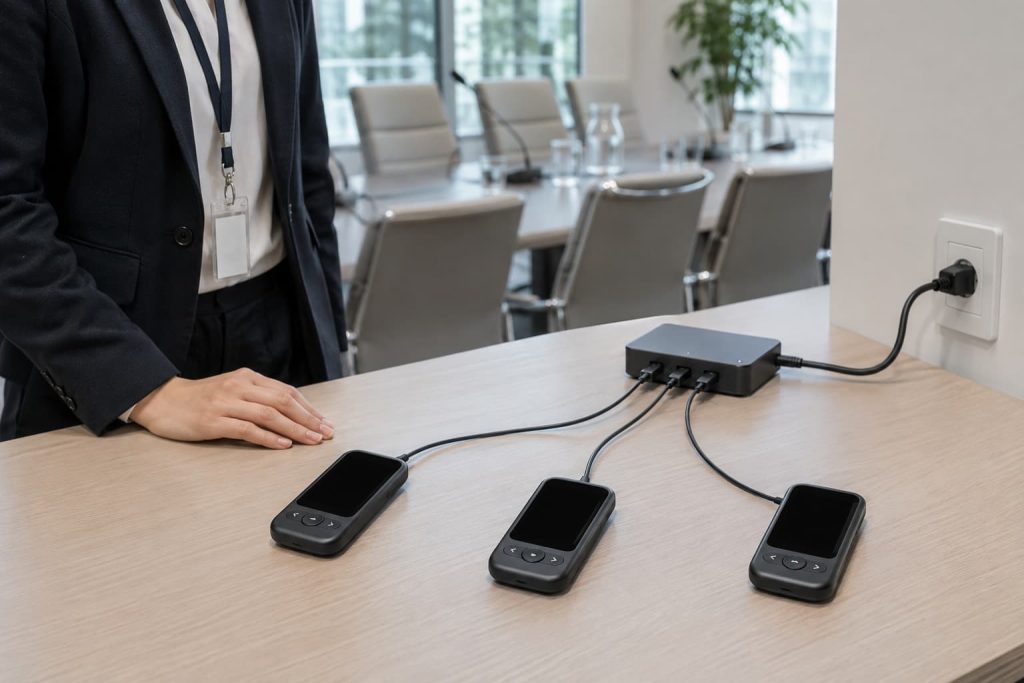
Turn the Conference Schedule Into a Usage Profile
All-day operation needs a start time, an end time, and a description of the work between them. Equipment may leave its charging location before guests arrive and remain in service after the formal program ends. Preparation, registration, transfers, and evening conversations can extend the required availability.
Build the usage profile around the operator’s routine. Record how long the device spends translating, receiving audio, displaying information, waiting, and sleeping. Note whether users switch it off during breaks or leave it ready for the next interaction.
The following table provides a planning structure. It describes possible tasks to investigate, rather than measured behavior of any particular product.
| Conference activity | Device behavior to define | Battery planning question |
|---|---|---|
| Guest reception | Repeated short conversations and screen use | How frequent are active sessions? |
| Presentation sessions | Continuous reception or another supported mode | Which functions remain active throughout? |
| Movement between rooms | Standby, reconnection, or continued operation | Does the device enter a lower-power state? |
| Lunch break | Idle operation or an approved charging session | Is the equipment available for charging? |
| Afternoon meetings | Repeated use after several hours of operation | Can the device complete the remaining tasks? |
| Evening networking | Intermittent use beyond the formal agenda | What reserve must remain? |
Ask the event operator to review this profile. A laboratory team may assume that equipment sleeps during every break, while staff leaves it connected and ready. Resolving that difference before sampling can prevent a misleading runtime target.
Select a Polymer Battery Around the Complete Device
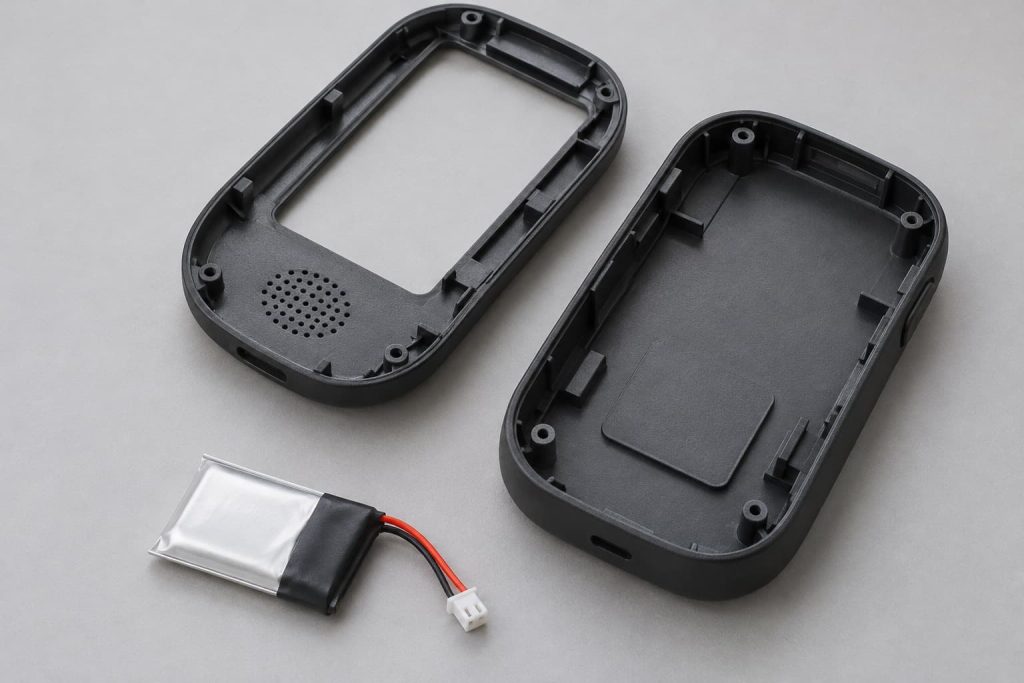
Pouch-cell formats give manufacturers options when battery thickness, weight, and available enclosure space matter. The useful question is how a candidate pack fits the complete product. Include the protection electronics, insulation, wires, connector, and installation arrangement in that review.
Compare polymer batteries against both the operating profile and the mechanical drawing. A pack that meets an early capacity target may still conflict with the speaker, antenna, mounting features, or required assembly space. Keep these constraints visible while comparing candidates.
A larger catalog capacity is not automatically the right direction for a handheld translator. For example, a 16000mAh 3.7V pack represents one capacity and voltage platform, rather than a default recommendation for compact translation equipment. Its suitability would depend on the device’s actual dimensions, load, weight target, and charging requirements.
Confirm the full operating voltage requirements with the device team. Nominal voltage and capacity provide a starting point, but they do not confirm compatibility across every operating state. The selected pack must support the device within its approved electrical limits.
Measure Active Use and Standby Separately
Battery planning becomes more useful when the team measures the device’s different modes separately. Record startup, active translation or reception, playback, display use, standby, and sleep where those modes exist. Include peak demand as well as sustained operation.
A single average taken during a quiet demonstration may not represent a busy reception period. Repeated conversations, frequent screen activation, and supported wireless functions can create a different operating pattern. Use the agreed schedule to decide which measurements belong in the runtime assessment.
For connected products, document the network conditions used during testing. If the device supports both online and offline translation, treat them as distinct test configurations until measurements establish their behavior. Do not assume that an advertised runtime applies equally to every mode.
Standby deserves its own check. Equipment can remain unused by a person while its electronics continue operating. Confirm whether the product reaches the intended low-power state and how quickly it returns to service.
Make Charging Breaks Part of the Requirement
A lunch break does not automatically provide a charging opportunity. The device may stay with a participant, remain at a reception desk, or move between rooms. Ask who collects it, where charging occurs, and when the next user needs it.
Distinguish a full-day requirement without charging from a schedule that includes an approved top-up. Both can be useful product targets, but they describe different experiences. Record the permitted charging window rather than allowing an undocumented break to make the runtime result appear better.
Charging plans also need the correct equipment and instructions. Confirm the approved adapter, cable, dock if applicable, and the product’s permitted operating conditions. A short available break does not justify selecting a higher charging current without a design review.
For shared equipment, establish how staff identify a device that is ready to return to service. A charging light may describe a charging state without proving that the next session’s runtime requirement has been met. Include the handover routine in the operational trial.
Validate the Working Day in the Finished Product
A capacity check on a battery sample cannot establish the complete translation device’s runtime. Test the intended pack inside representative equipment with the agreed hardware, software, accessories, and operating settings. Include the enclosure and device behavior in the evaluation.
Repeat the planned sequence from the defined starting condition to the agreed endpoint. Include startup, active periods, standby, room transfers, and any approved charging break. Record interruptions and unexpected behavior rather than restarting the test without explanation.
Define what successful operation means before testing begins. The endpoint might concern completion of the final task, loss of a required function, or the device’s normal low-battery shutdown. Use the same endpoint when comparing candidate packs.
Teams reviewing battery pack design should also agree on the margin needed beyond the normal schedule. A typical day and a longer-than-planned day answer different purchasing questions. Ask the engineering team how the approved test scope addresses the intended product life and operating conditions.
Give the Supplier a Measurable Development Brief
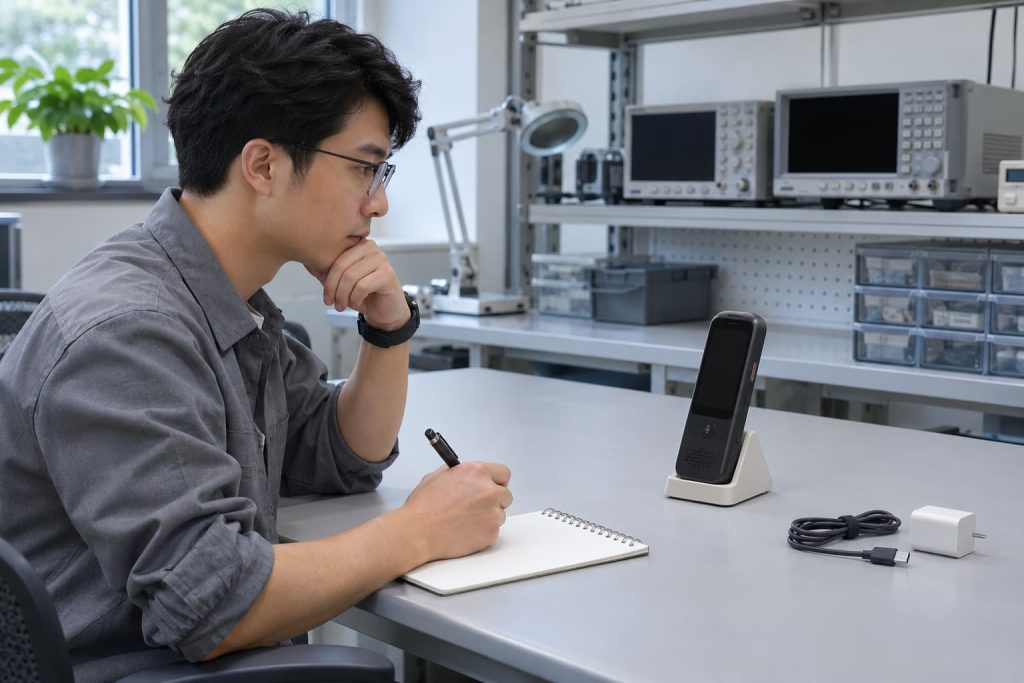
A useful inquiry combines the user’s working day with the device’s measured requirements. Provide the available battery space, voltage range, current profile, connector details, charging method, weight target, and expected production quantity. Identify the information that remains provisional.
For an ODM battery development project, agree on who develops the pack specification and who validates the finished device. Assign responsibility for firmware settings, charging behavior, and the runtime claim. This prevents different teams from approving different assumptions.
Keep sample records tied to the tested configuration. Record the battery revision, device revision, software version, accessories, and test conditions. Review changes that could affect the agreed operating behavior before carrying an earlier result into a new production version.
Before requesting samples, discuss your device requirements using the completed usage profile and available measurements. That gives the supplier a practical basis for proposing candidates and a validation plan. It also makes competing proposals easier to compare.
All-Day Operation Depends on a Tested Conference Workload
A polymer battery can power a translation device through a full working day when the complete system meets a defined and tested requirement. The decision depends on the actual device functions, active and standby periods, installation constraints, charging opportunities, and expected reserve.
Start with the tasks users need to finish, then select and evaluate the battery around those tasks. Describe any permitted charging breaks alongside the runtime result. An all-day claim becomes useful when customers can recognize the tested conditions and follow the corresponding operating routine.