
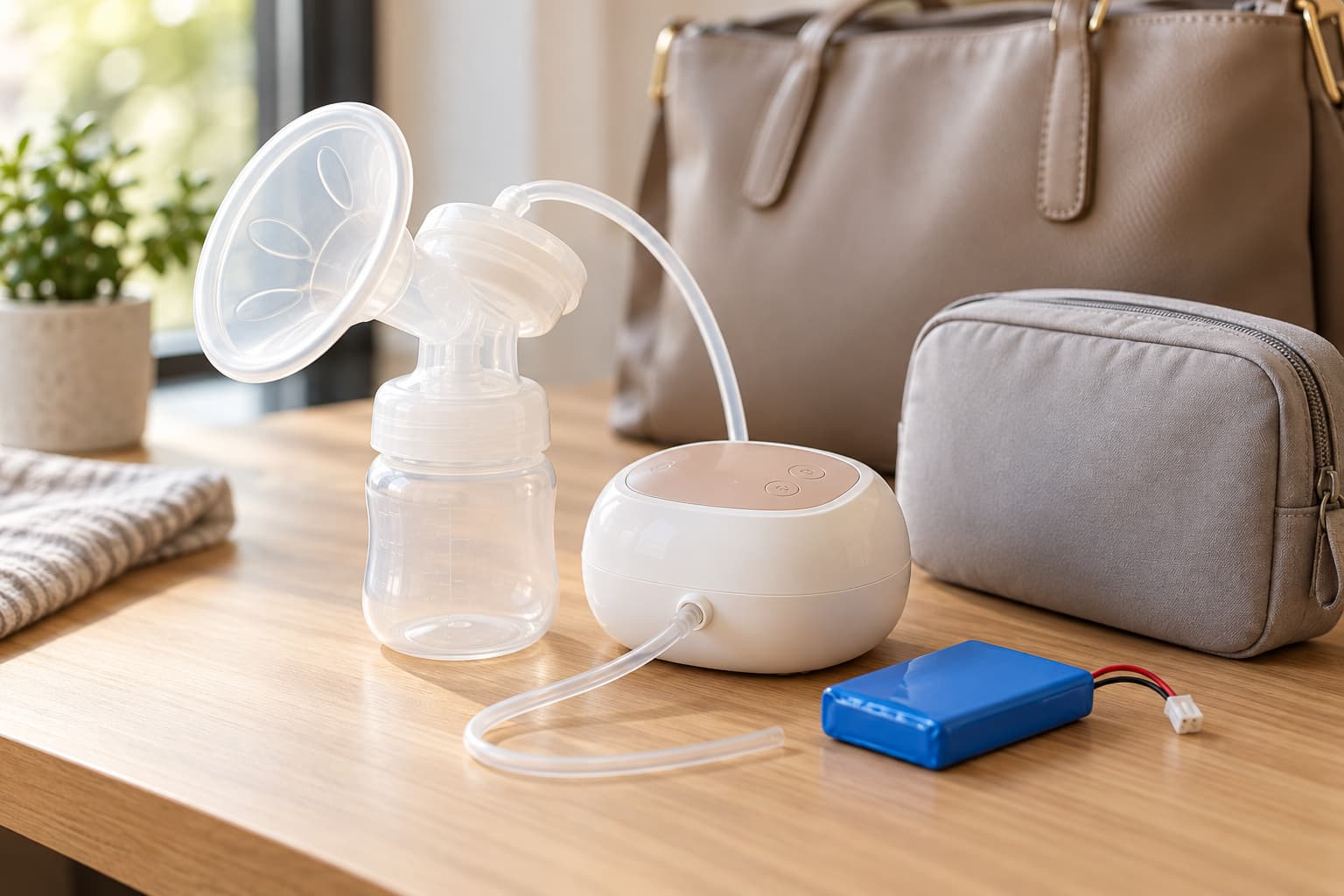
A breast pump battery supports a measurable number of sessions only when you clearly define a session. Duration, operating modes, settings and the time between uses all affect the result. A capacity label alone can’t tell you how many complete sessions a finished pump will deliver. For an OEM buyer, the starting point is the intended product experience. Does the customer need several uses away from a charging point? Will the battery sit inside a wearable unit or a separate motor housing? Those decisions shape both the battery proposal and the evidence needed to approve it.
Define one session before comparing breast pump battery life
A statement such as “several sessions per charge” leaves important conditions unanswered. Two tests can produce different session counts simply because one uses shorter sessions. Record the duration and sequence used for the claim. Include the operating modes, selected settings and any pauses. For a product with two independently powered wearable units, clarify if the result describes each unit or the complete pair.
When discussing custom battery solutions, give the supplier that operating description alongside measurements from the device team. The supplier needs the actual electrical demand to assess a candidate battery. Keep the routine used for engineering validation identifiable. It defines the test and does not prescribe how an individual should use the pump.
Test rechargeable breast pump batteries across relevant settings
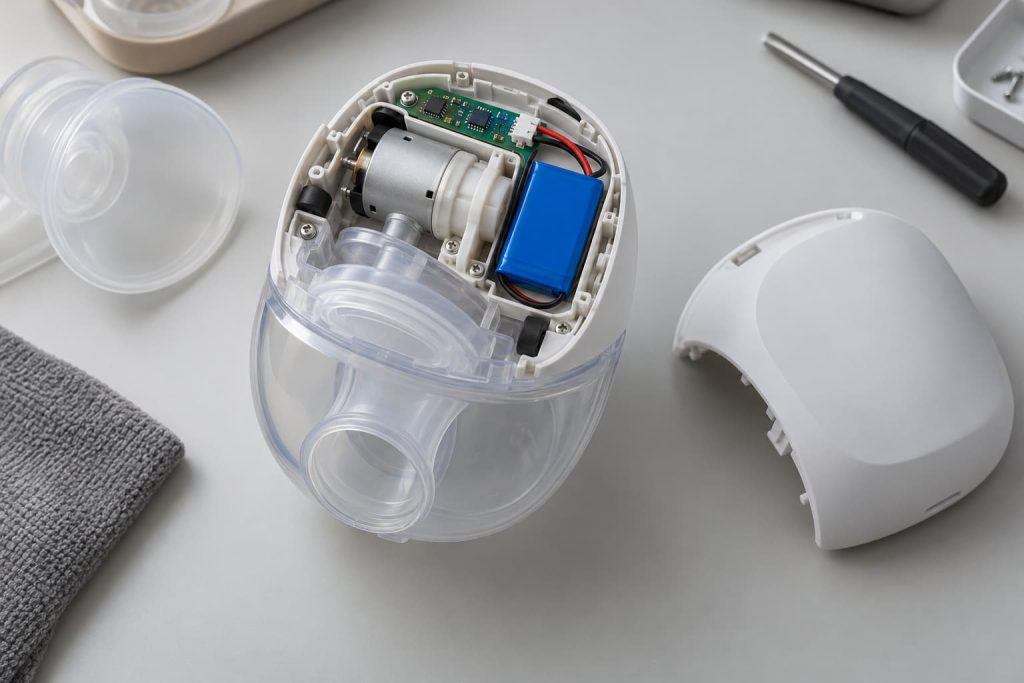
A pump may offer several modes and intensity settings. The equipment team should measure how those settings affect consumption rather than assume one setting represents every use. Include the intended motor operation, display, indicators and wireless functions where fitted. Record which functions remain active between sessions. Also define the pumping conditions used on the test fixture. A motor running without a representative pumping load may produce different results than the assembled product under the device team’s specified conditions.
Prepare a normal-use test and any demanding-use test the product requires. Keep their results separate. If the intended claim applies only to a particular sequence of modes, that sequence belongs with the claim.
Wearable and separate-motor pumps create different battery constraints
A wearable design places battery weight and volume inside a unit carried on the body. A separate-motor design places those components elsewhere, creating different portability requirements. For a wearable pump, review the complete unit’s weight and balance. The battery competes for internal space with the motor, electronics, collection components and structural features.
A separate motor housing may provide a different installation envelope, but its battery still needs assessment against the equipment’s size, carrying method and electrical requirements. A Polymer Battery can be an option to evaluate for a defined layout. Its suitability depends on the selected assembly and device requirements. Don’t recommend a large-capacity catalog pack for a wearable pump just because it stores more energy.
More sessions per charge involve size and charging tradeoffs
If a candidate battery misses the session target, ask what limits the result before requesting a larger pack. The device might consume more power than expected, remain active between uses or reach its shutdown condition before completing the planned routine. Each finding points to a different review.
Where more stored energy is appropriate, compare the proposed assembly’s dimensions and weight with the available space. Review the charging arrangement at the same time. Increasing capacity can affect the time needed to restore charge unless the charging design changes appropriately. Purchasing should receive the tradeoff clearly: what improvement is proposed, what changes it requires and which requirements remain fixed. This gives the product team a basis for choosing between battery and equipment changes.
Separate battery temperature from the pump’s surface temperature
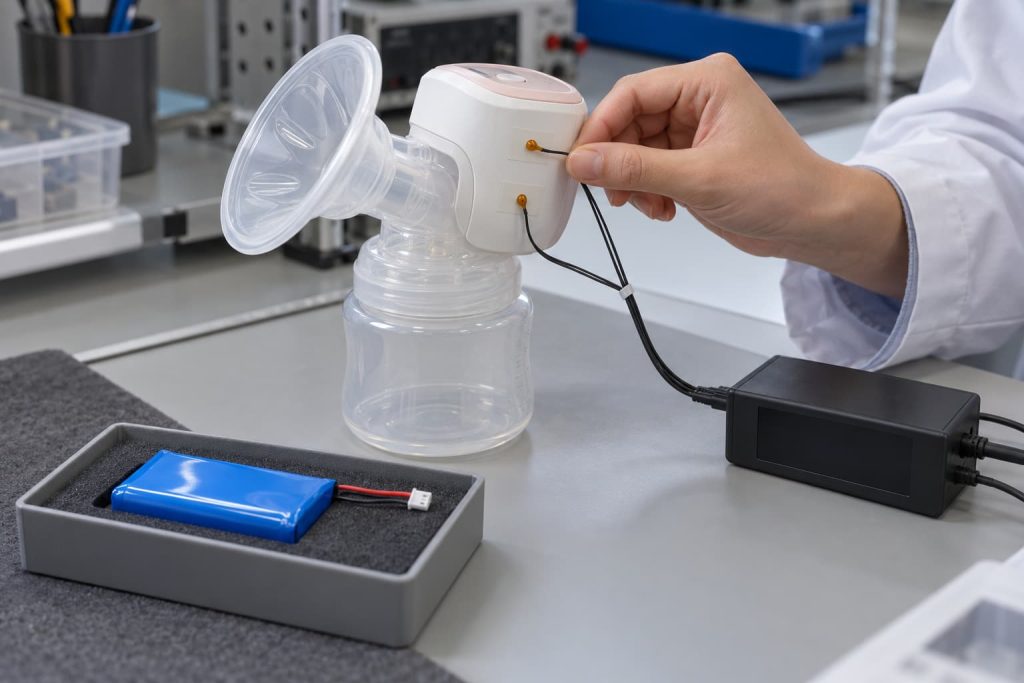
Warmth in an assembled pump can have several sources, including the motor, charging electronics and battery. Measuring one location does not describe every component or the surface a user touches. Ask the equipment team to identify measurement locations and operating and charging conditions. Record ambient conditions, device settings, installation and the point in the routine when readings are taken.
Texas Instruments describes battery temperature monitoring as a function available in charging electronics. That component function supports a battery-management discussion; it does not establish the finished pump’s surface-temperature performance. The complete device needs its own thermal assessment. Keep the battery supplier’s operating limits and the product team’s surface-temperature criteria distinct, then evaluate both in the intended construction.
Validate complete sessions in the finished equipment
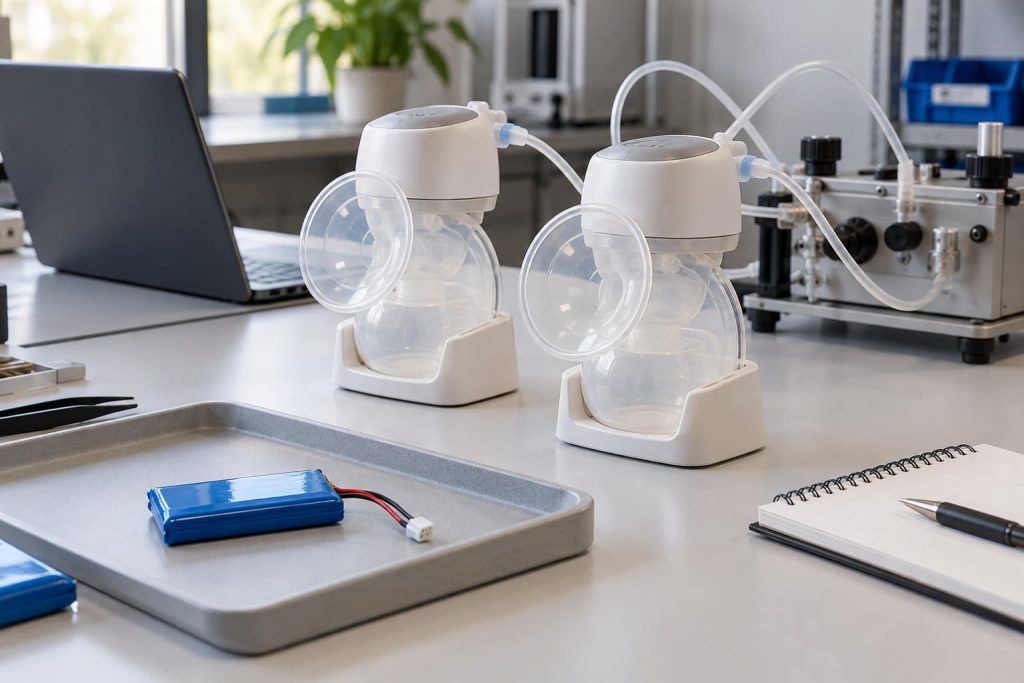
A battery-only discharge test helps characterize the assembly. The finished pump test establishes how that assembly supports the agreed session routine. Before testing, agree on the charging procedure, equipment configuration, test load and conditions used to end the evaluation. Count completed sessions separately from an unfinished final session.
| Test condition | What the record should identify |
|---|---|
| Device configuration | Model, firmware and single- or dual-unit arrangement |
| Session definition | Duration, modes and selected settings |
| Pumping conditions | Agreed fixture, load and assembled components |
| Starting charge | Charging equipment and completion criterion |
| Between-session behaviour | Pause duration and powered functions |
| Temperature | Ambient conditions and measurement locations |
| End condition | Shutdown or inability to complete the defined operation |
| Battery condition | Sample identity, configuration and relevant usage history |
Check operation and elapsed time. A powered indicator does not confirm that the pump continues to meet the equipment team’s defined performance criteria. If the result falls short, retain the observations needed to investigate it. Identify when the change occurred and whether it followed a mode change, interruption or low-battery indication.
Charging opportunities belong in the breast pump battery brief
Describe when the intended user can charge the product. Equipment returned to a charging point between uses has different availability requirements than equipment carried away for an extended period.
Keep full-charge testing separate from partial-charge recovery testing. If the product promises useful operation after a short charging opportunity, verify that promise under defined starting conditions. An ODM lithium battery manufacturer should receive the intended charging system, available charging time and device measurements before proposing an assembly. If battery aging forms part of the product’s performance commitment, define that evaluation separately from the result obtained with new samples.
The brief can then connect the battery specification to the charging opportunities the finished product is expected to support.
A breast pump battery supports the sessions demonstrated under defined conditions
The number of sessions per charge follows the complete device, its operating routine and its charging conditions. Select a battery that meets those requirements while considering weight, space, and temperature in the finished construction. Before approving a session-count claim, retain the procedure and results that support it. State which device arrangement, settings and battery condition the evidence covers.
That gives engineering, purchasing and customer support a shared explanation of what the product has demonstrated and which changes require another review.