
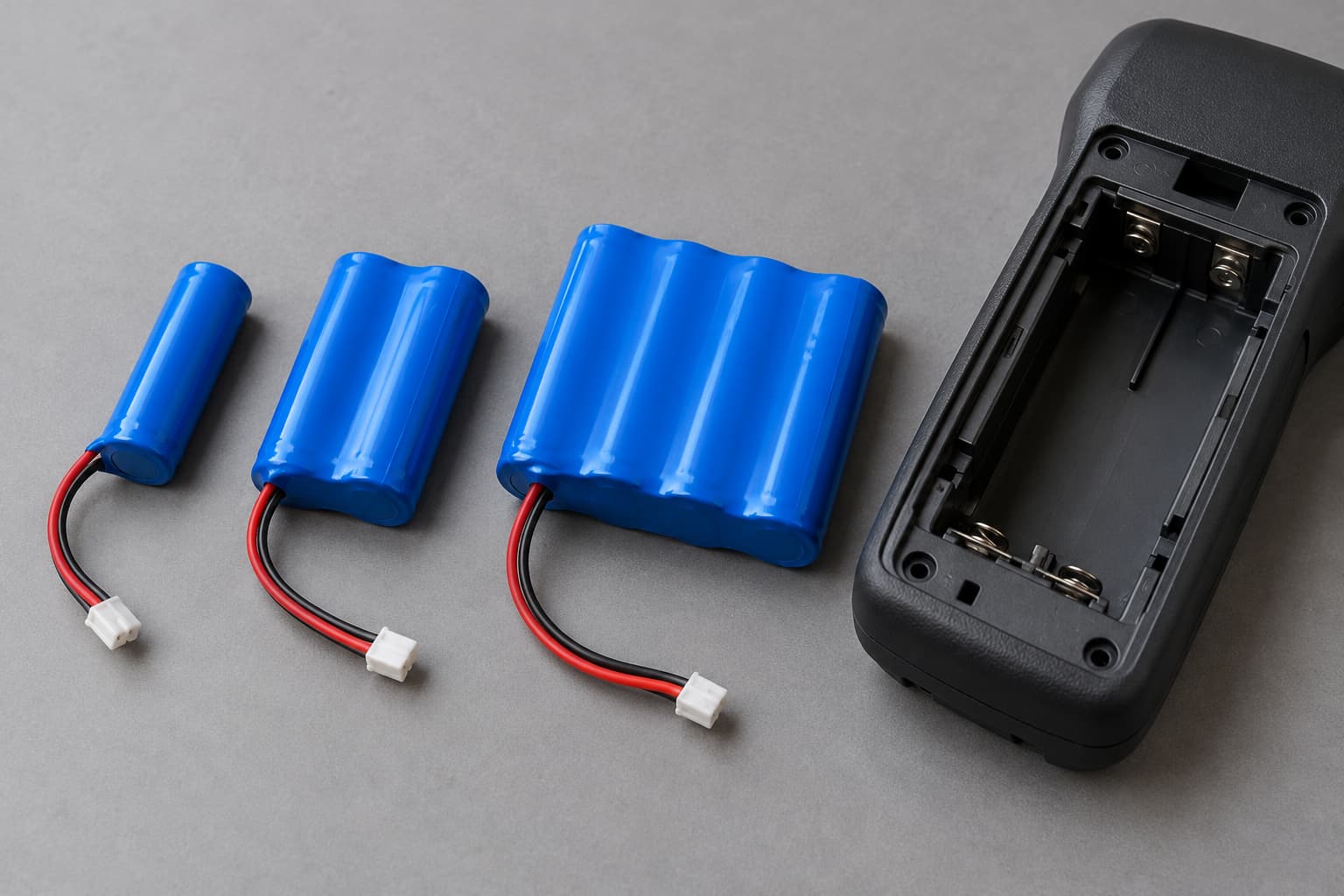
Choosing between removable vs built-in battery packs starts with a practical question: what should happen when the battery runs low or eventually needs replacement? A removable pack lets users swap a depleted battery for a charged spare. A built-in pack stays inside the equipment during normal use and charging. Either approach needs a replacement plan for the point when the battery no longer supports the required working time.
For OEM buyers, the decision affects daily operation, product construction, accessories and after-sales service. Two devices with similar power needs may require different arrangements because their users work differently.
Removable and built-in batteries describe different kinds of access
A removable battery pack is designed to be removed through an intended procedure. Some packs slide out when you release a latch. Others sit behind a cover secured with screws. A built-in battery stays inside the device during everyday operation. You may still be able to replace it after opening the housing. “Built-in” does not automatically mean permanently attached or impossible to service.
Before requesting a quotation, describe who should remove the battery and how often. Daily exchange by an operator creates different requirements from occasional replacement by a technician. When discussing custom battery solutions, make that distinction explicit. Asking for a “replaceable battery” alone leaves the supplier uncertain about the access and handling you expect.

A removable battery pack can reduce charging downtime
Imagine a handheld inspection device shared across consecutive work shifts. If the equipment must stop to charge its battery, the next operator may need another complete device. A removable pack provides another approach: stop the equipment, exchange the depleted pack and restart with a charged spare. The buyer must also plan how to charge the spare and where operators will keep it.
Battery exchange still involves an interruption. It does not guarantee uninterrupted operation or preservation of an unfinished task. Confirm what happens to stored readings, settings and active work when power disconnects. For this application, compare the full setup: device, spare batteries, charging equipment, and the time needed for each exchange.
Built-in battery packs suit a different charging routine
Consider a portable measuring device used for appointments during the day and returned to a charging point each evening. If it completes the intended workday, frequent battery swaps may offer little operational benefit. A built-in arrangement keeps the battery with the device and can avoid a separate daily swapping routine. Users still need a reliable place and sufficient time to charge it.
Check busy days as well as normal days. Equipment that occasionally works beyond its usual schedule may need an extra charge or a spare device. The useful question is how the charging routine fits the work. A familiar product appearance alone provides little basis for choosing the battery arrangement.
Replaceable battery packs need a practical service plan
Daily exchange and end-of-life replacement are separate decisions. A device may never need a spare battery during a shift yet still need an accessible replacement after years of use. Decide who will perform that work: the customer, a distributor, an independent repairer or your own service team. Then examine what the replacement involves.
Does the technician need to remove a display, disconnect fragile cables or replace seals? Can the equipment return to service after a simple check, or does it need a more extensive inspection? Also ask about replacement-pack availability and how to identify it. A service instruction has limited value if you can’t order the correct replacement or distinguish it from an incompatible version.
Battery construction affects space, handling and enclosure design
A pack intended for regular handling may need a protective housing, accessible contacts, retention features and a clearly defined insertion direction. Those features occupy space beyond the cells themselves. An internal assembly also needs secure mounting, insulation and access appropriate to its replacement procedure. A cylindrical lithium ion battery assembly can be considered within either approach, depending on the complete construction.
For example, the 18650 5200mAh Battery Pack provides a reference for an internal battery assembly discussion. Its product listing alone does not establish suitability for repeated user removal. Water and dust protection also depend on the complete enclosure. A built-in arrangement does not automatically prove sealing performance, while a removable design needs its cover, contacts and seals assessed under the intended use.
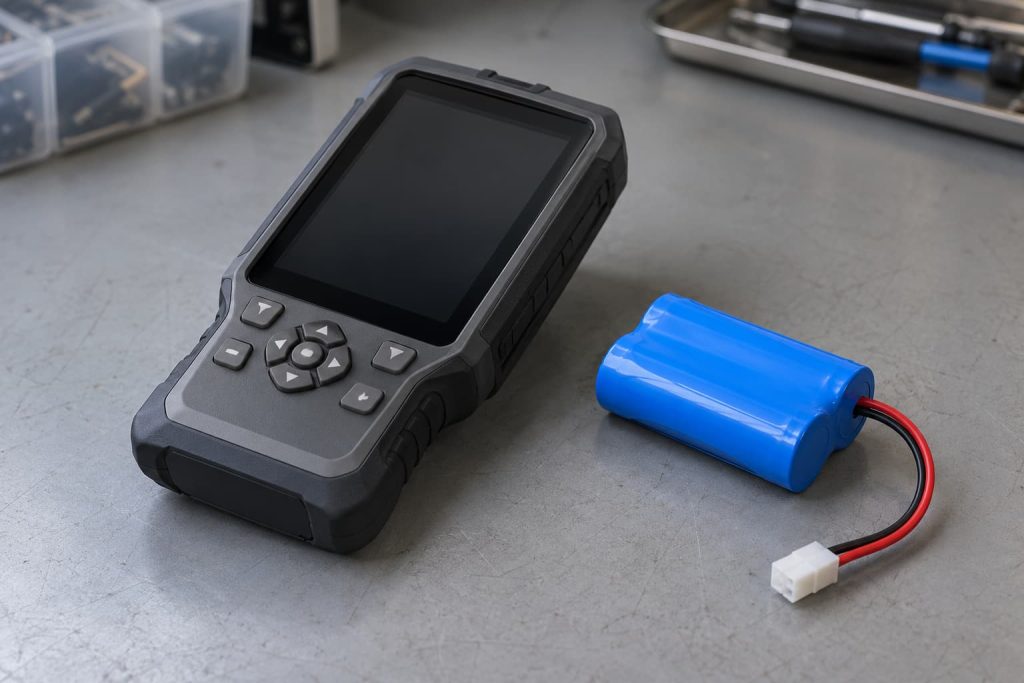
Compare removable vs built-in battery packs through daily work
Use the same operating scenario when comparing proposals. Include the people, accessories and service activities each arrangement requires.
| Buyer question | Removable pack considerations | Built-in pack considerations |
|---|---|---|
| What happens when power runs low? | Operator exchanges the pack, then restarts as required | Device charges or another device takes over |
| How does charging work? | Confirm a suitable charging arrangement for spare packs | Confirm charging access and available downtime |
| Who handles the battery? | Users may handle it frequently | Handling usually occurs during service |
| What takes up installation space? | Pack housing, retention and access features | Mounting, insulation and service access |
| How is an aging battery replaced? | Specify the approved replacement and procedure | Define housing access, repair steps and checks |
| What must purchasing budget for? | Spare packs, chargers and replacement stock | Charging equipment, service labour and possible device downtime |
Neither column establishes a universal winner. A removable arrangement needs a workable spare-battery system. A built-in arrangement needs a workable charging and repair system.
Check battery replacement requirements before fixing the housing
Destination-market requirements can affect the replacement approach. Include the intended sales markets and product category in the design review before approving the enclosure. For EU projects, the European Commission’s battery removability guidance provides a reference for reviewing the applicable provisions. Have the responsible compliance team confirm the requirements, timing and any relevant exceptions for the product.
Keep this review separate from the question of rapid battery exchange. A battery that can be replaced using a defined procedure is a different design proposition from one intended for frequent swapping during work.
The right battery arrangement follows the use and replacement plan
Choose between removable vs built-in battery packs by defining three events: daily charging, an unexpectedly long working day and eventual battery replacement. For equipment shared across shifts, a removable pack may reduce charging downtime, provided suitable spares and chargers are available. For equipment with a dependable charging break, a built-in arrangement may fit the routine, provided replacement access and applicable requirements are addressed.
Give the supplier those operating and service expectations alongside the device information. Evaluate the proposed arrangement through actual handling, charging and replacement tasks so the final choice supports the people who will use and maintain the equipment.