
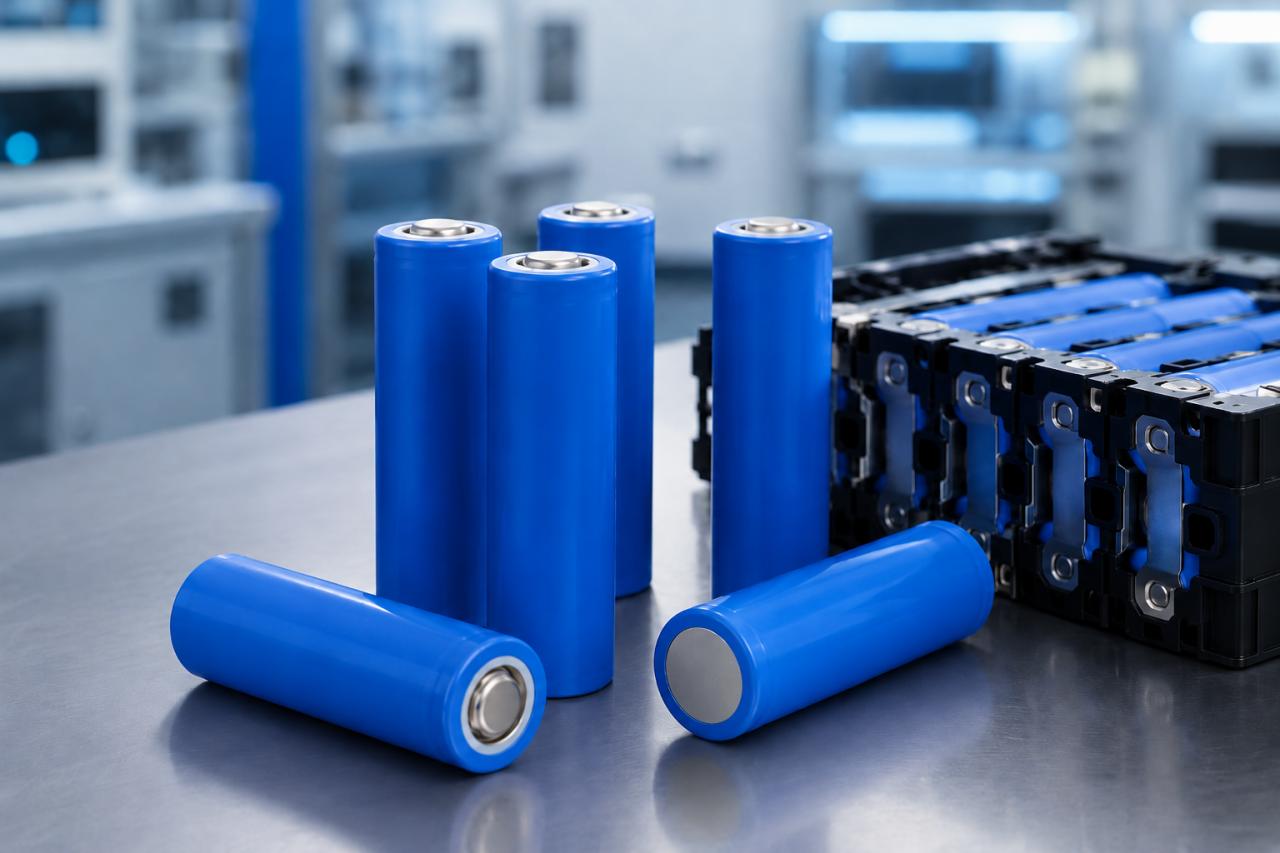
Custom cylindrical lithium-ion battery design should use the cell format that best fits the complete electrical, mechanical, thermal, sourcing, and validation requirements.
The 18650 or 21700 Decision for custom cylindrical lithium-ion battery design
Use 18650 cells when the project benefits from smaller cell diameter, flexible layouts, or an established qualified supply. Consider 21700 cells when fewer cells, higher energy per cell, or lower connection count improves the system. The correct choice depends on load, voltage, space, heat, weight, service method, sourcing, and validation data for the exact cell model.
The comparison below helps engineering and sourcing teams make the decision at pack level rather than from capacity alone.
A useful specification starts with the device and converts its demands into cell, architecture, mechanical, protection, and validation requirements. This process prevents a nominal capacity target from hiding pulse, temperature, fit, or service problems.
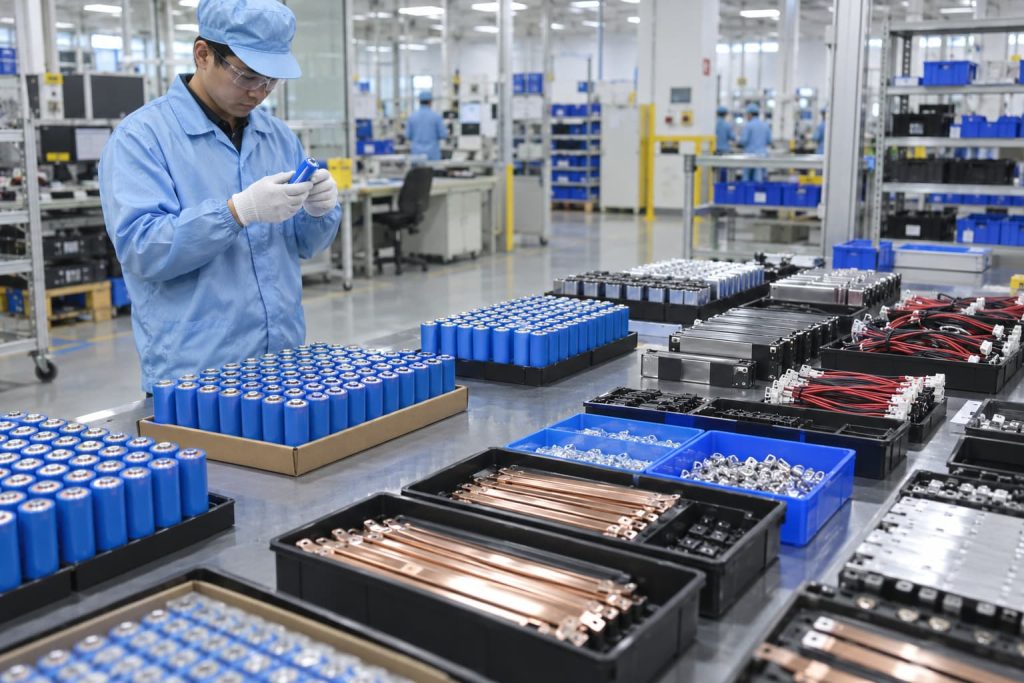
Measure the Device before Selecting Cells for a Cylindrical Battery Pack
Record sleep, typical, continuous maximum, startup, and pulse current. Include pulse duration, repetition, and functions that may overlap. Define the device input-voltage range and the lowest voltage that supports stable operation.
Estimate energy from a repeatable duty cycle rather than average current alone. Test data should identify the hardware, firmware, ambient temperature, initial state of charge, operating sequence, and end condition. Add reserve for ageing and temperature only after the team agrees on the underlying assumptions.
Define charging input, charge time, operation during charging, storage time, operating temperature, vibration, shock, ingress exposure, service interval, and destination markets. These inputs affect cell choice and pack construction.
Choose 18650 or 21700 from System Requirements for 18650 battery pack
An 18650 cell may support compact layouts and broad sourcing options. A 21700 cell can reduce cell count for a given energy target, but its diameter and length change the mechanical layout, heat paths, holder design, and serviceability.
Compare exact cell models under the same load, cutoff voltage, temperature, sample age, and measurement method. Review capacity, voltage drop, resistance, continuous and pulse current limits, cycle life, storage behaviour, and dimensional tolerances.
The Cylindrical battery range can provide a starting point for format and configuration discussions. Final approval should depend on device-level tests using production-representative cells and assemblies.
Define the Series and Parallel Architecture for 21700 battery pack
Series count determines the pack voltage window. Parallel count affects capacity, current sharing, cell count, size, weight, and the number of welded connections. Confirm that the fully charged and discharged pack remain compatible with the device, charger, motor drive, or DC conversion stage.
Document the configuration clearly, including:
| Design item | Requirement to control |
| Cell | Manufacturer, model, chemistry, revision, and lot |
| Layout | Series-parallel arrangement and cell orientation |
| Matching | Voltage, capacity, and resistance windows |
| Interconnect | Material, thickness, width, and current path |
| Welding | Equipment, parameters, inspection, and test method |
| Insulation | Rings, barriers, fishpaper, sleeves, and clearances |
| Electronics | BMS, sensing, balancing, communications, and firmware |
| Interface | Wire, connector, fuse, switch, and pinout |
Review single-fault current paths. A pack-level fuse or branch protection may be needed depending on architecture and risk assessment. The complete design should be reviewed by qualified battery and product engineers.
Control Heat and Current Paths for cylindrical lithium battery
Heat is not uniform across a pack. Cells near a heat source, enclosure wall, or restricted airflow path may experience different conditions. Interconnect resistance and uneven current sharing can create additional local heating.
Build a thermal test plan around the highest continuous load, repeated pulses, charging, operation during charging, and the maximum approved ambient temperature. Measure multiple cell locations, interconnects, electronics, connector, and enclosure surfaces.
Mechanical retention should limit movement without damaging cell sleeves or creating conductive abrasion. Define spacing, barriers, compression, potting or adhesive, ventilation, and service requirements. Consider how manufacturing tolerances affect the tightest clearances.
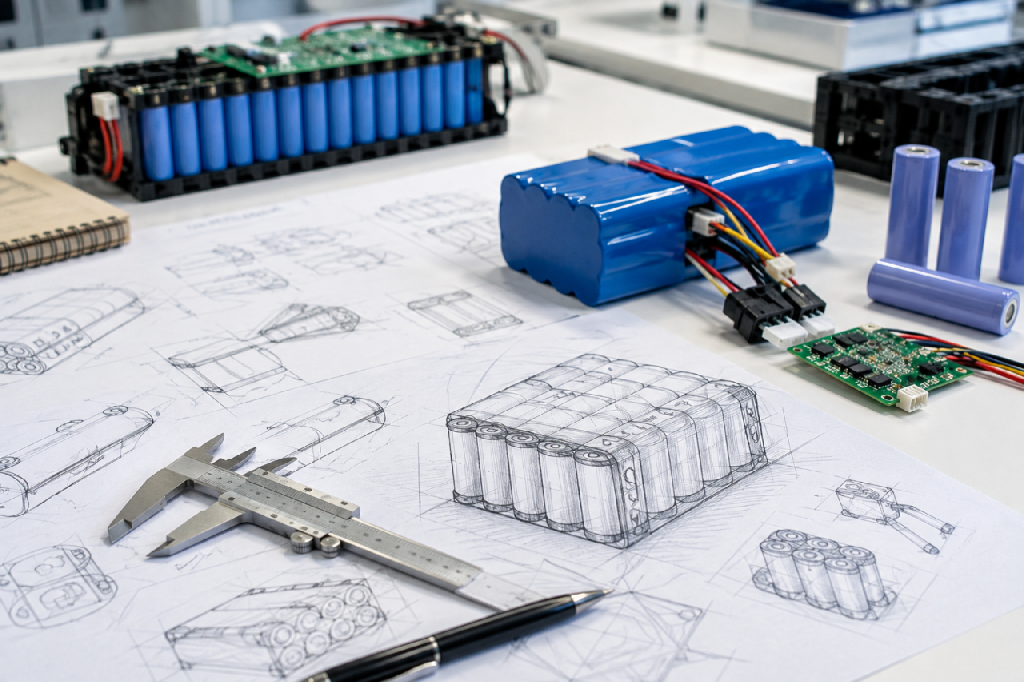
Match Protection and BMS Settings to the Pack for custom cylindrical lithium-ion battery design
Define overcharge, over-discharge, overcurrent, short-circuit, and temperature limits with tolerance, delay, and recovery behaviour. For series packs, specify cell-voltage sensing and balancing behaviour. For smart batteries, control firmware, communications, fuel-gauge configuration, and error handling.
Valid startup or motor events must not create nuisance trips. At the same time, thresholds must protect cells, interconnects, wires, connectors, and electronics. Test protection behaviour at the pack and device levels.
Projects that require coordinated electrical, mechanical, and firmware decisions can use Custom Battery Pack Solutions to define the shared engineering boundary.
Approve the Pack with Device-Level Validation for cylindrical battery pack
Use production-representative packs for final approval. Include the intended cell, electronics, programmed settings, welding process, insulation, enclosure, wires, connector, labels, and factory.
Validation may cover capacity under defined conditions, pulse response, low-state-of-charge operation, charging, thermal limits, protection, fit, vibration, shock, connector retention, cycle life, storage, and environmental exposure. Each result needs a test method, equipment, sample quantity, limit, raw data, and decision.
The applicable safety plan depends on product scope and market. The IEC 62133-2 safety requirements address portable sealed secondary lithium cells and batteries. Confirm applicability, edition, national differences, and finished-product obligations with qualified specialists.
Lock the Approved Production Configuration for 18650 battery pack
An OEM battery production agreement should control cell substitutions, matching rules, interconnects, welding, electronics, firmware, insulation, connectors, test software, inspection limits, and production-site changes.
Submit the load profile, voltage range, pack envelope, temperature range, charging method, desired runtime, service-life target, certification markets, and expected order quantity. Zenilove can use these inputs to compare cylindrical-cell options and define the sample and validation plan.
Cell Format Questions for 21700 battery pack
Are 21700 cells always better than 18650 cells?
No. A 21700 cell may reduce cell count for a given energy target, but pack shape, current sharing, heat paths, sourcing, mass, protection, serviceability, and approved cell availability can make an 18650 design more suitable.
Which cell format is better for high-current equipment?
Cell diameter alone does not answer that question. Compare the exact cell models at the required continuous and pulse current, minimum state of charge, temperature range, voltage limit, and cooling condition.
Can an existing 18650 pack be changed to 21700 cells without redesign?
Usually not. The change can affect enclosure dimensions, series and parallel architecture, welding, interconnects, thermal behaviour, protection settings, charger compatibility, weight, and validation evidence.
What data should be sent to Zenilove for an 18650 versus 21700 comparison?
Provide the load profile, voltage window, pack envelope, temperature range, runtime target, charger, weight limit, service-life target, destination markets, and expected order quantity.