
A high-capacity battery can meet a runtime target and still fail during device integration. Common causes include a mismatched charging circuit, insufficient peak-current support, tight enclosure clearance, reversed connector polarity, or a protection circuit that trips during startup. Capacity alone cannot answer these questions.
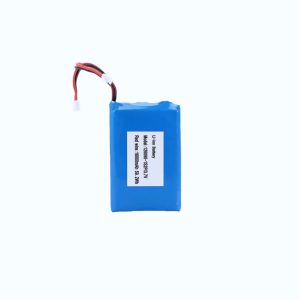
The 16000mAh 3.7V Polymer Battery Pack uses a 126090 1S2P configuration and stores 59.2Wh of rated energy. It targets portable equipment, medical and rehabilitation devices, IoT products, handheld terminals, and low-voltage backup systems that need extended operation from a single-cell voltage platform. Before requesting samples, the device team should match the complete electrical, mechanical, and assembly requirements.
Lock the 16000mAh 3.7V Polymer Battery Pack Specifications.
Start with a controlled specification sheet. Every engineering, sourcing, and quality team should refer to the same values when evaluating samples. The current product data lists these nominal pack parameters:
| Parameter | Product specification |
|---|---|
| Model | 126090-1S2P/16000mAh |
| Nominal voltage | 3.7V |
| Rated capacity | 16000mAh |
| Rated energy | 59.2Wh |
| Configuration | 1S2P |
| Size (L/W/H) | 60.5 × 25 × 96mm |
| Weight | Approximately 255g |
| Full-charge voltage | 4.2V |
| Battery category | Polymer |
These figures provide the starting point, not final approval for a device. The drawing, connector, wire length, wire exit direction, PCM settings, insulation, label, and packaging can affect the finished assembly. Record each approved detail in the sample specification so later production units can be checked against the same reference.
Confirm the 3.7V Electrical Platform Before Capacity.
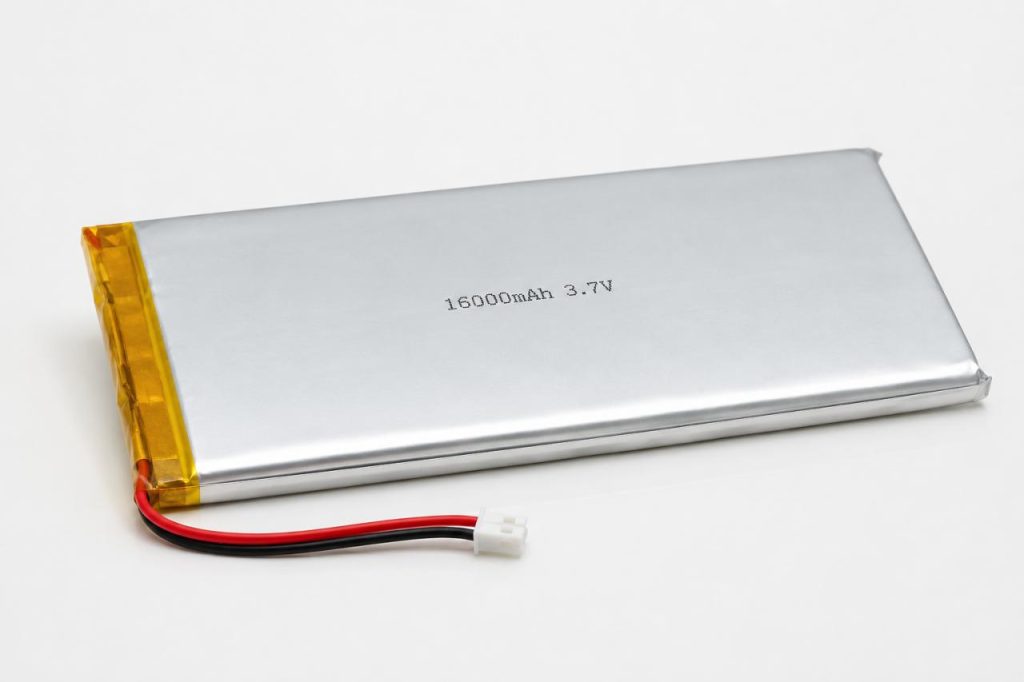
A 3.7 V Li-ion polymer battery operates on a single-series voltage platform. Its voltage rises to 4.2V at full charge, so the device input and charging circuit must accept the complete operating range specified by the battery supplier. A product designed for a 7.4V or 11.1V pack cannot use this battery as a direct replacement.
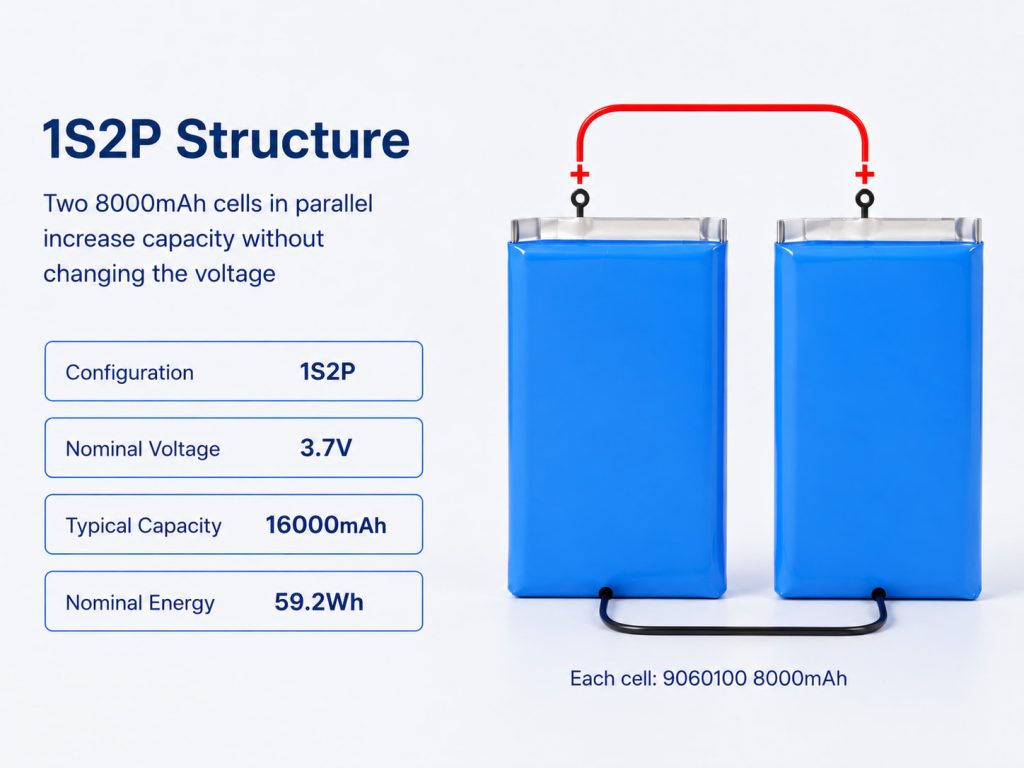
The 1S2P configuration connects two matched cells in parallel. This arrangement increases total capacity while keeping the nominal voltage at 3.7V. It suits a device that already runs from a one-series lithium battery and needs more stored energy. The parallel construction does not remove the need to verify the load profile, cell matching, protection settings, and charging method.
Measure Continuous and Peak Current
Measure current in every operating mode instead of relying only on the device label. Wireless transmitters, motors, pumps, bright displays, and processors can create brief peaks that exceed normal consumption. Provide the battery supplier with the normal current, maximum continuous current, startup current, peak amplitude, and peak duration.
The PCM, cells, wires, welds, and connector must all support that profile. If the protection threshold sits below a normal startup peak, the pack may disconnect even though its remaining capacity is high. If wiring or connector ratings are too low, they can create voltage drop and unwanted heat.
Match the Charger to the Pack
This rechargeable lithium polymer battery uses constant-current/constant-voltage charging with a 4.2V charge voltage. Confirm the charger profile, charging current, termination behavior, and device-side power path with the supplier before testing. Do not treat a connector that physically fits as proof that the charger is compatible.
Check Enclosure Fit, Wiring Space, and Weight
The listed pack size is 60.5 × 25 × 96mm, and the stated weight is about 255g. Compare these values with a dimensioned enclosure drawing. A visual estimate or a measurement taken from an empty housing often misses ribs, fasteners, cable bends, foam pads, and neighboring circuit boards.
Leave controlled clearance for manufacturing tolerance, insulation, wires, connector placement, and the battery supplier’s installation requirements. The enclosure should not clamp or puncture the pouch pack. It should also prevent movement that could pull on tabs or wiring during a drop or vibration event.
Weight changes the product as well as its battery compartment. A 255g pack may suit portable instruments, terminals, and stationary backup modules, but the device team should still review total product weight, balance, mounting strength, and handling expectations. For a thinner or lighter design, compare other Polymer Battery formats before fixing the enclosure.
Decide Where a 16000mAh Polymer Pack Adds Value.
The pack makes sense when a device needs a 3.7V supply, has enough internal volume, and prioritizes operating time. Suitable project directions include portable monitoring equipment, handheld data terminals, selected medical and rehabilitation products, IoT gateways, robotics control units, and low-voltage backup modules.
Estimate runtime from measured device power rather than capacity alone. The rated energy is 59.2Wh, but conversion losses, peak loads, standby consumption, temperature, battery age, and device cut-off behavior reduce usable runtime. Test the finished prototype in its real duty cycle. A lab test at one steady load will not represent a product that wakes, transmits, drives a motor, and returns to standby.
Projects with severe weight limits, very thin housings, higher system voltage, or unusually high discharge demand may need a different cell structure. Reviewing the wider range of Lithium Battery Products can prevent a team from forcing one pack format into an unsuitable mechanical or electrical design.
Specify PCM, Connector, and Assembly Details
Include protection and assembly requirements in the request for quotation. A complete input package reduces sample revisions and prevents small production details from becoming field failures.
Send the supplier these items:
- Device nominal and maximum input voltage
- Normal, maximum continuous, startup, and peak current
- Charging method and charging current
- Maximum battery-space dimensions with tolerance
- Connector manufacturer, series, and mating part
- Pin assignment and positive/negative polarity
- Wire gauge, wire length, and exit direction
- PCM protection requirements
- NTC or identification-resistor requirements, when used
- Insulation, mounting, label, and packaging requirements
- Expected operating conditions and target runtime
For a new device, Custom Battery Solutions can align cell selection, PCM design, connector details, and prototype validation with the product requirements. Freeze the approved sample drawing and bill of materials before bulk production. A verbal description such as same connector “does not control the terminal orientation, pin order, wire length, or supplier series closely enough.
Validate the Battery in the Finished Prototype
A bench inspection confirms only part of the design. Test the pack inside the finished or production-representative device, using the intended charger and real firmware. A practical validation sequence includes:
- Inspect the pack, label, insulation, wire routing, connector, and polarity against the approved drawing.
- Measure the battery compartment and confirm clearance with all covers, fasteners, pads, and nearby parts installed.
- Check device startup, maximum load, sleep, wireless transmission, motor operation, and other current peaks.
- Run complete charge and discharge cycles with the intended charger and device cut-off behavior.
- Measure runtime under representative duty cycles instead of a single steady load.
- Monitor voltage drop and temperature at the cells, PCM, wiring, and connector within supplier-approved limits.
- Repeat tests after environmental and mechanical evaluations required by the finished product.
- Record results against an agreed acceptance plan before approving mass production.
If the PCM trips, the connector warms, or runtime misses the target, identify the electrical cause before increasing capacity. A higher-capacity pack cannot correct a mismatched protection threshold, undersized wire, excessive voltage drop, or inefficient power conversion.
Confirm Production and Shipping Documents Before Ordering
The purchase order should reference the approved specification, drawing revision, sample, test criteria, labeling, and packaging. Confirm the supplier’s controls for cell matching, welding, insulation, PCM assembly, polarity checks, capacity testing, and final electrical inspection. Ask how engineering changes are communicated after approval.
Shipping documentation also needs early attention. Lithium batteries face transport rules that depend on configuration, energy rating, packaging, and shipping method. IATA publishes current information on air transport requirements for lithium batteries. Before dispatch, confirm with the battery supplier and logistics provider which test summaries, declarations, labels, and packaging documents apply to the exact pack and route.
A production-ready order should clearly state:
- Approved model and drawing revision
- Electrical and mechanical tolerances
- PCM and connector configuration
- Label and traceability requirements
- Sample and inspection standards
- Quantity and delivery schedule
- Packaging method
- Required transport and compliance documents
- Change-control process
A 16000mAh 3.7V Polymer Battery Pack Must Match the System.
The 126090 1S2P pack provides 3.7V nominal output, 16000mAh capacity, and 59.2Wh of rated energy in a 60.5 × 25 × 96mm format. It can support long-running portable and low-voltage equipment when the device accepts the voltage range, current profile, dimensions, weight, charging method, and protection design.
Approve the pack only after testing it with the intended enclosure, connector, charger, firmware, and operating cycle. That system-level check gives sourcing and engineering teams a defensible basis for sample approval and bulk production.