

A product can meet its runtime target on paper and still fail during motor startup, wireless transmission, or low-temperature operation. Capacity may look correct while cell size, discharge current, voltage, or thermal behavior does not match the device.
Selecting a high-capacity cylindrical battery requires more than comparing milliamp-hours. OEM projects should compare stored energy, peak current, installation space, pack layout, charging conditions, and service life before deciding between 18650 and 21700 cells.
High-Capacity Cylindrical Battery Capacity Is Only the Start
Battery capacity shows how much charge a cell can store, but it does not describe the cell’s full electrical behavior. Manufacturers normally state capacity in milliamp-hours or amp-hours. Watt-hours give a clearer view of stored energy.
Energy (Wh) = Nominal Voltage (V) × Capacity (Ah)
A 3.6V, 3500mAh cell stores about 12.6Wh. A 3.6V, 5000mAh cell stores about 18Wh. Voltage cutoff, temperature, discharge rate, cell age, and conversion losses affect how much energy the device can use.
A high-capacity cell can still perform poorly in a high-pulse application if its discharge capability does not match the load. Compare cells under similar test conditions and review the complete load profile instead of selecting the highest capacity number.
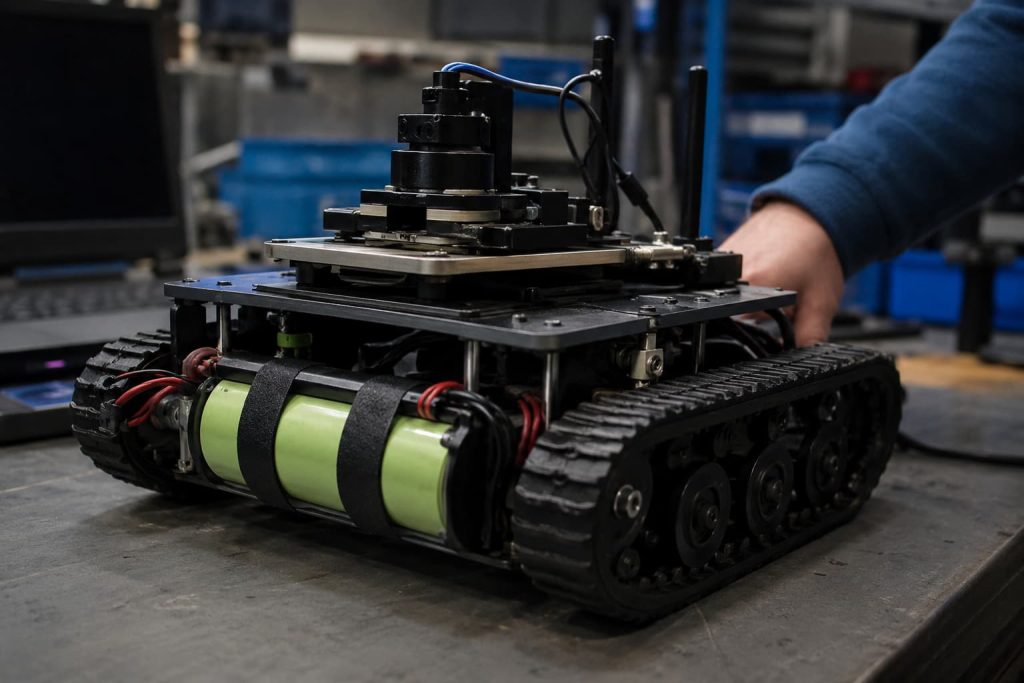
18650 vs 21700 High-Capacity Cylindrical Battery Design
The names 18650 and 21700 describe approximate cell dimensions. An 18650 cell is about 18mm in diameter and 65mm long. A 21700 cell is about 21mm in diameter and 70mm long.
| Comparison | 18650 Battery | 21700 Battery |
|---|---|---|
| Approximate size | 18 × 65mm | 21 × 70mm |
| Common nominal voltage | 3.6V or 3.7V | 3.6V or 3.7V |
| Common capacity range | About 2000–3500mAh | About 3000–6000mAh |
| Main benefit | Compact size and broad model availability | More energy from each cell |
| Main limit | More cells may be needed | Requires more enclosure space |
A 21700 cell can store more energy per cell, which may reduce the number of cells needed for the same target.
An 18650 format can fit compact instruments, handheld terminals, and existing products built around an 18mm cell. A 21700 format can suit robotics, portable industrial equipment, larger medical devices, and mobile tools that can accept a wider cell.
Zenilove’s Cylindrical Battery range includes 18650 cells, 21700 cells, and assembled cylindrical battery packs.
High-Capacity Cylindrical Battery Pack Layout Changes Runtime
A single cell may not provide the voltage or operating time required by an OEM device. Pack designers use series, parallel, or series-parallel structures to reach the electrical target.
Three 3.6V, 5000mAh cells in a 3S1P configuration provide about 10.8V, 5Ah, and 54Wh. Four 3.6V, 3500mAh cells in a 1S4P configuration provide about 3.6V, 14Ah, and 50.4Wh.
Product-level references include the 21700 3S1P Battery Pack for a series configuration and the 18650 1S4P Battery Pack for a parallel configuration. Buyers should still confirm voltage, capacity, load, connector, and enclosure limits for the device.
A 3S2P structure combines both methods. Six 3.6V, 5000mAh cells provide about 10.8V, 10Ah, and 108Wh. The pack gains runtime, while size, weight, material use, and heat-management requirements also increase.
A 21700 3S2P Battery Pack shows how a series-parallel structure can support equipment that needs higher voltage and longer operating time. Engineers still need to account for voltage cutoff, conversion losses, cell matching, temperature, and usable state of charge.
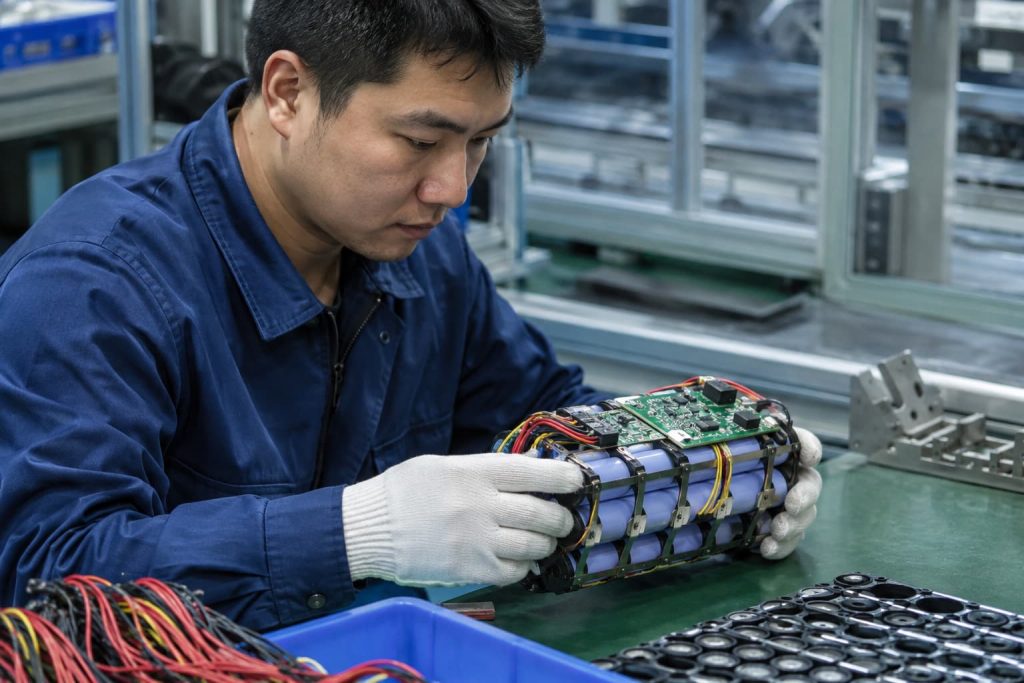
Current and Thermal Limits Matter in Cylindrical Battery Selection
Capacity and discharge current describe different cell characteristics. A high-capacity cell may store substantial energy while supporting only a moderate load. Another cell with lower capacity may deliver higher current with less voltage drop.
The load profile should include average current, continuous maximum current, peak current, peak duration, startup current, minimum device voltage, charging current, and operating temperature. A device may draw only 500mA during normal operation and several amps during motor startup. Selecting a cell based on the average value alone can cause restart, protection shutdown, or unstable output during peak.
Pack construction also affects temperature and current delivery. Cell spacing, nickel strip dimensions, welding quality, wire gauge, connector rating, insulation, and heat-transfer paths influence performance. The BMS or PCM must support the expected charging and discharging current.
Multi-cell packs also need matched cells. Using the same approved cell model and matching voltage, capacity, internal resistance, and production condition reduces imbalance.
Projects intended for international transport should confirm the required lithium battery transport documentation. The UNECE UN Manual of Tests and Criteria, Revision 8 includes subsection 38.3 requirements for lithium cells and batteries. UN 38.3 covers transport testing and does not replace device-level safety evaluation or destination-market certification.
Match the Battery Format to the Device
The device determines which cylindrical format provides the more practical pack design.
| Device Situation | Starting Direction | Main Reason |
| Compact handheld equipment | 18650 cell or compact pack | Narrower enclosure |
| Long-runtime portable equipment | 21700 cell or pack | More energy per cell |
| Motor-driven equipment | High-current 18650 or 21700 | Peak current priority |
| Precision instruments | Stable-output 18650 pack | Flexible pack structure |
| Mobile robots | 21700 or series-parallel pack | Runtime and peak-load support |
| Existing 18650 product upgrade | Verified higher-capacity 18650 | Less mechanical redesign |
A 21700 cell can create installation, weight, or heat-distribution problems when the enclosure was designed around 18650 cells. An 18650 pack can also provide long runtime through parallel connections, although this increases cells, weld points, and assembly parts.
Before prototyping, define operating voltage, cutoff voltage, target runtime, average and peak current, available dimensions, connector requirements, charger settings, operating temperature, protection functions, target certifications, and production quantity.
A Custom Battery Pack may be required when a standard cell cannot meet the voltage, current, connector, protection, or installation requirements.
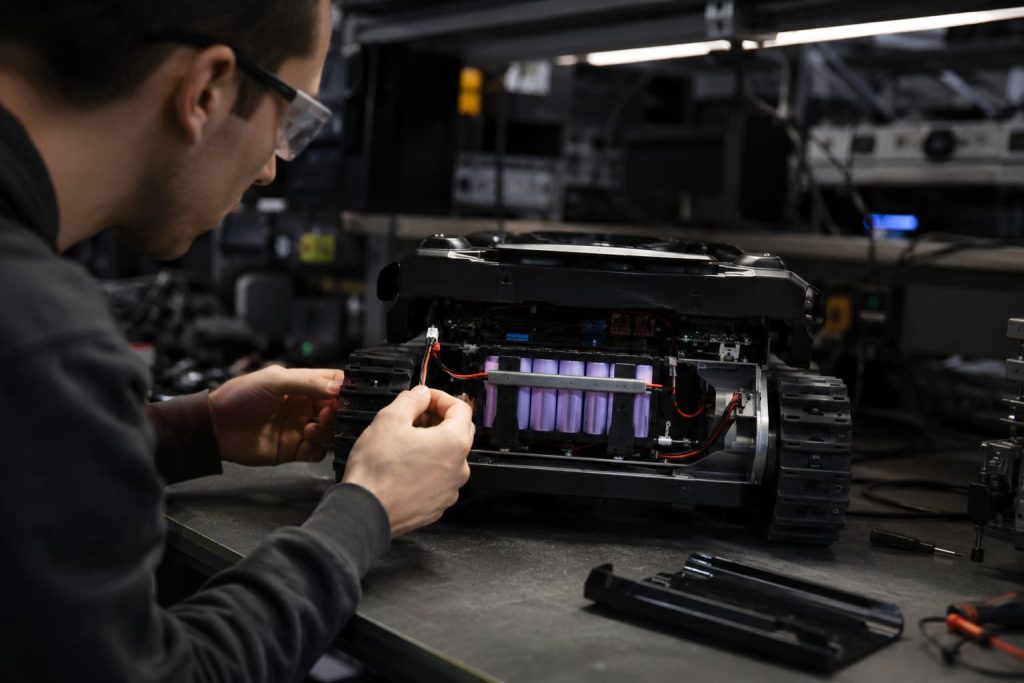
Select a High-Capacity Cylindrical Battery From the Real Load
An 18650 battery fits projects that prioritize compact dimensions, lower cell weight, and broad model availability. A 21700 battery fits devices that can accept a larger cell and need more energy from each cell.
The final selection should follow device voltage, load profile, runtime, enclosure space, temperature, charging method, and certification plan. Capacity provides one input. Current delivery, pack structure, thermal behavior, and production consistency determine how the battery performs after integration.
Before requesting a quotation or prototype, send the battery manufacturer the electrical load, available space, connector drawing, operating environment, target runtime, and expected production volume. These details allow the engineering team to compare 18650 and 21700 options against the real device instead of selecting a cell from capacity alone.