
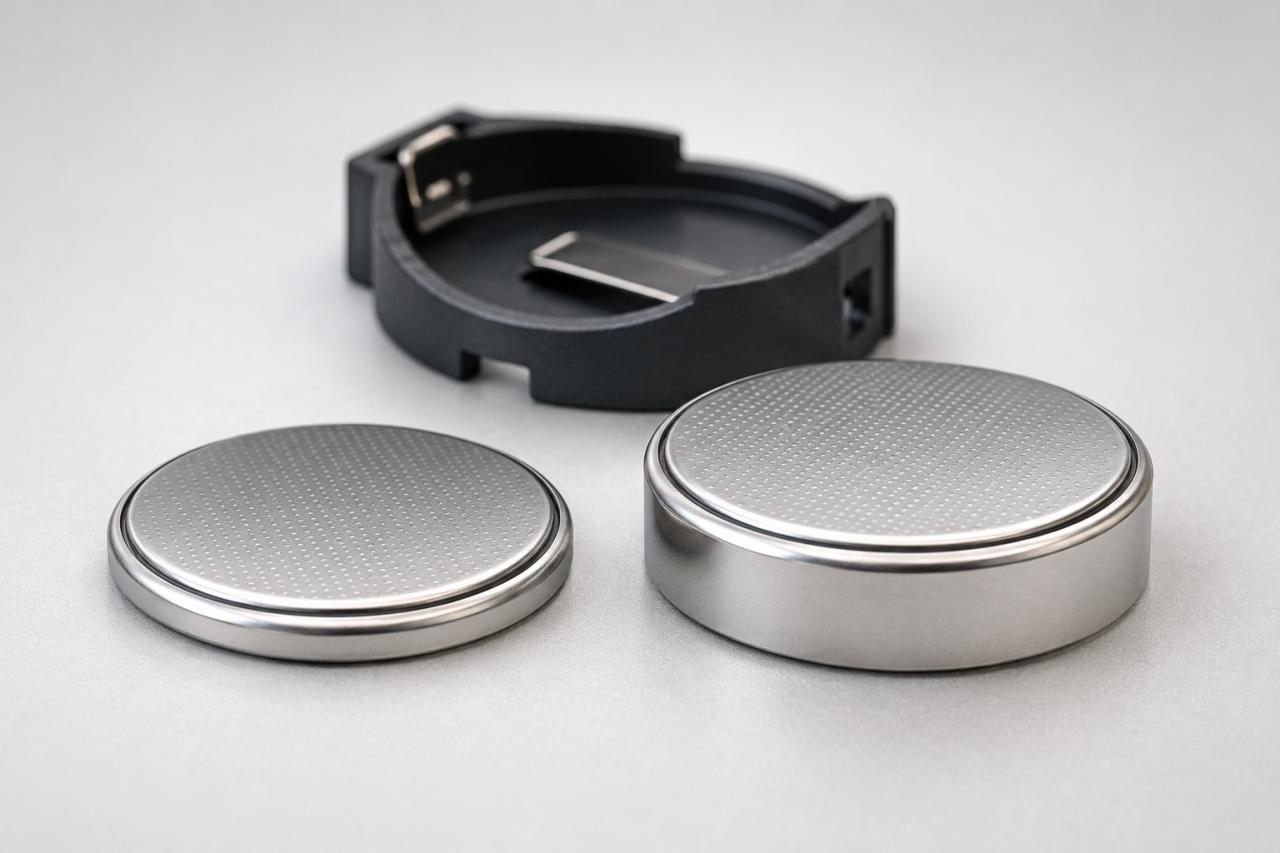
Two batteries. Same diameter. Same voltage. And yet, swapping one for the other can leave a device completely dead — or worse, physically damaged. The cr2025 vs cr2032 confusion costs procurement teams time and money every quarter, and it happens because the spec difference is invisible until you’re already looking at a failed install. Here’s what actually separates them, and how to make the right call before the order goes out.
What CR2025 vs CR2032 Actually Means
The naming convention tells you everything, once you know how to read it. CR indicates the electrochemical system — manganese dioxide lithium, the standard for coin cells. The next two digits give the diameter in millimeters. The final two digits give the thickness, in tenths of a millimeter. So: CR2025 = 20mm diameter, 2.5mm thick. CR2032 = 20mm diameter, 3.2mm thick.
That’s it. Same footprint, same chemistry, different height. But that 0.7mm gap in button cell battery sizes is where the real divergence begins.
The One Spec That Changes Everything
Thickness controls volume, and volume controls how much active material fits inside the cell. More material means more capacity. The CR2032 holds roughly 220–240mAh. The CR2025 comes in at approximately 160–170mAh — about 30% less. Both run at a nominal 3V, so voltage is not the differentiator. Runtime is.
For low-drain devices like BIOS chips or remote controls, that capacity gap is barely noticeable. For devices that cycle more frequently — smart cards, certain wearables, continuous-monitoring sensors — it shortens replacement intervals in ways that compound across a large install base.
CR2025 vs CR2032 Capacity and Voltage Compared
Both cells deliver a nominal 3V output and use the same lithium manganese dioxide chemistry, so their discharge curves are similar. The CR2032 coin-cell battery simply sustains that output longer because of its greater electrode mass.
Where coin battery sizes start to matter operationally is in shelf life projections. A CR2032 in a low-drain application can maintain a stable charge for 8 to 10 years under manufacturer-rated storage conditions. A CR2025 in the same circuit will fall short of that window — not by half, but noticeably. For procurement teams building multi-year maintenance plans, that gap is worth modeling before finalizing a spec. One thing buyers sometimes overlook: self-discharge rates are nearly identical between the two. The difference in longevity comes from starting capacity, not chemical behavior.
CR2025 vs CR2032 in Real Device Applications
Device manufacturers choose between these two cells based on battery compartment depth rather than preference. The housing is designed around one spec, and that spec is fixed.
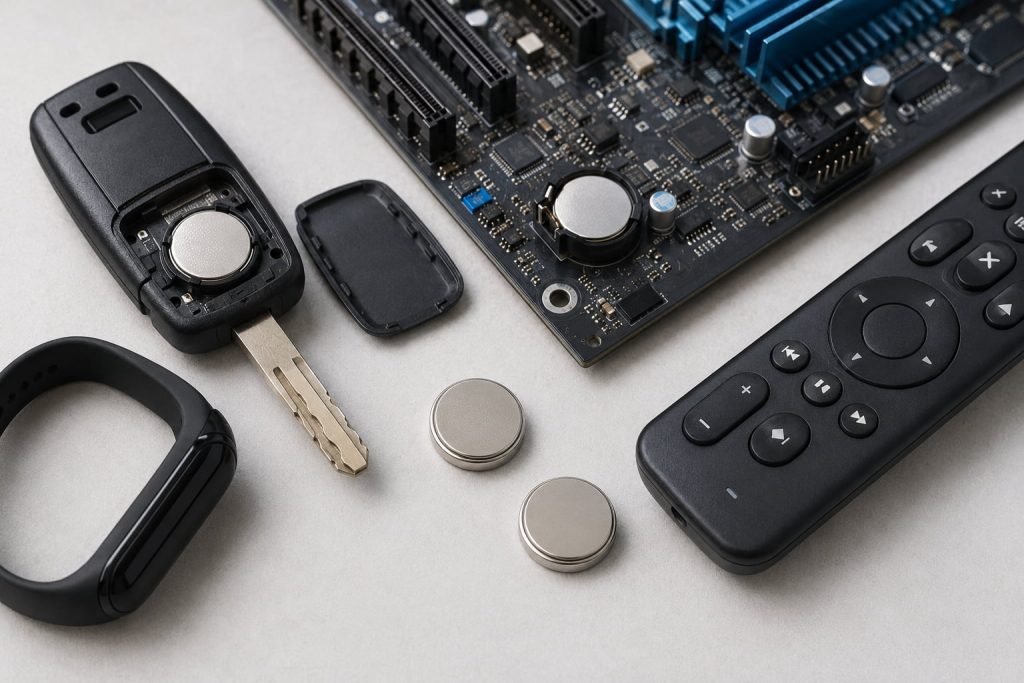
CR2032 is the more common choice. It powers the vast majority of automotive key fobs, PC motherboard CMOS chips, medical alert devices, and most consumer electronics requiring a coin cell. The CR2032 key fob battery is the clearest example: the compartment depth is precisely designed for a 3.2mm cell, and a thinner CR2025 will often make intermittent contact — or none at all.
CR2025 shows up in applications where the enclosure is space-constrained, and designers accept lower capacity as a trade-off. Certain slim card-format devices, some older watch models, and compact fitness trackers use it for this reason.
Where CR2016 Fits In
The cr2016 vs cr2032 question comes up less often but follows the same logic. CR2016 is 1.6mm thick — thinner than both. It carries roughly 75–90 mAh and is used in the most space-critical applications: ultra-thin calculators, flat, card-style remotes, and some jewelry-format wearables. The three cells form a clear thickness hierarchy: 1.6mm → 2.5mm → 3.2mm, with capacity scaling accordingly. They share the same 20mm diameter and 3V output, but none of them are interchangeable in devices engineered for a specific height.
Can You Swap CR2025 vs CR2032 in a Pinch?
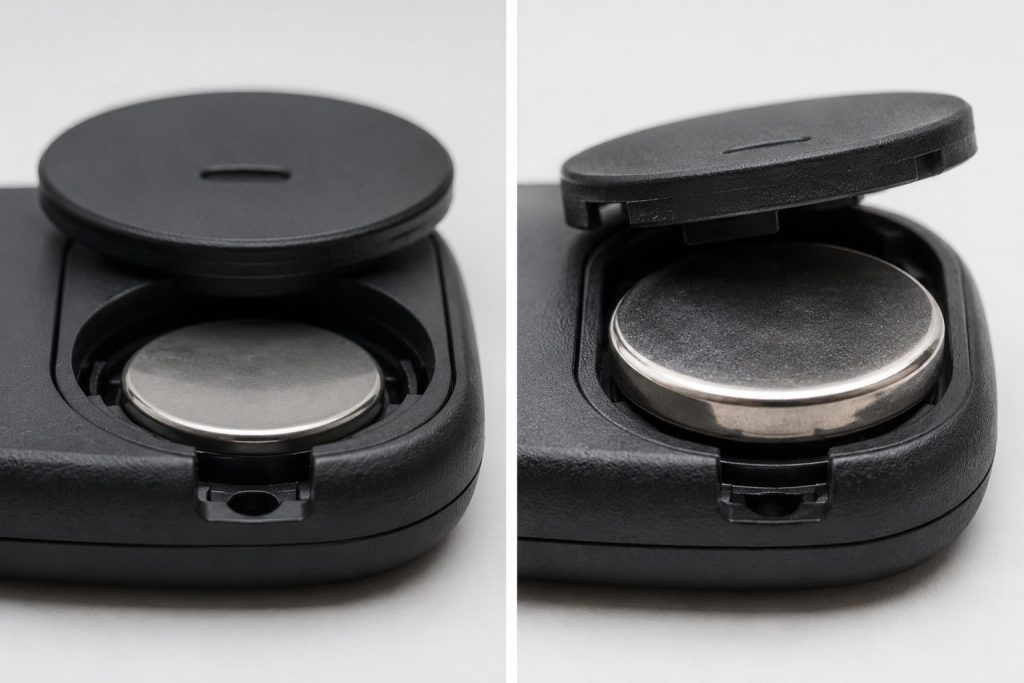
The short answer: sometimes, in one direction only. A CR2025 placed in a CR2032 slot will usually make electrical contact, because the spring terminal compresses enough to bridge the gap. The device will work — but with reduced runtime, and with a slightly loose fit that can cause intermittent failures under vibration or mechanical stress. Not a long-term solution, but functional in a low-stakes, temporary situation.
Going the other direction doesn’t work. A CR2032 in a CR2025 compartment won’t close. The lid won’t seat, the contact geometry breaks, and forcing it risks damaging the housing. That’s not a workaround — it’s a failed installation. For bulk sourcing decisions, substitutions are not a strategy. Spec to the device, not to what’s available in the warehouse.
Sourcing CR2025 vs CR2032 for Bulk Orders
At volume, the cr2025 vs cr2032 distinction becomes a supply chain decision, not just a technical one. Mixed inventory — where both cell types enter the same warehouse under loose labeling — is one of the most common sources of field failures in device maintenance programs. The cells look identical in an unmarked tray.
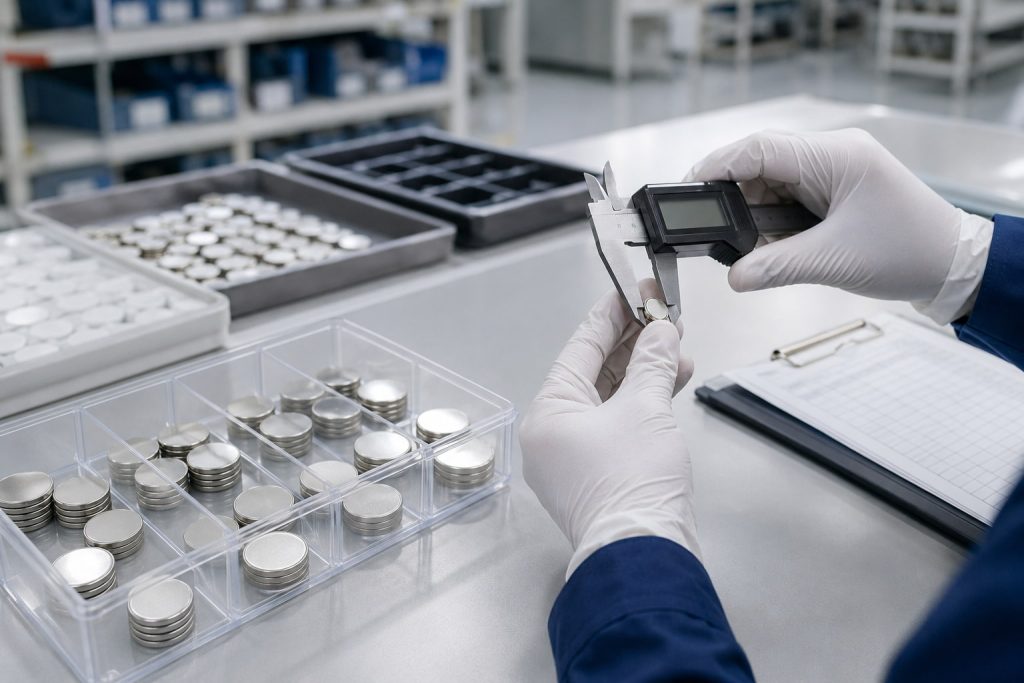
Standard procurement practice for button batteries at scale should include model-specific part numbers on every PO, incoming inspection that includes thickness measurement, and clearly separated storage locations for different coin cell battery sizes. A 0.7mm difference doesn’t show up visually under normal warehouse conditions.
Suppliers who can confirm cell thickness tolerances in writing — not just nominal specs — are worth prioritizing. Tolerance variation at the thin end of a CR2032 batch can push cells into CR2025 territory, creating exactly the contact issues described above.
For teams sourcing both cell types, a single qualified supplier covering the full CR series battery range reduces the risk of cross-contamination between SKUs during fulfillment.
Getting the Spec Right the First Time
The cr2025 vs cr2032 decision isn’t a judgment call — it’s a reading exercise. Check the device spec sheet, confirm the battery compartment depth, and lock the part number before the first order. According to IEC 60086-3, the international standard governing primary lithium cells, dimensional tolerances for coin cells are tightly defined because interchangeability assumptions can lead to systematic failures in the field. Sourcing the wrong cell at volume doesn’t just mean a reorder. It means field technician time, device downtime, and a supply chain review that could have been avoided at the spec stage.