
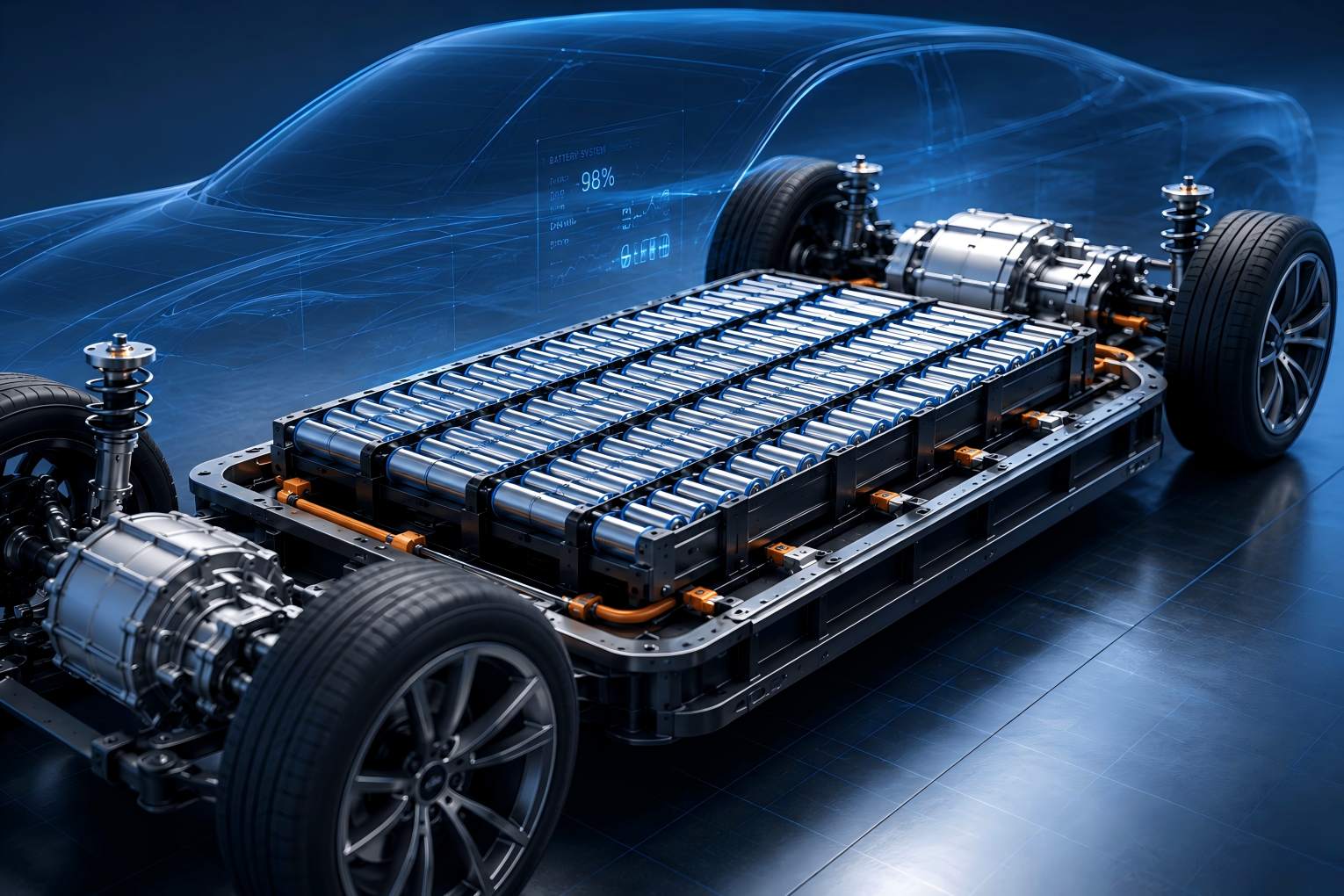
21700 batteries work well in high-performance EV battery systems because they balance five things at the same time: driving range, power output, thermal behavior, pack efficiency, and production maturity. No cell format is best at everything. What sets 21700 batteries apart is how well they handle this combination.
A quick note on naming: the term 2170-type cell often appears in EV technical discussions because some automakers use their own naming style for cylindrical cells. Zenilove focuses on 21700 battery cells, which sit in the same broad size category: cylindrical lithium-ion cells around 21 mm in diameter and 70 mm tall. However, actual performance still depends on cell chemistry, manufacturer, capacity, discharge rate, and pack design.
21700 Batteries Balance Range, Power, and Thermal Control
In real EV pack design, optimizing only one number often creates another problem. A cell may offer strong energy density but weak power delivery. Another cell may provide high discharge performance but create difficult thermal challenges. A low-cost option may look attractive at first, but it may fail to meet long-term reliability requirements once the battery pack faces real charging, driving, and temperature conditions.
21700 batteries have stayed relevant in high-performance EV applications because they soften these tradeoffs. With enough energy density for long-range battery systems, solid power output for demanding driving conditions, and manageable thermal behavior at the pack level, this format offers a practical balance for EV battery design. The format has also gone through years of mass production refinement, which matters when a battery design moves from prototype to volume production.
That overall balance is what makes 21700 batteries useful in practice. They do not win because of one single specification. They work because they help engineers balance energy, power, heat, safety, and space.
Higher Capacity Supports Longer Driving Range
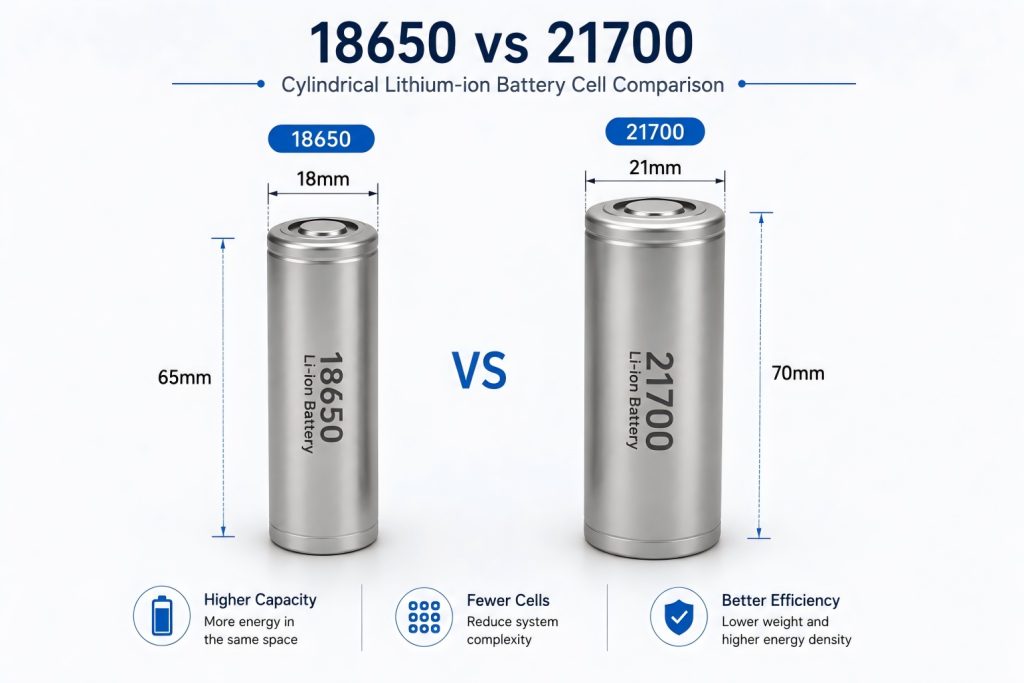
A 21700 cell is larger than an 18650 cell, and the extra internal volume usually allows each cell to store more energy. At the battery pack level, this can support longer driving range and better space efficiency.
For EV battery engineers, higher capacity per cell can create two practical advantages. First, it can help increase total energy storage within a limited pack space. Second, it may reduce the number of cells needed to reach a similar capacity target compared with smaller cylindrical cells.
A pack that once required thousands of smaller cells may use significantly fewer 21700 cells for a similar capacity goal. This can reduce interconnects, simplify wiring, and improve assembly efficiency. In a high-performance EV battery system, where range, weight, and space all matter, these advantages can compound quickly.
Strong Power Output Supports High-Performance Driving
Range is only part of the picture. A high-performance EV battery system also needs to deliver strong power when the vehicle demands it. Acceleration, climbing, highway driving, and fast charging all place heavy demands on the battery pack.
21700 batteries can support a useful balance between energy storage and power delivery. When designed into the right pack structure, they can help maintain stable output under load and reduce the risk of noticeable voltage drop during demanding driving conditions.
This matters because performance EV users expect the vehicle to respond quickly and consistently. A battery system that looks good in capacity data but struggles under load will not deliver the driving experience expected from a high-performance EV. The value of 21700 batteries is that they can support both range and power when the pack design is properly engineered.
Thermal Control Makes 21700 Batteries Practical for EV Systems
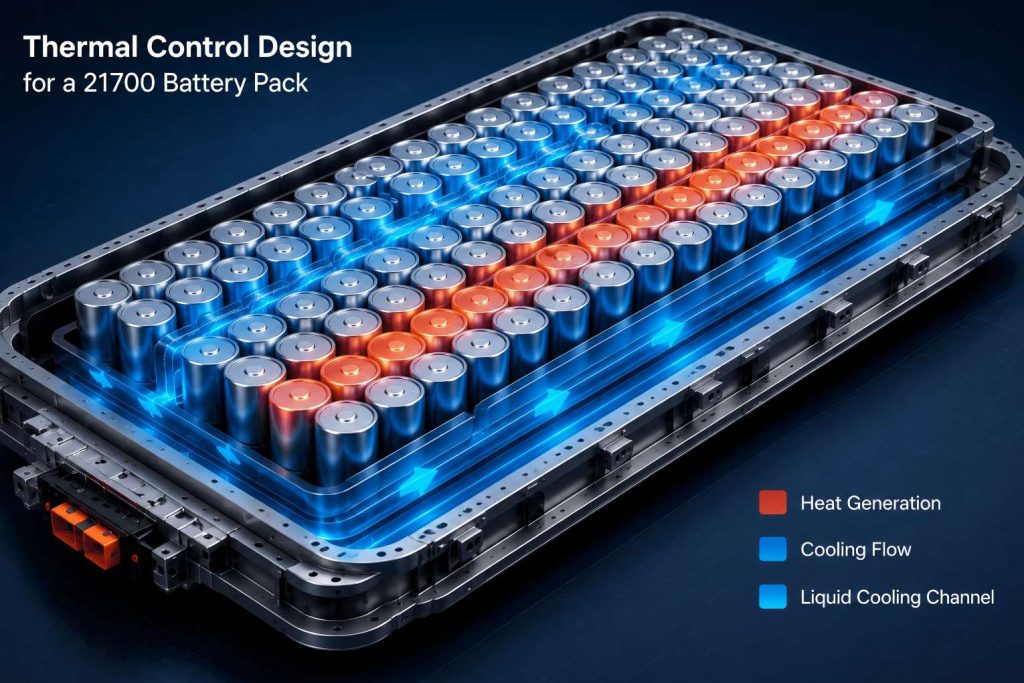
Heat is what separates a reliable battery system from a fragile one. Fast charging produces heat. High-power driving produces heat. Hot weather adds even more pressure. If the pack cannot control temperature well, performance, safety, and battery life all suffer.
The 21700 format gives engineers more capacity per cell while still remaining small enough for practical cooling layouts. It does not remove the need for thermal design, but it gives battery teams a workable middle ground between energy storage and heat control.
This is why 21700 batteries are useful in high-performance EV battery systems. They support stronger energy and power demands without forcing engineers into an overly difficult cooling structure. For broader EV market context, the International Energy Agency tracks global EV battery development and adoption trends.
Pack Efficiency Helps Reduce System Complexity
Pack efficiency is not only about energy. It is also about how many components must keep working safely and consistently over the life of the vehicle.
When each cell stores more energy, the battery pack may need fewer total cells. This can reduce:
- Fewer weld points
- Fewer interconnects
- Fewer thermal interfaces
- Less wiring complexity
- Lower system management pressure
For a high-performance EV battery system, this simplification has real engineering value. Fewer parts can mean easier assembly, fewer potential failure points, and a more efficient pack layout. It can also help engineers manage weight, space, and reliability more effectively.
This is one reason 21700 batteries remain attractive in demanding battery systems. Their value is not only inside the cell. It also appears in how the full battery pack can be designed around them.
EV Examples Show the Value of Larger Cylindrical Cells
Several EV examples help explain why larger cylindrical lithium-ion cells matter in vehicle battery design.
Tesla Model 3 and Model Y are commonly cited examples of 2170-type cylindrical cells. They are not luxury EV examples in the traditional sense, but they show how this size category can support range, output, thermal control, and scalable battery pack production.
Tesla Model S is often discussed as a premium EV, but it is not the right example for 21700 battery design. Model S has mainly relied on 18650 / 1865-type cylindrical cells. This distinction matters because not every premium EV uses 21700 batteries.
Lucid Motors is a better example of a premium EV maker that values high-performance cylindrical cell technology. The point is not to claim that Zenilove supplies Lucid or that every premium EV uses the same cell. The point is that larger cylindrical cells have proven their value when EV engineers need a balance of energy, power, cooling, and pack design.
These examples show why the 21700 battery size category matters. 21700 batteries are not exclusive to high-end EVs, and not every premium EV uses them. Their value is engineering balance, not market positioning.
Zenilove’s View: 21700 Battery Value Comes From Pack-Level Design
The cell is only the starting point. A strong 21700 cell installed in a poorly designed pack will still produce a weak battery system. A well-engineered pack can pull more usable performance, safety, and reliability from the same cell format.
At Zenilove, we look at 21700 batteries through the full system, not just the cell specification. A battery that looks strong on paper is not always the best battery for the final system. The right 21700 battery solution should match the real power demand, safety requirements, thermal conditions, space limits, and pack structure.
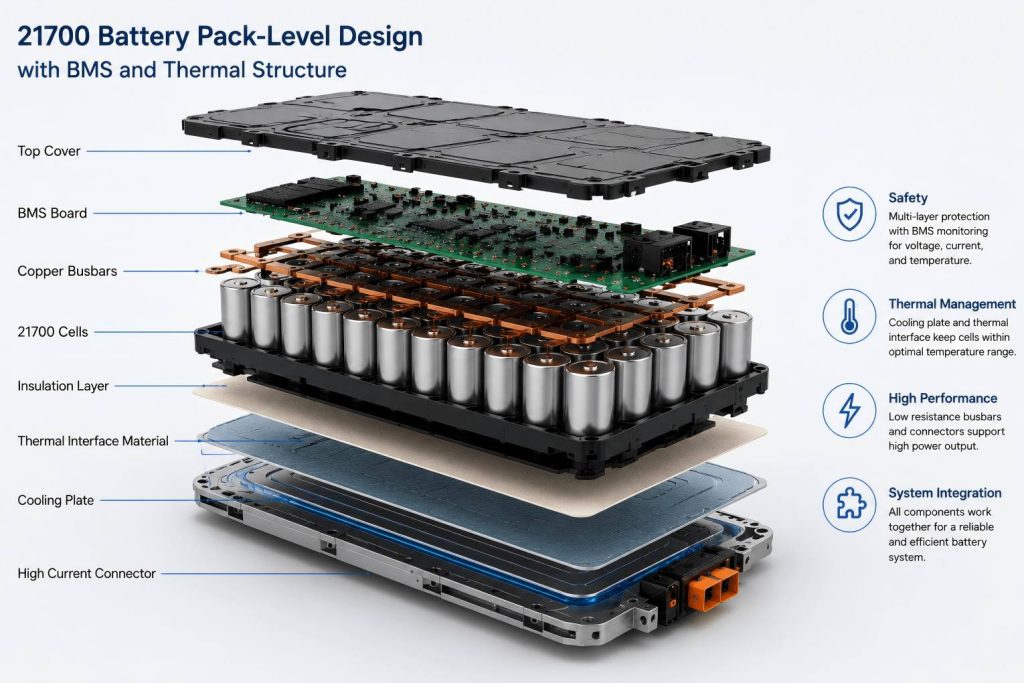
What matters at the pack level includes:
- Cell selection that matches capacity, discharge rating, and chemistry to the real application
- BMS protection that monitors voltage, temperature, balance, and safety conditions
- Thermal design that keeps cells within a healthy operating range during charging and use
- Connector and busbar layout that reduces resistance and supports the required current
- Pack structure that protects cells from mechanical stress and improves system reliability
The Real Value of 21700 Batteries Is System Balance
21700 batteries fit high-performance EV battery design because they balance range, power output, thermal behavior, pack efficiency, and reliability. Their value is not about topping one specification. It is about helping the full battery system work safely and efficiently.
At Zenilove, we design custom 21700 battery pack solutions with the full system in mind, not just the cell. Cell selection, BMS protection, thermal design, and pack structure all need to match the final application. That is where 21700 batteries become more than a cell format — they become a practical power solution.