
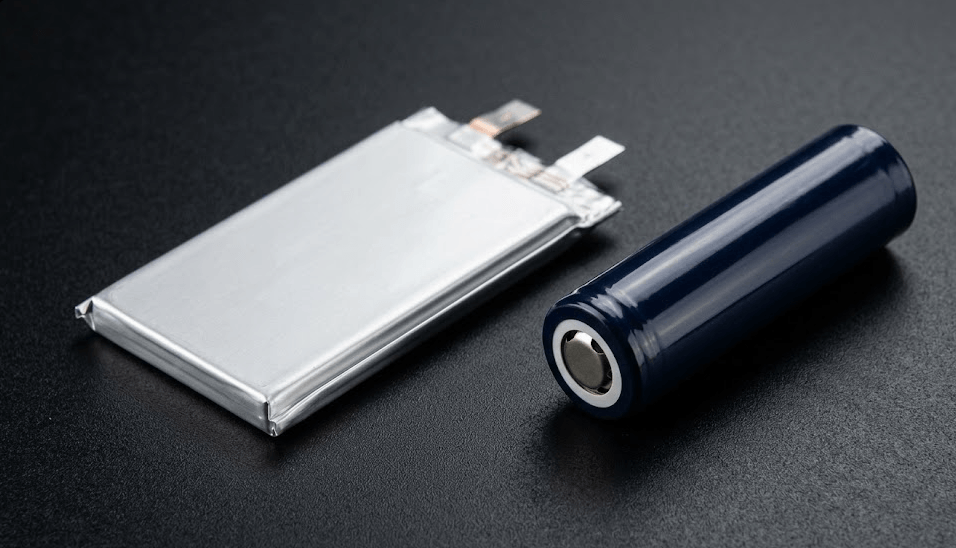
Many product teams assume a li polymer battery and a lithium-ion battery are essentially interchangeable. In practice, the two share the same electrochemical foundation but diverge significantly in how they are packaged, protected, and integrated into a finished device. These structural differences shape everything from enclosure design to long-term reliability, making the choice less about chemistry and more about engineering fit.
Key Differences Between Li Polymer Battery and Lithium Ion Battery
| Feature | Lithium Ion Battery | Li Polymer Battery |
|---|---|---|
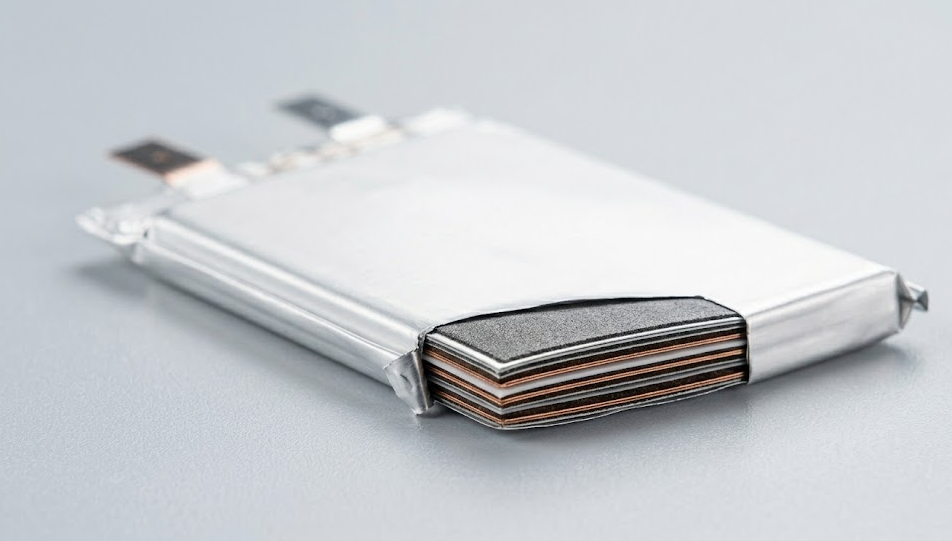
| Cell structure | Wound or stacked electrodes in rigid format | Stacked or folded electrodes in flexible laminate |
| Enclosure | Metal can (cylindrical or prismatic) | Aluminum-laminate pouch |
| Shape flexibility | Fixed standard formats | Customizable dimensions and geometry |
| Thickness | Typically 10–50 mm depending on format | Can be as thin as 2–3 mm |
| Mechanical strength | High — rigid case provides structural support | Low — pouch requires external support from enclosure |
| Energy density | High volumetric density in standard formats | Competitive, but varies with custom cell design |
| Cost | Lower for standard formats at scale | Higher tooling cost; justified by design flexibility |
| Common aging behavior | Capacity fade with minimal physical change | Electrolyte outgassing may cause cell swelling over time |
These differences stem from packaging and design, rather than differences in how they function. It is the aluminum foil composite pouch that gives lithium polymer batteries their slim profile and geometric flexibility, whereas the metal casing of lithium-ion batteries sacrifices this flexibility in exchange for mechanical strength. The two battery types perform similarly at the electrochemical level.
Performance and Lifespan of li polymer battery and Lithium-Ion Batteries
Lithium ion batteries in standard cylindrical or prismatic formats deliver consistent, predictable performance across production runs. Uniform geometry simplifies thermal modeling and system validation.
Li polymer battery performance, by contrast, depends more heavily on stack pressure, temperature distribution across the laminate, cell thickness uniformity, and charging profile precision. Small variations in any of these factors can influence both capacity and cycle behavior.
For both types, cycle life is primarily driven by operating temperature, depth of discharge, charge rate, and the quality of protection design. Neither technology reaches its rated cycle count without well-tuned BMS logic and thermal controls.
Safety and Aging of Lithium Polymer and Lithium-Ion Batteries
Li polymer batteries are susceptible to pouch swelling caused by electrolyte decomposition. This accelerates under overcharge conditions, sustained high temperatures, or physical stress on the laminate. Mechanical compression fixtures are often used in high-cycle applications to manage swelling and maintain electrode contact pressure.
Lithium ion cells in metal enclosures are less prone to visible deformation, but the rigid case does not eliminate thermal runaway risk. Excessive internal gas pressure can still cause venting or, in severe cases, rupture.
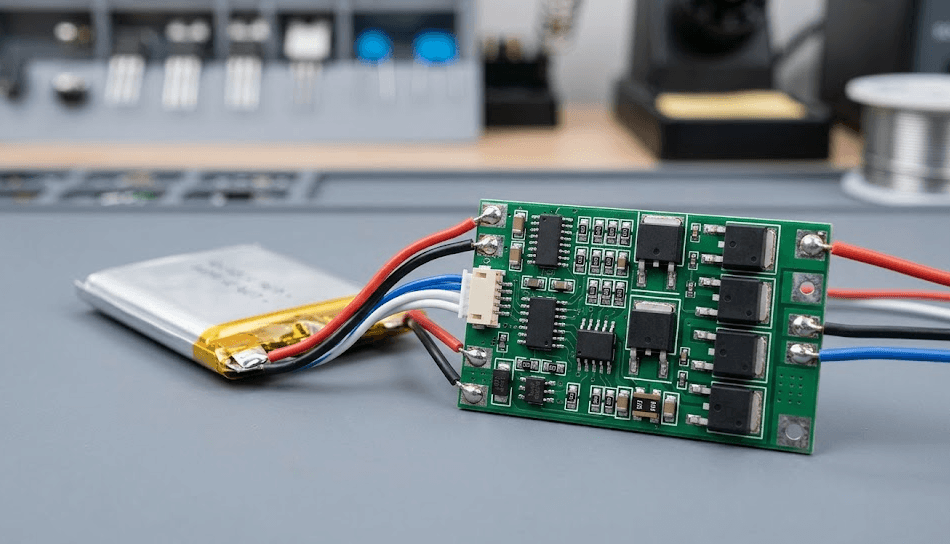
Both battery types require protection circuits or a dedicated BMS to guard against overcharge, over-discharge, short circuit, and temperature excursions. Neither format should be treated as inherently safe without electrical protection in place. For a broader reference on battery safety standards, Battery University provides reliable background on lithium cell behavior and failure modes.
Precautions for Using Lithium Polymer and Lithium-Ion Batteries
Lithium-Polymer Batteries:
- The device has limited internal space and fixed enclosure dimensions
- A thin or lightweight battery profile is a design priority
- The product requires a non-standard cell shape, such as L-shaped or curved geometries
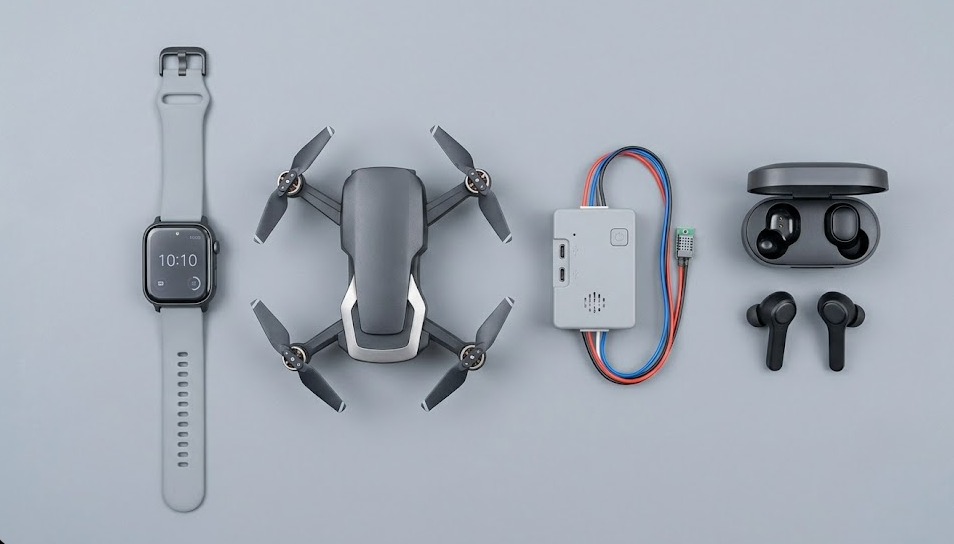
- The design is highly integrated — wearables, IoT devices, drones, compact medical devices, or portable consumer electronics
Lithium-Ion Batteries:
- Higher capacity or energy throughput is the primary requirement
- Standard cylindrical (18650, 21700) or prismatic formats align with the mechanical design
- Cost efficiency at scale is a critical factor
- The application uses modular or replaceable packs — power tools, energy storage systems, industrial equipment, or electric vehicle modules
Which Battery Fits Your Design?
When a device requires a slim, lightweight, or custom-shaped power source, li polymer battery are typically the better choice. However, when design requirements call for higher capacity, stronger mechanical protection, and greater cost-effectiveness, lithium-ion batteries are often more suitable. Which battery is “better” depends on the packaging method, space constraints, safety requirements, cost objectives, and how the battery integrates into the device.