
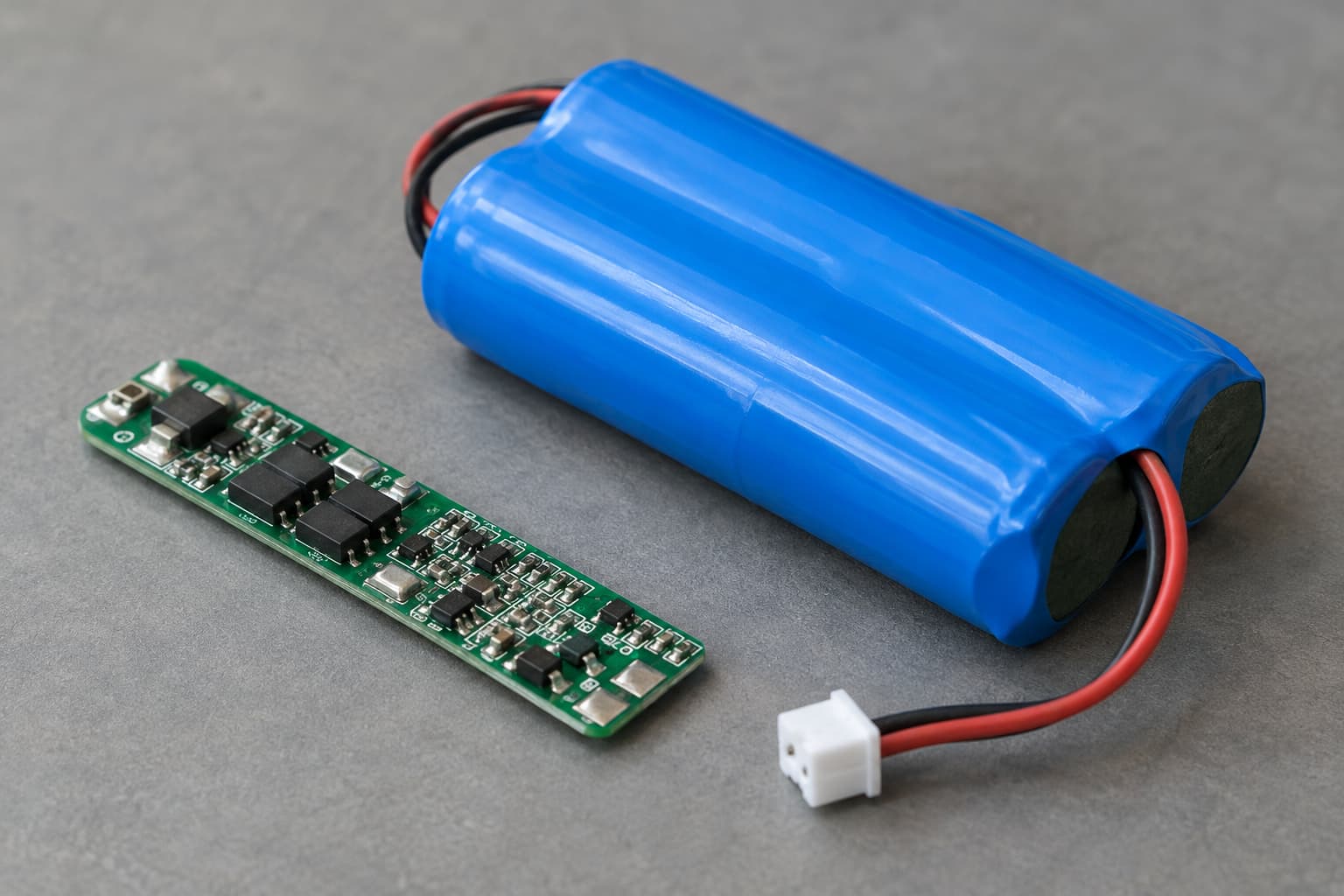
Custom battery pack cost factors include cells, protection electronics, mechanical construction, wiring, testing, development work, and order conditions. A useful OEM quote separates the recurring pack price from one-time charges and states exactly what each amount covers.
Two suppliers can quote the same voltage and capacity while proposing different products. Before comparing prices, give both suppliers the same device brief and ask them to list assumptions, exclusions,s and approved component alternatives.
Which custom battery pack cost factors change the unit price?
Start with the parts and operations repeated for every production pack. Ask for enough detail to understand the proposal, even when the supplier keeps its internal cost breakdown confidential.
| Cost factor | What buyers should confirm |
|---|---|
| Cells | Exact model, quantity, approved alternatives and purchase conditions |
| Protection electronics | Required functions, current limits, sensing and communication |
| Mechanical construction | Cell arrangement, insulation, housing and assembly method |
| Wiring and connectors | Part numbers, wire gauge, length, pinout and polarity |
| Production checks | Tests performed on every pack and records supplied |
| Order conditions | Batch quantity, packaging, delivery terms and quote validity |
For projects using cylindrical lithium-ion battery cells, compare the proposed cell model and pack arrangement alongside capacity. Changes in discharge demand or available installation space can affect the components and assembly work included in the quote.
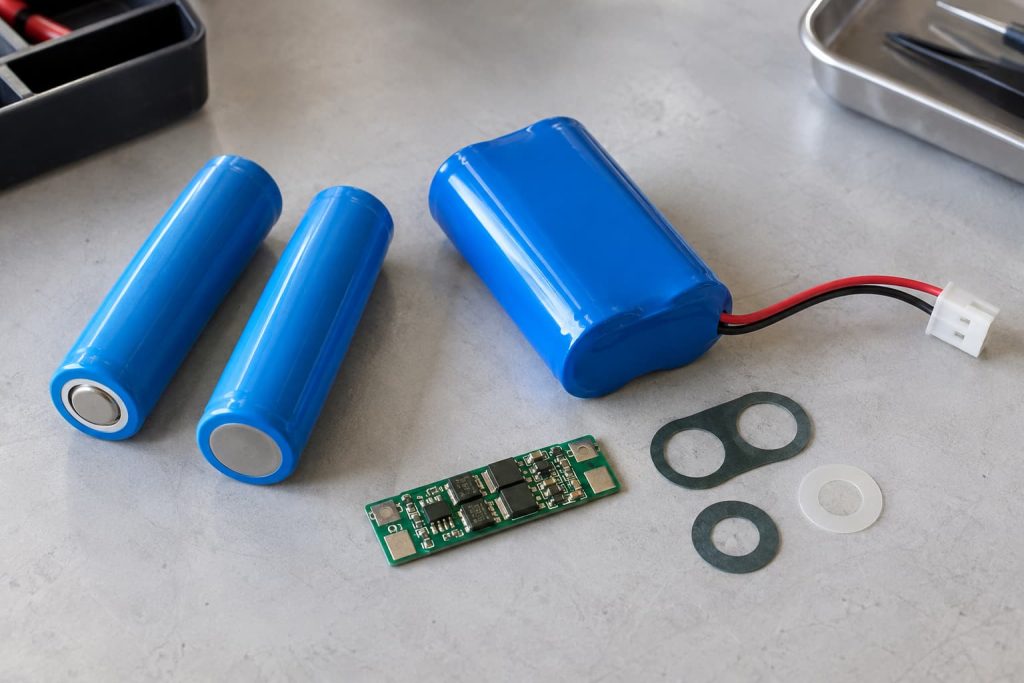
Battery pack development cost belongs on a separate line
Engineering samples often require work that does not repeat unchanged on every production unit. Drawings, circuit development, firmware configuration, sample assembly, and device integration support may appear as separate charges.
For ODM battery pack design, request a list of paid deliverables and included revision rounds. Specify who supplies the device, charger,r and test information, and who approves the sample.
Ask how the supplier handles changes after approval. Replacing a connector or adding communication can affect drawings, components, tests, and verification. Agree on the change process before paying the development fee, and distinguish correcting a supplier error from expanding the approved scope.
Battery pack tooling cost depends on the construction
A custom housing may require a mold, while assembly fixtures and test fixtures serve different purposes. Ask the supplier to identify each tool and explain its role. Avoid treating every setup charge as a housing mold.
Confirm ownership, storage, maintenance, expected service life,ife and the terms for transferring tooling. Also ask which drawing revision the tool supports. A housing change after tooling approval may require modification or replacement.
Existing construction can be worth evaluating when it fits the equipment. Zenilove’s 18650 5200mAh Battery Pack provides a concrete product reference for that discussion. Confirm device fit and any requested changes before treating a catalog product as equivalent to a custom quotation.
Protection functions and testing need a defined scope
The phrase “BMS included” leaves several questions unanswered. Specify the functions the device needs, including relevant protection behavior, temperature sensing, capacity reporting, and communication.
Texas Instruments explains the differences between battery protectors, monitors, and gauges. These categories perform different functions. Use that distinction to ask what the quoted electronics actually provide.
Separate routine production checks from engineering validation and external laboratory work. Request test conditions, sample quantities, acceptance criteria, reporting,g and responsibility for retesting. Clarify what certification support includes and which charges remain outside the quote. A statement that testing is included should identify the tests and evidence you will receive.
Compare custom battery pack pricing on the same basis
Build a comparison sheet using identical quantities, specifications, ns and delivery terms. Record omissions as open questions rather than assuming the cheaper supplier included them.
| Comparison item | Evidence to request |
|---|---|
| Technical baseline | Approved specification and component list |
| Recurring price | Price at each actual release quantity |
| One-time charges | Engineering, tooling, fixtures and sample fees |
| Verification scope | Test plan, reports and excluded laboratory charges |
| Commercial terms | Currency, payment, delivery terms and validity |
| Change conditions | Revision charges and component substitution approval |
A large annual forecast does not automatically mean every release receives the price for a single large order. Request pricing for the quantities you expect to purchase.
For internal budgeting, calculate a first-order comparison: quantity multiplied by unit price, plus separately payable development, tooling, sample, test, and delivery charges. Avoid counting costs already included in the unit price twice.
Send an RFQ that reduces assumptions.s
A clear request for quotation gives suppliers fewer gaps to fill. Include the device application, operating voltage range, runtime target, continuous current, peak current, and peak duration.
Attach the battery compartment drawing, mounting details, connector part number, pinout, wire length,h and charger information. Describe operating conditions, sample quantity, first production batch, and expected release schedule.
When evaluating custom battery solutions, mark each requirement as fixed, negotiable,e or awaiting confirmation. Ask suppliers to show proposed deviations separately. This makes a lower-cost alternative easier to evaluate without losing track of the original specification.
Questions to resolve before approval
Procurement teams should settle these points before turning a preliminary estimate into an order.
Does a higher-capacity pack always cost more?
Capacity alone cannot determine the price. Compare the complete cell proposal, electronics, construction, and order conditions before drawing that conclusion.
Can a larger order remove tooling charges?
Ask for the commercial arrangement in writing. A supplier may spread charges across unit prices or invoice them separately. Confirm how later orders and design changes affect that arrangement.
Is the lowest unit price the lowest project cost?
Check excluded development, tests, packaging, and delivery charges, then compare first-order spending with repeat-order pricing.
A comparable OEM quote defines every cost and deliverable
Custom battery pack cost factors become easier to assess when every supplier quotes against the same approved brief. Record the recurring pack price, one-time work, testing scope, deliveryterms, and change conditions before approval.
Resolve missing information before choosing a supplier. The purchasing decision should link each charge to a specific component, service, or deliverable, with clear responsibility for approval and any later changes.