

Cylinder high-capacity battery testing must confirm usable runtime because a higher nominal capacity does not automatically improve device performance. Voltage drop under load, device cutoff, temperature, cell resistance, pack losses, and ageing determine how much energy the equipment can actually use.
The Incoming Batch Decision for cylinder high-capacity battery testing
Procurement teams should verify the exact manufacturer and model, check lot and date codes, review storage history, sample voltage and internal resistance, test capacity under one controlled method, inspect dimensions and sleeves, and confirm traceability. Multi-cell packs also need matching limits and rules for mixing lots. A small pre-sales sample is not enough to approve a large batch.
The process below explains what to measure, how to compare lots, and what evidence the supplier should retain.
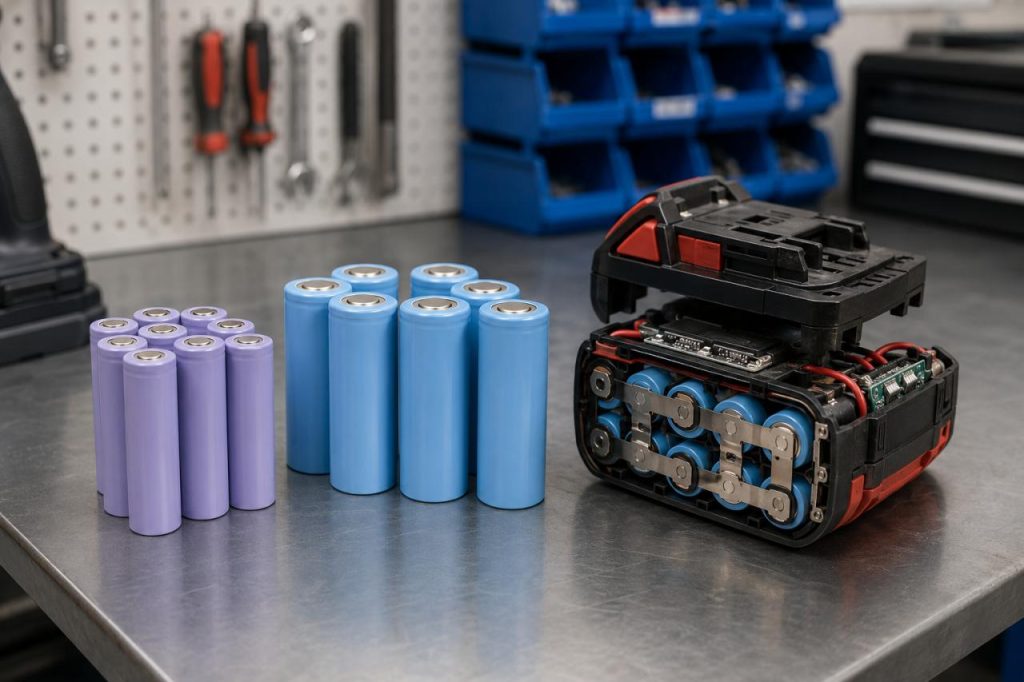
Compare Usable Energy under the Device Load for high-capacity lithium-ion cells
Request the conditions behind every capacity value: discharge current, cutoff voltage, temperature, rest period, sample age, and sample quantity. Values measured under different conditions cannot support a fair comparison.
Reproduce the device duty cycle. Include continuous current, startup or pulse events, intervals, sleep periods, and the lowest input voltage that allows stable operation. Measure voltage at the device terminals so the result includes the pack interconnect, protection board, wire, connector, and contact resistance.
Use this comparison structure:
| Test item | Condition to define |
| Capacity | Load, cutoff, temperature, rest, and sample age |
| Pulse voltage | Current, duration, interval, state of charge, and temperature |
| Temperature rise | Sensor position, ambient, airflow, and test duration |
| Runtime | Device revision, firmware, duty cycle, and end condition |
| Recovery | Rest time and permitted voltage recovery |
| Repeatability | Sample quantity, lots, and acceptance limits |
The cylindrical li ion battery page can support initial format selection. Approve the final cell and pack only after the device-level conditions are defined.
Check the Capacity-Power-Temperature Trade-Off for cylindrical cell batch
Cell designs optimised for energy may behave differently from designs optimised for power. A high-capacity cell can meet a runtime target at a moderate load but show greater voltage drop or heating during repeated high-current events.
Test at the lowest approved operating temperature, where internal resistance may increase, and at the highest ambient temperature, where thermal margin is reduced. Include the most demanding state of charge rather than testing only fresh, fully charged cells.
For 21700 cylindrical cells, compare the reduced cell count and energy potential with the larger diameter, mechanical layout, heat paths, holder design, and replacement strategy. Evaluate the complete pack rather than treating format as a stand-alone advantage.
Define Cell Matching and Pack Architecture for 21700 cell testing
Multi-cell packs need controlled series-parallel configuration and cell matching. Define acceptable windows for open-circuit voltage, capacity, and internal resistance. State whether cells from different production lots may be mixed and how aged inventory is managed.
Review current sharing in parallel groups and voltage balance in series strings. Interconnect resistance, weld quality, temperature differences, and cell variation can change the load carried by individual cells.
Battery Pack Design Services can connect these cell-level choices to the pack voltage, protection, enclosure, connector, thermal design, and device interface.
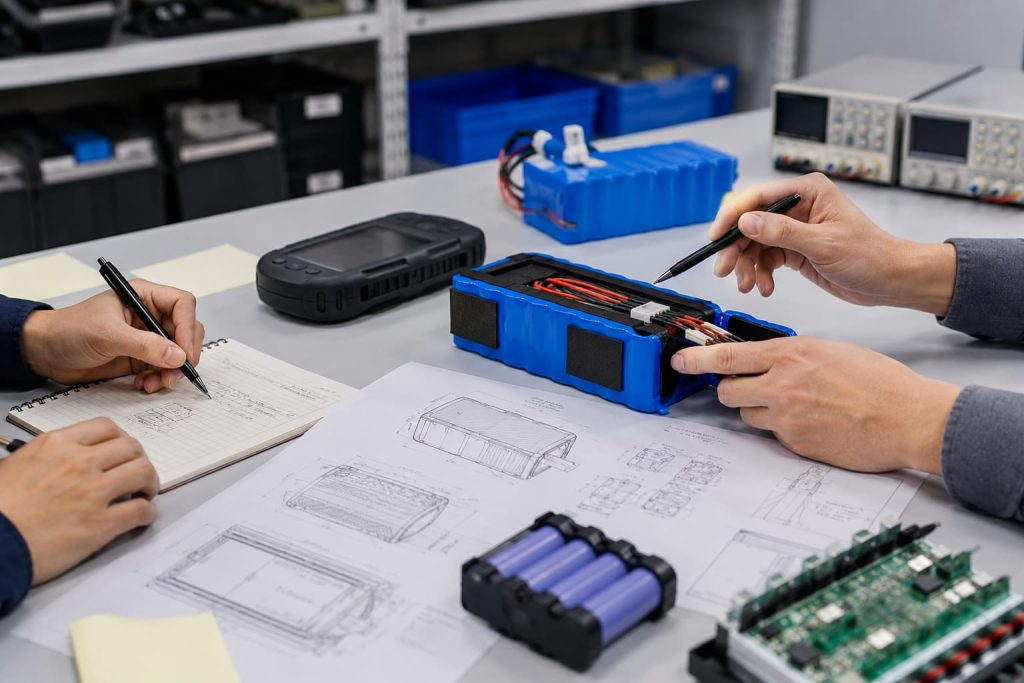
Control Batch Consistency for battery batch inspection
A small sample may not show the distribution that appears in a wholesale order. Request data across multiple cells and, when appropriate, more than one production lot. Review the mean, range, outliers, and failure-handling rules for critical measurements.
Incoming and production controls may include:
- Model, manufacturer, date code, and lot verification
- Open-circuit and load voltage
- Internal resistance under a defined method
- Capacity sampling and retention
- Dimensions, weight, appearance, and sleeve condition
- Leakage or abnormal odour inspection
- Sorting and matching records
- Storage temperature, humidity, and inventory rotation
Require traceability from incoming cell lots to finished packs and shipments. The supplier should be able to identify every pack that used a suspect lot and every critical lot used in a selected finished pack.
Review Protection and Thermal Limits for cylinder high-capacity battery testing
Protection settings should allow valid device pulses while limiting damaging conditions. Define thresholds, tolerances, delays, recovery behaviour, and test methods for overcharge, over-discharge, overcurrent, short-circuit, and temperature functions.
Measure temperature at representative cells, interconnects, protection components, wires, and connectors. Test continuous load, repeated pulses, charging, and operation during charging where permitted. Consider blocked airflow, the hottest approved ambient condition, and manufacturing tolerances.
Audit the Supplier and Shipment for high-capacity lithium-ion cells
For a wholesale cylindrical lithium battery order, verify the exact cell source, production site, approved specifications, inspection plan, packaging, terminal protection, transport documents, and change-notification rules.
The UN lithium battery test requirements describe the transport test framework for lithium cells and batteries. Confirm that the test summary and supporting records match the supplied model and configuration. Current shipping rules should be verified for the transport mode, quantity, packaging, and route.
An OEM lithium battery manufacturing agreement should prohibit unapproved changes to the cell, interconnect, electronics, firmware, insulation, assembly process, inspection method, or production site.
Request Data for the Real Application for cylindrical cell batch
Submit the device load profile, minimum operating voltage, pack envelope, temperature range, required runtime, charging method, expected order quantity, and target markets. Zenilove can use those inputs to compare high-capacity cylindrical cells and propose matching, sampling, and validation requirements for the production pack.
Batch Inspection Questions for 21700 cell testing
Which measurements should be checked for every incoming cell batch?
At minimum, use the approved sampling plan to review identity, appearance, open-circuit voltage, AC or DC resistance method as specified, capacity under defined conditions, dimensions, date or lot code, and traceability records.
Is rated capacity enough to approve a high-capacity cell?
No. Buyers should compare usable energy at the actual device load, voltage cutoff, temperature, pulse pattern, and ageing condition. A cell can meet nominal capacity while still causing excessive voltage sag or heat in the application.
Why should cells be matched before pack assembly?
Large differences in capacity, resistance, state of charge, or age can create uneven current, temperature, voltage, and state-of-charge behaviour within a parallel or series group.
What application data should a buyer send Zenilove?
Send the load profile, minimum voltage, pack envelope, temperature range, runtime target, charger, pulse requirements, forecast volume, and destination markets so sampling and validation can reflect the real use case.