
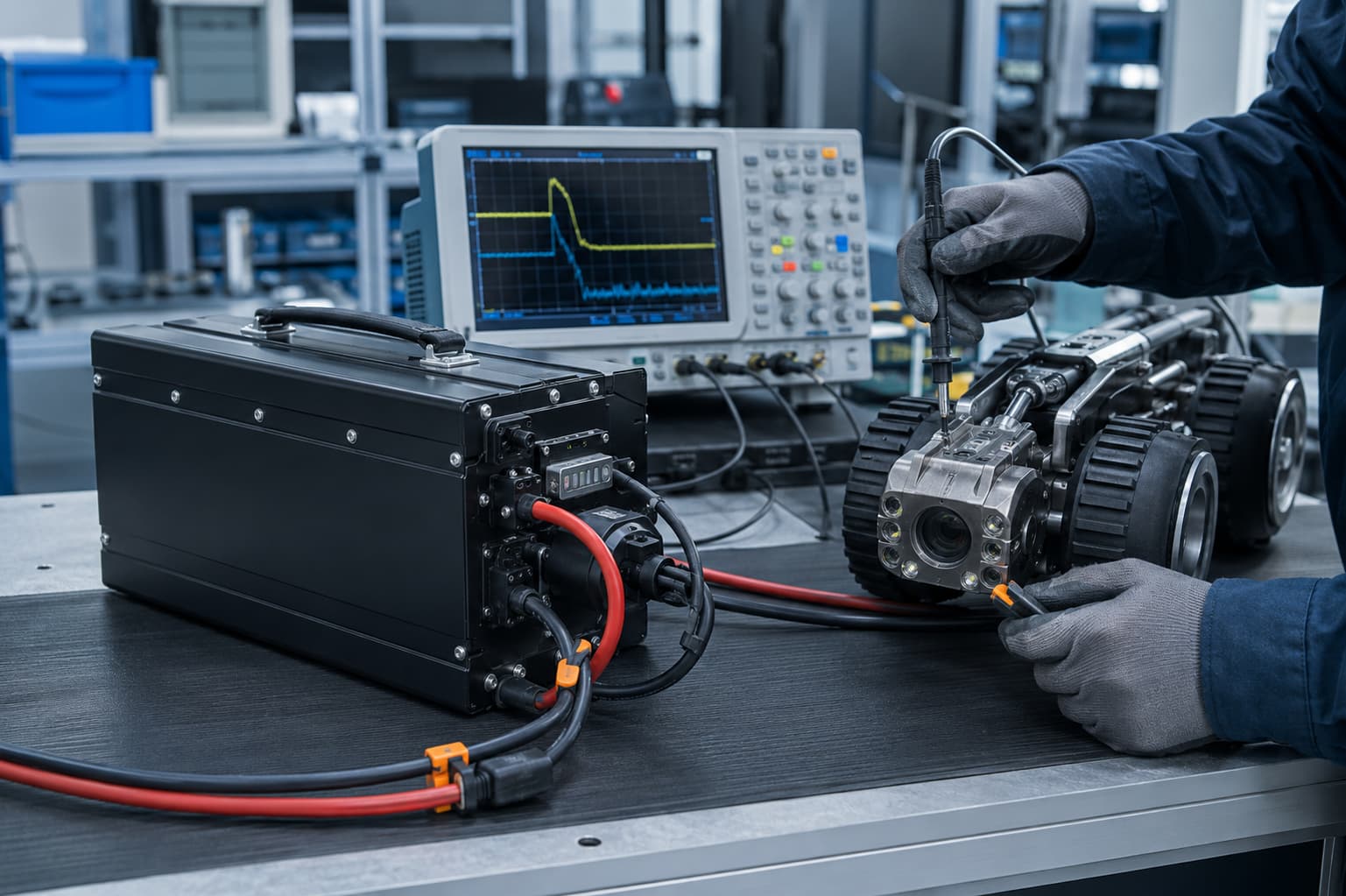
Custom lithium battery solution design must address more than nominal voltage and capacity because a pack can still fail in the equipment it was built to power. A motor start may trigger protection, a radio pulse may reset electronics, charging heat may exceed an enclosure limit, or the finished assembly may not fit once you add wires, insulation, and production tolerances.
Information Required for a Feasibility Review for custom lithium battery solutions design
A battery manufacturer needs the real load profile, voltage limits, required runtime, maximum finished-pack dimensions, charging method, operating temperatures, protection requirements, target markets, validation conditions, annual demand, and project schedule. Missing any of these inputs forces the supplier to make assumptions that can cause sample failure, redesign, or an inaccurate quotation.
The sections below show engineering and procurement teams how to prepare those inputs before requesting a battery proposal.
Start with the Real Load Profile for custom battery pack design
Record the device current over a complete operating cycle. Average current is useful for an initial energy estimate, but it does not describe short events that often control pack performance. Measure startup current, continuous load, pulse current, pulse duration, interval between pulses, sleep current, and combinations of functions that can operate at the same time.
Define the lowest device input voltage that still supports stable operation. The useful battery capacity ends when the device reaches this cutoff, even if energy remains in the cells. Measure voltage at the device input so the result includes losses through cell interconnects, protection circuits, wires, connectors, and contacts.
Use a repeatable duty cycle for runtime testing. Record hardware and firmware revisions, ambient temperature, initial state of charge, active functions, cycle timing, and end-of-discharge condition. “Typical use” is not a test method unless the team defines it.
Translate the Application into Pack Limits for an industrial battery pack
Convert the measured load into a controlled requirement set:
| Requirement | Information to define |
| Energy | Required runtime, usable voltage range, and end condition |
| Current | Continuous, pulse, duration, interval, and combined loads |
| Voltage | Nominal range, maximum charge voltage, and device cutoff |
| Mechanics | Maximum finished dimensions, mounting, wire exit, and connector |
| Environment | Operating, charging, storage, humidity, shock, and vibration |
| Service | Cycle-life target, maintenance interval, and replacement method |
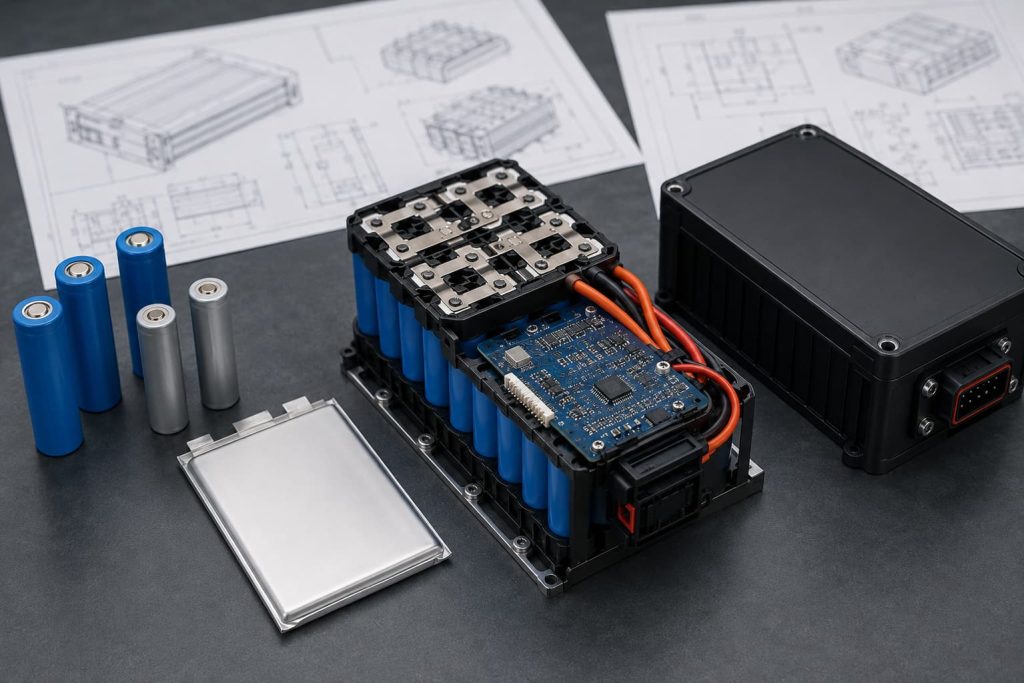
The mechanical limit must describe the finished battery rather than a bare cell. Include the protection board, insulation, adhesive, label, wire bend, connector, and permitted manufacturing tolerance. Review the installation path and retention method with representative enclosure parts.
The Custom Battery Pack Solutions process can use these inputs to compare cell formats and pack architectures. Cell selection should follow the system requirement rather than begin with a preferred catalogue capacity.
Select Cells and Architecture Together for a Lithium Battery Solution
Series count sets the voltage window. Parallel count affects capacity, current sharing, size, weight, and the number of cell connections. Cell chemistry and format influence energy density, power capability, thermal behaviour, mechanical support, and sourcing options.
Compare candidates under the same load, cutoff voltage, temperature, and sample condition. Published capacity measured at a light laboratory load may not predict the energy available during cold operation or repeated pulses. Request resistance, voltage-drop, temperature, cycle-life, and storage data under conditions relevant to the equipment.
Define how cells will be matched and connected. A production specification may include voltage, capacity, and internal-resistance windows; welding parameters; interconnect material; insulation; cell spacing; compression; and lot-control rules. These details influence repeatability as much as the nominal cell model.

Match Protection to Normal Operation for custom battery engineering
Protection thresholds must tolerate valid device behaviour while limiting unsafe or damaging conditions. Define overcharge, over-discharge, overcurrent, short-circuit, and temperature functions with thresholds, tolerances, delays, and recovery conditions.
A startup pulse can resemble a fault if the current threshold or delay is too restrictive. Raising the threshold without checking wires, connectors, interconnects, and cells creates a different risk. Test the full current path and verify both normal operation and fault response.
For projects with fuel gauging, communications, or firmware, assign responsibility for cell characterisation, parameter configuration, learning cycles, error handling, and update control. A JDM battery development program can coordinate these shared engineering decisions when the battery and host device must be developed together.
Design for Temperature and Charging Conditions for custom lithium battery solutions design
Record the lowest and highest temperatures for discharge, charging, storage, and transport. Charging limits are often narrower than discharge limits. The charger, processor, motor drive, radio, and battery may also add heat inside the same enclosure.
Specify the input source, programmed charge current, termination current, target charge time, recharge behaviour, and whether the device operates during charging. Test the highest combined heat condition at defined ambient temperatures. Record sensor positions because temperature limits without measurement locations can produce inconsistent results.
The applicable compliance plan depends on the product, battery configuration, market, and use case. The IEC 62133-2 safety requirements address portable sealed secondary lithium cells and batteries under intended use and reasonably foreseeable misuse. Confirm the exact standards and editions required for the finished project with qualified specialists.
Validate the Production-Representative Pack for custom battery pack design
Early prototypes can prove interfaces, but final approval should use the planned cell, protection board, programmed settings, interconnects, wires, connector, insulation, label, assembly process, and manufacturing site.
Build a validation matrix covering:
- Runtime under the defined duty cycle
- Minimum state of charge plus maximum pulse demand
- Lowest operating temperature plus repeated loads
- Highest ambient temperature during charging and operation
- Protection trip and recovery behaviour
- Mechanical fit at maximum finished dimensions
- Connector handling, shock, vibration, and retention
- Charging time, temperature, and termination
- Applicable safety and transport documentation
Each test needs a method, equipment list, sample quantity, acceptance limit, raw result, and decision. Retain the approved sample and link it to the drawing, bill of materials, firmware, and report revisions.
Control the Solution after Approval for industrial battery pack
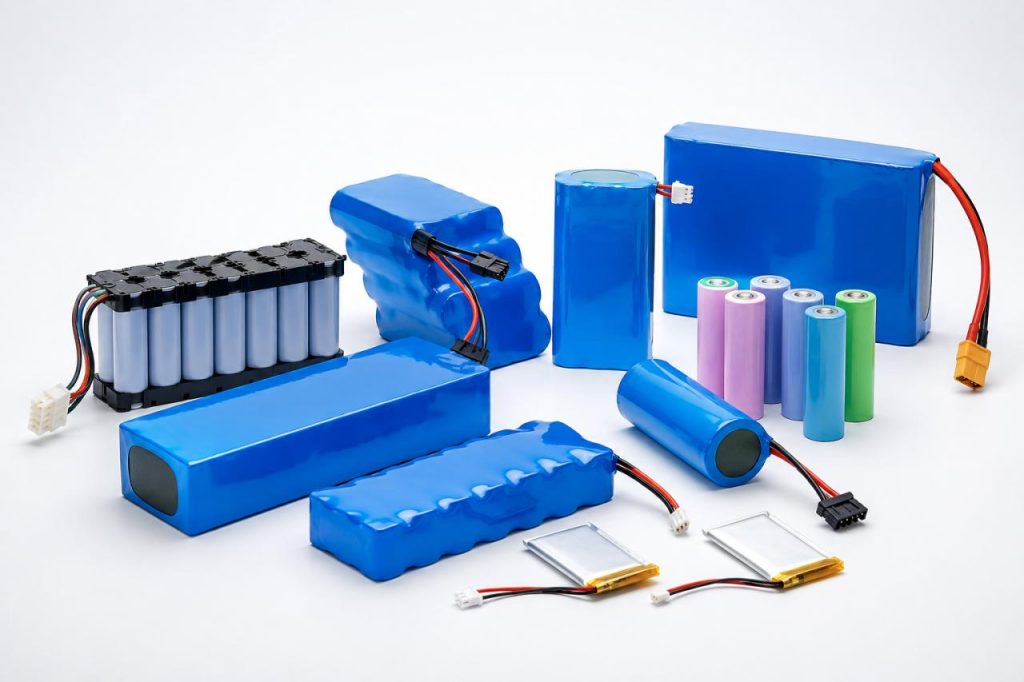
An OEM lithium battery manufacturing agreement should define which changes require notification and reapproval. Typical controlled items include the cell source, protection components, firmware, PCB layout, interconnect, wire, connector, insulation, process, inspection method, and production site.
Submit the equipment duty cycle, peak current, temperature range, available space, charging method, service-life target, destination markets, and expected order volume. Zenilove can use those inputs to assess a battery architecture and propose the samples and validation evidence required before production.
RFQ Questions for lithium battery solution
What information should be included in a custom battery RFQ?
Include the measured load profile, operating voltage limits, required runtime, maximum pack envelope, connector, charging method, operating and storage temperatures, service-life target, destination markets, and forecast volume.
Is device power rating enough to size a battery pack?
No. A useful design input shows current or power over time, including startup, communication, motor, heater, display, sleep, fault, and peak-load events. Average power alone can hide voltage sag and protection-trip risks.
When can a battery manufacturer provide an accurate quotation?
A preliminary quotation may be possible from basic requirements, but a reliable production quotation normally requires a defined pack architecture, approved components, mechanical design, protection settings, validation scope, documentation, and order assumptions.
What will Zenilove need before recommending a battery architecture?
Zenilove will need the application duty cycle, voltage window, current peaks, available space, temperature range, charging method, target life, compliance markets, and expected annual demand.