
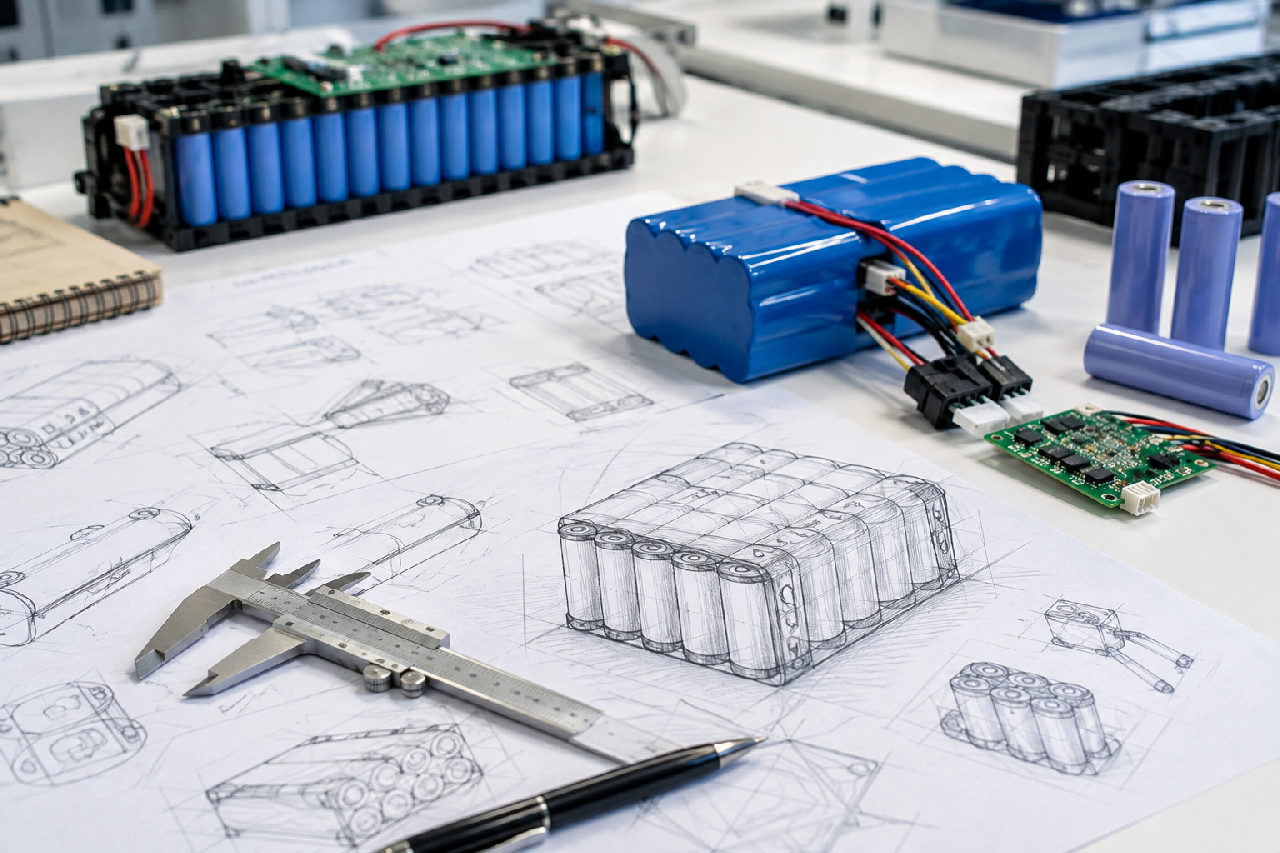
ODM Battery Pack Design can appear complete in a concept drawing while major engineering decisions remain open. Cell selection may still depend on runtime tests. The enclosure may leave too little space for insulation or wiring. The protection strategy may not match the device load profile. Buyers need defined deliverables at each stage so they can approve evidence, not appearance. A capable ODM Lithium Battery Manufacturer should turn product requirements into a controlled development path. That path normally moves through requirements review, concept samples, engineering samples, validation, certification support, and production handoff. Each gate should answer a different set of questions.
Start ODM Battery Pack Design With Controlled Inputs
The first deliverable is an agreed input package. It should record the device voltage range, continuous and peak current, duty cycle, charging method, available space, connector needs, operating temperature, storage conditions, expected service life, shipping markets, and target launch date. Mechanical information needs the same discipline. Supply the actual enclosure model, keep-out zones, fastening points, cable routing, drop or vibration exposure, and surfaces that may transfer heat. A nominal length, width, and height rarely describe every restriction inside a compact device.
Identify which values are fixed and which can change. A fixed enclosure with an open runtime target creates a different design problem from a fixed runtime target with flexible dimensions. Recording that distinction prevents repeated redesign when test results arrive. Buyers should also define the expected project output. Some projects need only a battery pack that fits an existing device. Others require cell selection, BMS development, mechanical design, prototype verification, certification preparation, and production documentation. The required scope determines the schedule, sample quantity, and engineering responsibility.

Define ODM Battery Pack Design Deliverables at Concept Stage
Concept work should narrow the design space and expose tradeoffs. Buyers should expect a proposed cell format, preliminary series and parallel arrangement, pack voltage and capacity targets, an early protection architecture, a connector approach, a mechanical concept, and a list of unresolved risks. The ODM Battery Pack Design proposal should connect every major recommendation to device data. Peak current capability, voltage sag, heat generation, usable capacity, and available space can change the pack configuration. A Custom Battery Pack proposal should state which inputs support the recommendation and which values still require measurement. The concept sample may confirm physical fit, cable exit, connector access, center of gravity, and assembly sequence. Label it clearly if it uses non-final cells, temporary wiring, or a provisional protection board. An appearance sample does not represent the final electrical design or production process.
Buyers should review the concept against practical questions:
- Does the pack fit within the available space and tolerance range?
- Can cables reach the device connector without excessive bending?
- Does the proposed cell support normal and peak current?
- Is there space for insulation, sensing, protection, and assembly tolerances?
- Which risks remain open before engineering samples are built?
Approving these points early reduces avoidable mechanical and electrical changes during validation.
Use Engineering Samples to Close Design Risks
Engineering samples should represent the intended electrical and mechanical architecture closely enough to test it. Before authorizing the build, approve the schematic or functional description, cell model, protection thresholds, sensing arrangement, wire sizes, connector part, insulation method, enclosure materials, and sample quantity. The sample plan should state what each unit will test. One sample may support device integration, while others may be assigned to electrical performance, mechanical checks, temperature measurement, or abnormal-condition testing. Using one repeatedly modified sample for every test makes the results difficult to compare.
Test the Battery Pack Under the Real Device Load
Bench discharge data cannot replace device testing. Motors, radios, pumps, heaters, processors, and lighting loads can create short peaks that average-current calculations miss. Test startup, maximum operating mode, low state of charge, charging while operating when permitted, and device behavior near cutoff. Record current, voltage, temperature, runtime, and any shutdown or restart behavior. If the device uses several operating modes, test the highest-load sequence and the most common real-use cycle. A pack that meets an average runtime target may still trigger protection during a short power peak.
Review Mechanical and Thermal Evidence
Check fit with production-tolerance parts instead of one carefully selected enclosure. Inspect compression, sharp edges, cable bend radius, connector strain, cell movement, fastening points, and service access. Temperature measurements should cover expected charging and discharging conditions, including locations most likely to trap heat. The team should also check how nearby device components affect pack temperature. Teams that require broader cell, BMS, connector, and structure support can compare these tasks with custom lithium battery solutions before fixing the development scope.
Plan Battery Certification Support Before Design Freeze
Certification planning works best when you know target markets, transport methods, device categories, and responsible applicants early. Build a requirements matrix that separates battery transport testing, cell or pack safety evaluation, device-level requirements, and customer-specific tests. These activities do not use one universal test plan. The appropriate laboratory or certification body should confirm the standards, sample configuration, document list, and number of samples required for the specific product and market. Freeze the design only after reviewing the evidence needed for the agreed markets. Late changes to cells, protection settings, enclosure materials, connectors, firmware, or construction can affect previous results and may require additional review.
The certification sample should have a traceable configuration. Record the cell model and lot, pack revision, protection-board version, firmware where applicable, connector, wiring, insulation, enclosure material, assembly process, and label version. Shipping preparation also needs current operational guidance. IATA battery transport guidance explains the air-cargo context for batteries, but the shipper must confirm classification, packaging, documentation, and carrier requirements for the specific shipment.

Approve the ODM Battery Manufacturing Handoff
A validated sample is not the complete production handoff. Buyers should receive or approve the controlled bill of materials, drawings, functional specifications, firmware revision where applicable, inspection criteria, test limits, assembly instructions, golden sample, packaging definition, traceability method, and change process. The pilot build should prove that the manufacturing process can reproduce the engineering result. Review yield, failure categories, test-station data, workmanship findings, and rework. Repeated manual adjustments show that the process still needs control.
Production testing should use defined acceptance limits. The test method, equipment, software revision, fixture, and recorded results should remain traceable. Buyers should also confirm how failed units are identified, analyzed, repaired, and retested. This gate clarifies the boundary between ODM development and OEM lithium battery production. ODM scope includes development decisions and their supporting evidence. OEM scope starts from a sufficiently controlled customer design and focuses on repeatable production to that definition. Change control continues after production release. A proposed replacement for a cell, connector, protection component, insulation material, or enclosure part should receive technical review before implementation. The review should identify the affected drawings, validation results, certification evidence, inventory, and customer approvals.
A Complete ODM Battery Pack Design Path Is Traceable
A controlled ODM Battery Pack Design process gives the buyer a clear basis for every approval. Requirements define the problem. Concept work narrows the available options. Engineering samples test the intended architecture. Validation closes identified risks. Certification planning aligns evidence with target markets. Production handoff controls what the factory must reproduce. Before requesting a quotation, provide the current project stage, device load information, available space, target markets, expected order volume, and launch schedule. Zenilove can use those inputs to outline an ODM development route and identify the documents, samples, tests, and decisions required at each milestone.