
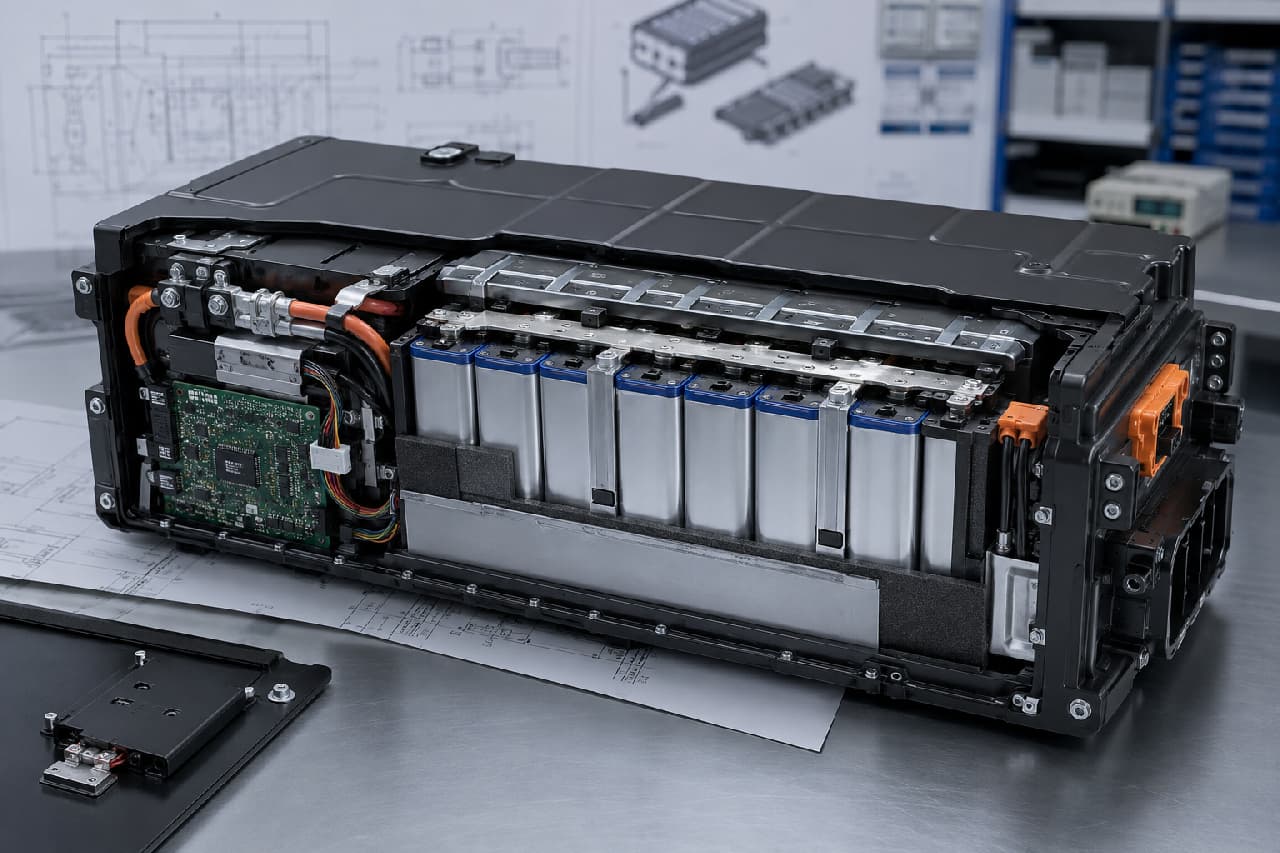
Custom Lithium Battery Products must match the electrical load, enclosure, charging system, operating environment, and service requirements of the device. Nominal voltage and capacity alone cannot prove that a pack will work reliably after installation. A battery may provide enough energy on paper but still experience voltage drop, excessive heat, short runtime, connector failure, or unexpected protection shutdowns. Buyers should define measurable requirements, test the proposed configuration under realistic conditions, and control production changes before approving volume orders.
Define the Duty Profile for Custom Lithium Battery Products
Record how the device uses power during a complete operating cycle. Include the operating voltage range, continuous current, peak current, pulse duration, standby current, daily energy demand, charging frequency, and required runtime. Average current does not show the full load placed on a rechargeable battery. Motors, pumps, wireless transmitters, processors, heaters, and lighting systems may create short peaks that cause voltage sag, increase temperature, or trigger the protection circuit.
Also document ambient temperature, enclosure temperature, vibration, shock, moisture, altitude, storage duration, and expected service life. A battery tested on an open bench may behave differently inside a sealed device with restricted airflow. Companies developing equipment for different industries can review relevant battery applications to compare how operating conditions influence pack configuration.
Measure Custom Lithium Battery Products Under Real Loads
Use measured device data whenever possible. Test with the intended device, charger, cables, accessories, and software instead of relying only on a laboratory resistor. Record voltage, current, temperature, runtime, and protection events during startup, continuous operation, peak demand, standby, and shutdown. Mark estimated values and engineering margins separately so temporary assumptions do not become permanent specifications.

Convert Device Limits Into Clear Pack Requirements
Translate device restrictions into measurable battery requirements before requesting a final quotation. Confirm the available space, maximum weight, mounting position, connector orientation, cable length, cable exit direction, installation method, and maintenance access. A custom battery design often requires trade-offs between runtime, current capability, size, weight, charging time, cycle life, and cost. The supplier can only recommend a suitable design when fixed limits and flexible preferences are clearly separated.
Define nominal voltage, working voltage range, maximum charging voltage, discharge cutoff, continuous current, peak current, charger requirements, and communication functions. Do not approve a lithium battery pack based on one capacity figure. Zenilove’s Custom Battery Solutions page explains how device requirements can be converted into an engineered battery configuration.
Freeze Interfaces for Custom Lithium Battery Products
Create a controlled drawing showing external dimensions, mounting points, connector position, cable routing, tolerances, labels, and required clearances. Allow space for insulation, wiring, protective components, and manufacturing variation. Confirm the connector model, pin definition, polarity, wire gauge, cable length, and communication interface. Small interface changes can create installation failures, so approved details should remain controlled throughout production.
Review Cell Selection for Custom Lithium Battery Products
Cell selection affects runtime, current output, temperature, cycle life, pack dimensions, and supply stability. Ask the manufacturer to identify the proposed cell model, chemistry, rated capacity, operating voltage, current limits, sourcing route, and lot-control method. Review performance under the planned load and temperature rather than relying only on nominal datasheet values. A cell tested under a light load may provide less usable energy inside a compact device with higher current demand.
Evaluate loaded voltage curves, internal resistance, temperature rise, cycle conditions, storage aging, and low-temperature performance. The supplier should explain why the proposed cell matches the device power source and duty profile. Buyers can compare cell formats and pack structures through the available Lithium Battery Products before confirming the final configuration.
Coordinate BMS Protection for Custom Lithium Battery Products
Define how the battery, charger, device, and software respond to overcharge, over-discharge, overcurrent, short circuit, and abnormal temperature. Review voltage thresholds, current limits, response delays, balancing settings, sensor locations, cutoff behavior, and reconnection conditions. For smart packs, confirm state-of-charge reporting, warning signals, and communication-loss behavior.
Poorly coordinated BMS protection may shut the battery down during a normal current peak or prevent the device from restarting after a temporary fault. Record all approved settings in the technical specification.
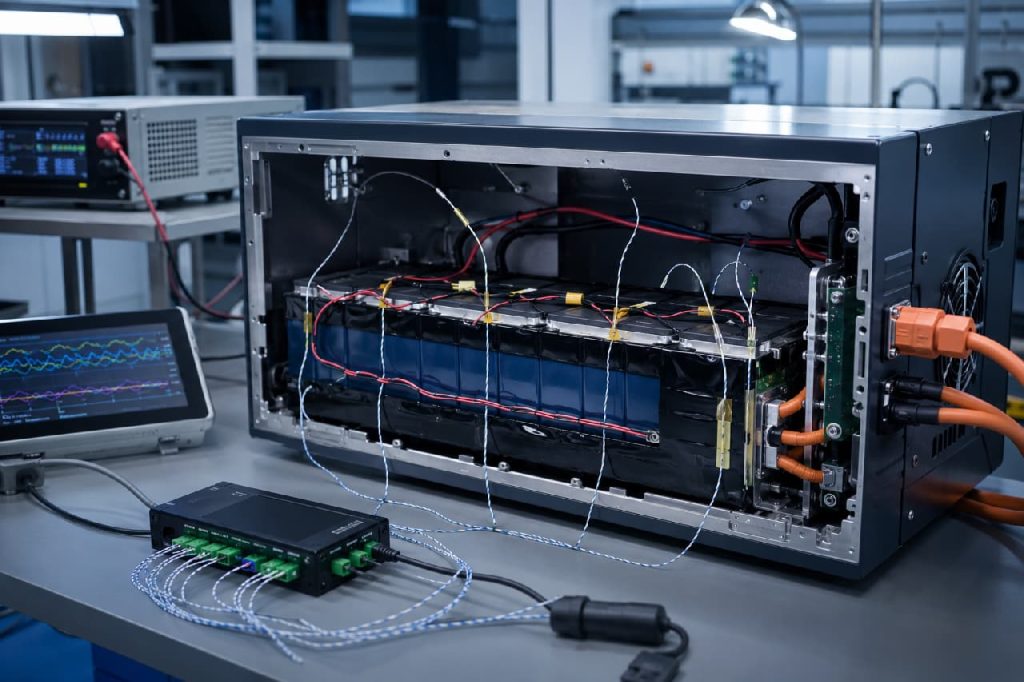
Test Custom Lithium Battery Products in the Final Enclosure
Charging, thermal behavior, and mechanical assembly should be tested as one system. Confirm the charging current, charging voltage, charging time, connector rating, cable specification, charger tolerance, and permitted temperature range. Measure temperature during charging, continuous operation, peak-load events, and repeated cycles. Define warning levels, charging pauses, current reduction, shutdown conditions, cooldown time, and restart behavior.
Mechanical validation should cover cell supports, insulation, barriers, welding areas, cable strain relief, protective parts, and connector retention. Check for abrasion, cable pinching, sharp edges, vibration movement, and pressure on cells or wiring.
Use Production-Intent Samples
Test the battery inside the intended enclosure. Open prototypes often release heat more effectively than the final assembly and may hide thermal problems. Run normal operation, maximum load, charging, standby, storage, and relevant vibration or shock tests. Use the intended charger, cable, firmware, payload, and accessories. Record the battery serial number, cell lot, charger model, device version, firmware version, test settings, and ambient conditions. These records make failures easier to reproduce and show whether later changes require new tests.
Verify Production Control and Traceability
Prototype approval does not guarantee consistent mass production. Review how the manufacturer controls materials, assembly instructions, inspection points, calibrated test equipment, handling, rework, and final records. The approved specification should identify the cell, BMS components, connector, cable, insulation materials, firmware, labels, and packaging. Important components and finished packs should remain traceable to their production lots.
Before shipment, confirm test records, packaging, terminal protection, labeling, documentation, and transport methods. Buyers preparing air shipments should review applicable lithium battery transport requirements and confirm details with qualified logistics providers.
Control Materials and Design Changes
Require advance notice before the supplier changes the cell source, electronic component, BMS firmware, layout, manufacturing process, factory, or test method. Define which changes require updated documentation, new samples, regression testing, qualification, and buyer approval. A validated design can lose consistency when substitutions enter production without technical review. Keep approved samples, drawings, bills of materials, firmware versions, test reports, and deviation records under revision control.

A Controlled Plan Supports Custom Lithium Battery Products Approval
Custom Lithium Battery Products can move into mass production after the buyer and manufacturer approve a controlled technical baseline. The baseline should include the requirement document, drawings, bill of materials, cell specification, BMS settings, firmware version, interface files, test reports, approved deviations, labels, packaging details, and production-intent samples.
Link Custom Lithium Battery Products to Acceptance Evidence
Connect every requirement to a verification method, test condition, sample quantity, result limit, and acceptance record. Cover dimensions, capacity, runtime, peak load, charging, protection, temperature, mechanical fit, storage, and device operation. Please assign an owner and a deadline to every unresolved issue. Document its possible effect on performance, safety, cost, production, installation, or maintenance. A controlled validation process gives the buyer and manufacturer the same technical reference. It reduces integration problems, prevents undocumented substitutions, and helps future production lots continue to match the approved device requirements.