
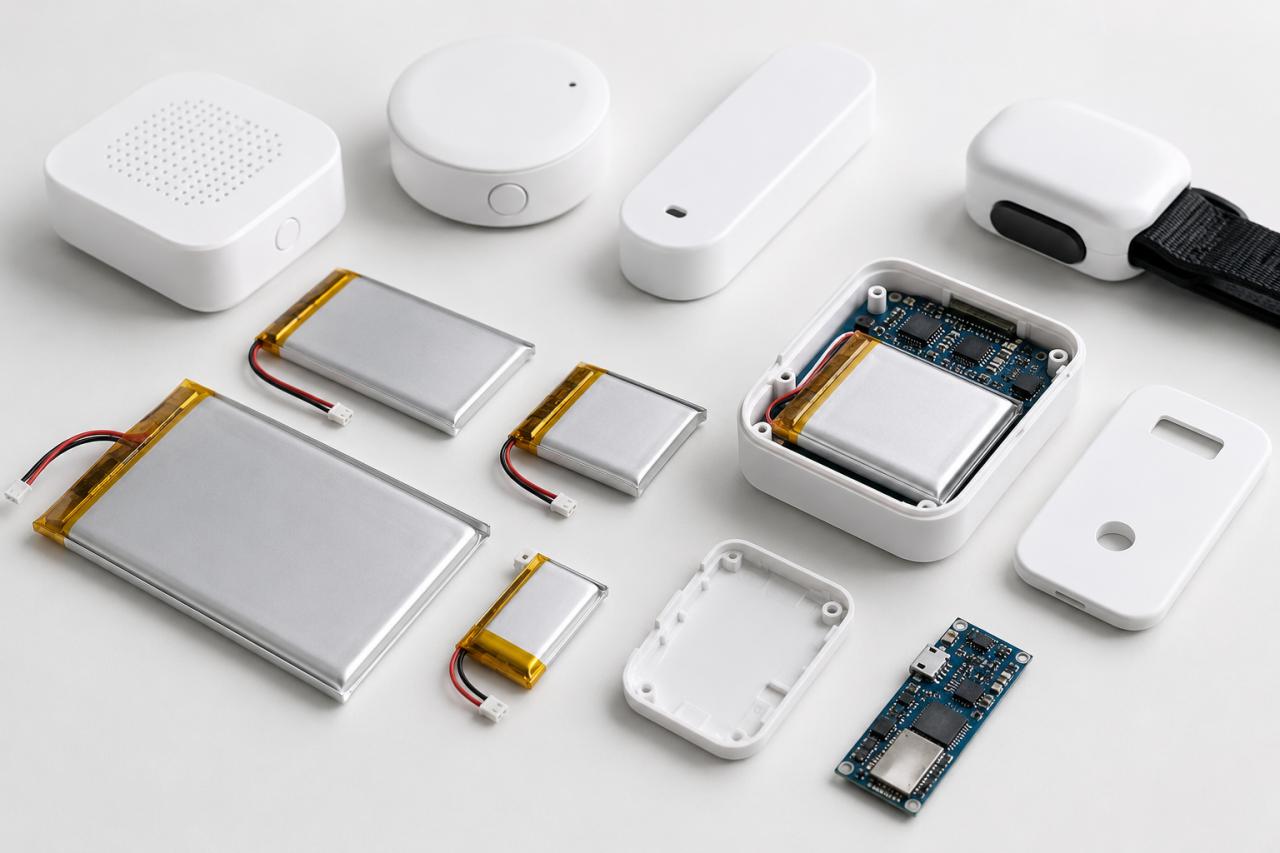
Choosing a polymer battery for IoT devices starts with one basic question: how does the device really work after installation? Many IoT products look simple from the outside, but their power behavior can be very different. A remote sensor may sleep most of the day and wake up only to send data. A GPS tracker may need short bursts of higher current. A smart terminal may run a display, a communication module, and a processor simultaneously. For buyers, the right battery is not only the one with the highest capacity. It must match the device’s working cycle, housing space, current demand, safety design, and production plan. This is why many IoT projects use a custom Polymer Battery instead of a standard off-the-shelf cell.
Start With the Real Power Needs of the IoT Device
IoT devices are often designed for long service life, small size, and stable field performance. Before choosing a battery, buyers should define the device’s actual use case. A smart meter, Bluetooth tag, GPS tracker, remote monitor, POS terminal, and smart home sensor will not use power in the same way. The first step is to list the device’s main working conditions. Does it stay in standby mode most of the time? Does it upload data every few minutes or only a few times per day? Does it use Bluetooth, WiFi, 4G, GPS, or another wireless module? Will the device work indoors, outdoors, inside a vehicle, or in a fixed industrial location?
These answers shape the battery choice. A compact indoor sensor may need a thin battery with low self-discharge. A GPS or communication device may require stronger peak-current support. A portable IoT terminal may need both a long runtime and a stable output under repeated charging cycles.
Check Runtime and Standby Current Before Choosing a Polymer Battery for IoT Devices
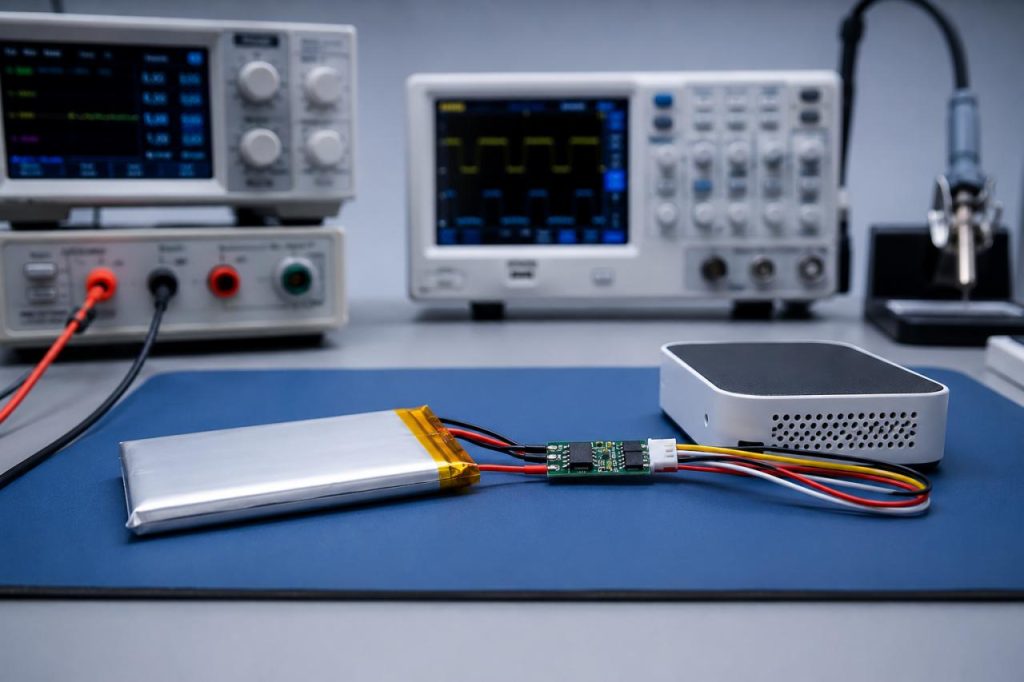
Runtime is one of the most common battery questions, but it is also one of the easiest to misunderstand. Capacity matters, but it does not decide runtime alone. IoT products usually combine long standby periods with short active periods. That means standby current, wake-up frequency, and transmission time can change the real battery life more than the label capacity suggests. A 5000mAh battery may perform well in one device and poorly in another if the current curve is different. Buyers should ask for the device’s current consumption in sleep, active, transmission, and charging modes. Without this information, battery selection becomes guesswork, wearing a lab coat, which humans seem strangely comfortable with.
Standby Current Affects Long-Term Deployment
Many IoT devices are installed in places where maintenance is expensive. Replacing a battery in one device may be simple. Replacing batteries in thousands of remote sensors is not. Low standby current helps reduce unnecessary energy loss during idle periods, especially for devices that stay in the field for months.
Communication Bursts Change Battery Demand
Wireless modules can generate brief current spikes during data uploads, GPS positioning, or network connections. If the battery cannot support these peaks, the device may restart, lose data, or fail to connect. Buyers should check not only the average current but also the peak current and pulse-load behavior.
Match Battery Size, Shape, and Thickness to the Device Housing
IoT devices are often built around limited internal space. The battery must fit into the housing without forcing the design team to sacrifice safety, wiring space, or heat management. This is where polymer batteries show a clear advantage. Compared with rigid cylindrical formats, polymer batteries can support thin, flat, and flexible pack layouts. Zenilove’s polymer battery solutions include ultra-thin, high-capacity, high-rate, and custom-shaped options for space-limited product designs. For compact IoT devices, this makes it easier to balance runtime and product size.
A battery may meet the capacity target but still fail the design if it is too thick, too wide, or difficult to wire. Buyers should confirm the available length, width, thickness, connector position, wire direction, and protection board location before choosing a pack.
Internal Space Must Include More Than the Cell
The battery cell is only one part of the final pack. Wires, connectors, PCM or BMS boards, insulation materials, and fixing space also need room. If the device housing is already finalized, the battery supplier should review the mechanical drawings before confirming the pack structure.
Evaluate Peak Current, Voltage Stability, and Protection Design
A good IoT battery must provide stable power during real operation. Some devices draw low current most of the time, then suddenly need more power when a motor, screen, sensor, GPS module, or wireless module turns on. If the voltage drops too much during these moments, the device may shut down or behave unpredictably.
Buyers should confirm nominal voltage, charge voltage, discharge cut-off voltage, maximum discharge current, internal resistance, and protection settings. For example, a high-capacity pack such as the 16000mAh High-Capacity Polymer Battery Pack is designed for long-runtime applications and supports custom BMS design and connector termination, helping IoT product teams match the battery pack to device-level requirements. Protection design also matters. A polymer battery pack for IoT devices should include suitable protection against overcharge, over-discharge, overcurrent, and short circuit. In some applications, NTC temperature detection may also be needed to support safer charging and operation.
Decide Whether the Project Needs a Custom Polymer Battery Pack
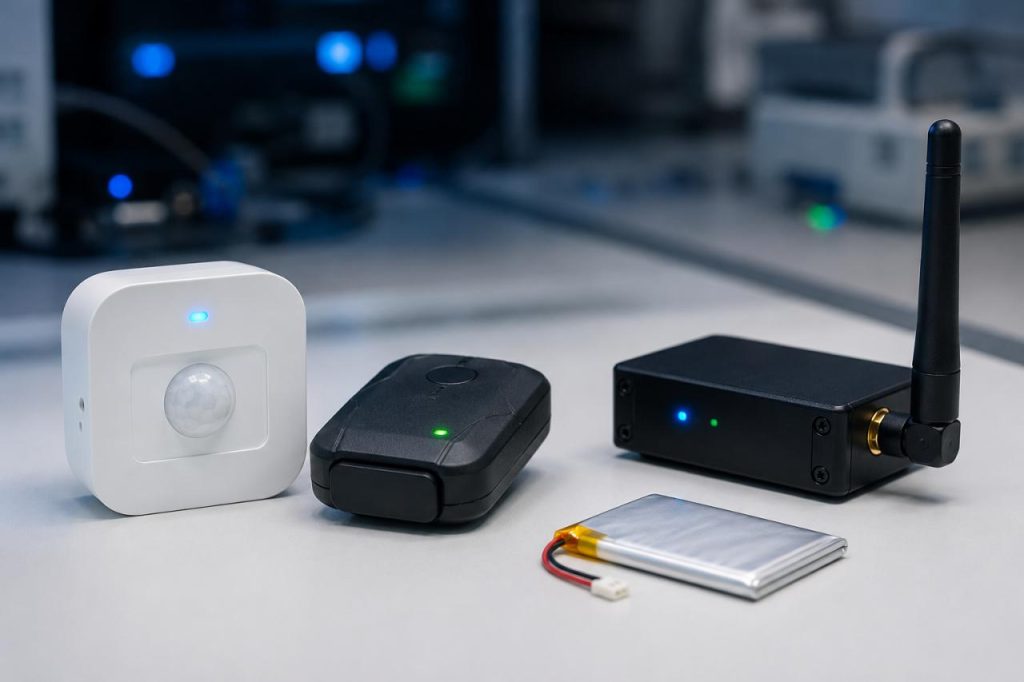
Standard batteries work when the device design is flexible and the power demand is simple. Many IoT projects, however, need a custom pack because the product has fixed space, a defined connector, specific runtime targets, or special installation conditions. A custom polymer battery pack is worth considering when the device requires a specific size, non-standard thickness, dedicated wire length, selected connector, integrated protection circuit, or private-label requirement. It also helps when the project moves from prototype testing to stable batch production.
For buyers with device requirements but no finalized battery design, working with an OEM Lithium Battery Manufacturer can help integrate cell selection, BMS integration, sample confirmation, and production support into a single development path. Battery compliance should also be considered early, especially for global shipping. IATA provides guidance for lithium battery transport based on configuration and watt-hour rating, which buyers should review when planning international delivery: IATA Batteries Guidance.
A Polymer Battery Works Best for Compact IoT Devices With Custom Power Needs
A polymer battery works best for IoT devices that require a thin form factor, long standby time, stable output, flexible dimensions, and a customized pack design. It is especially useful for sensors, trackers, smart modules, handheld terminals, wearable IoT products, and portable smart devices. The right choice depends on the full device requirement, not one battery number. Buyers should check the real power curve, housing space, peak current, voltage stability, protection design, and customization needs before making a decision. When these details are clear, a polymer battery can give IoT devices the balance they need: a compact form factor, reliable runtime, and easier integration into final products.