

Button batteries look simple until you need to replace one. Two cells may share the same silver color, round shape, and 3V marking — yet behave very differently inside a device. That difference almost always comes down to button battery size. A button battery size code tells you both the cell’s diameter and its thickness. CR2032, CR2025, and CR2016 are clear examples. All three measure 20mm across, but their heights differ: 3.2mm, 2.5mm, and 1.6mm, respectively. That fraction of a millimeter can decide whether a device powers on normally or refuses to respond at all.
What Button Battery Size Means
The size code isn’t arbitrary. In a CR2032, “20” is the 20mm diameter and “32” is the 3.2mm thickness — multiply by 0.1 to get the millimeter value. Diameter controls whether the cell fits inside the battery holder. Thickness controls how firmly it presses against the positive and negative terminals. Too thin, and the device may power on intermittently. Too thick, and the cover won’t close — or the holder bends under pressure. Voltage matters too, but matching only the voltage is one of the easiest ways to pick the wrong cell. A 3V rating tells you the chemistry; it doesn’t tell you the dimensions.
Car Key Fobs and Button Battery Size
Car key fobs draw current in short bursts — every time you press the button. Stable contact matters more here than raw capacity. A weak connection reduces signal strength and causes the fob to respond only intermittently. For car keys, always check the old battery before buying. If it reads “CR2032,” replace it with “CR2032”. A thinner CR2025 may slide into the same 20mm slot, but it won’t press firmly against the contact spring. A thicker CR2032 won’t fit a fob designed for CR2025. The right cell for car keys is the one the manufacturer specified — not the closest approximation. For a detailed breakdown of these two common formats, see our CR2025 vs CR2032 comparison guide.
Watches Require the Right Button Battery Size
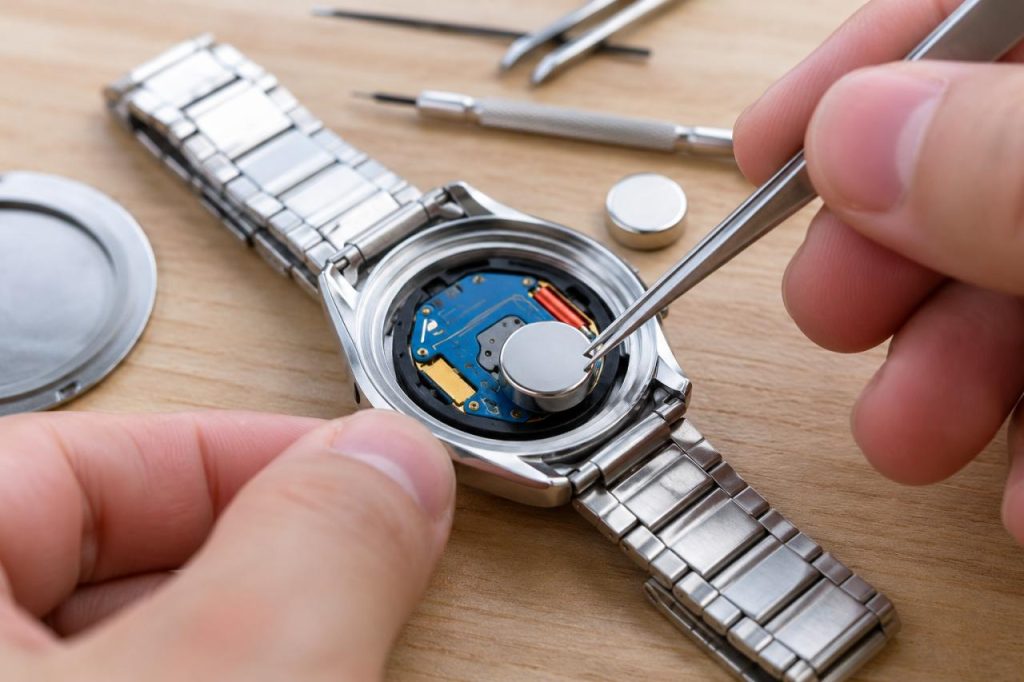
Watches leave almost no margin for error. The battery sits under a tight back cover, often beside delicate movement components. Even a few tenths of a millimeter too thick can press against the case back or stop the cover from closing. A thicker cell doesn’t always mean longer life if it damages the watch in the process. Use the exact code printed on the old cell or specified in the manufacturer’s documentation. Many watch batteries look nearly identical from above — the difference only shows up when you compare thickness directly.
Remote Controls and Button Battery Size
Small remote controls, garage door openers, and compact wireless switches may use CR2032, CR2025, CR2016, or other coin cell sizes, depending on the compartment design. Power demand is usually low, but fit still matters. A cell that’s slightly too thin may work at first — then cut out when the remote is moved, pressed at an angle, or dropped. If the battery is too thick, the cover bulges or the contacts wear faster. The device maker designed the holder around a specific cell dimension. That decision wasn’t casual, and the replacement shouldn’t be either.
Calculators Need a Button Battery Size That Fits
Calculators, kitchen scales, digital thermometers, and small electronic tags consume very little current. For these devices, fit often matters more than capacity. A CR2032 holds more charge than a CR2025 or CR2016 because it has more internal volume — but that advantage disappears if the thicker cell can’t sit properly in the compartment. For slim devices, a thinner coin cell with the correct diameter and voltage maintains stable contact over time. Good fit and reliable contact outlast the marginal capacity difference between adjacent sizes.
Medical Devices Depend on Exact Button Battery Size
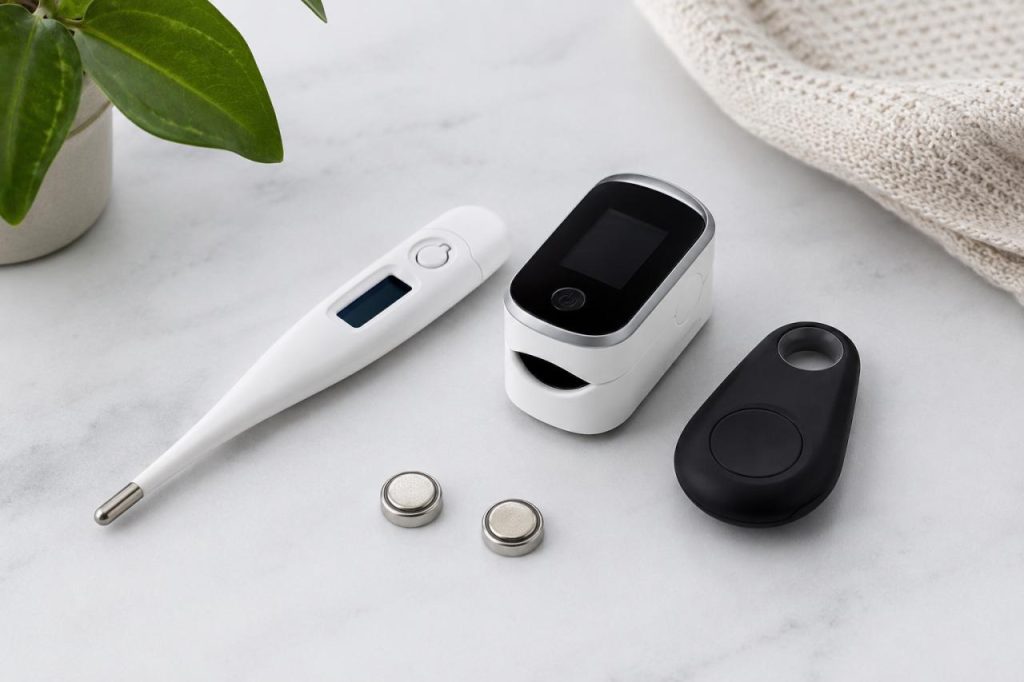
Small medical devices — digital thermometers, glucose meters, hearing accessories, health monitors — should use the full battery code listed in the manual. These devices rely on stable, consistent power to record and display data accurately. A wrong cell dimension can cause loose contact, unexpected shutdowns, or inconsistent readings. The device may still power on with a substitute, but unreliable power in a medical context carries more risk than a flickering remote control. Match the full code: diameter, thickness, voltage, and chemistry. Avoid substitutes unless the manufacturer explicitly approves them.
Toys and Gadgets Need a Secure Button Battery Size Fit
Toys, light-up accessories, mini speakers, and novelty electronics use coin cells because the format is compact and easy to place in small housings. Security of fit matters here — especially when children handle the product. The cell should sit without rattling. A loose fit causes power interruptions and contact wear. The compartment cover should close flat without pressure. If it needs force to shut, the cell is too thick. For children’s products, store spare cells in a locked location — they’re small enough to present a serious ingestion risk. Zenilove’s coin cell range covers multiple dimensions and capacity options for product design applications.
Smart Devices and the Button Battery Size Trade-Off
Bluetooth trackers, smart tags, environmental sensors, and IoT modules often run on standby for weeks or months. These products need the right balance between physical size and capacity. When the device supports CR2032, the thicker cell typically delivers 220–240 mAh — roughly 40% more capacity than a CR2025 at around 160 mAh. If the housing is designed for a thinner cell, forcing a larger one risks damaging the holder and voiding the contact alignment. Product designers select cell dimensions based on expected standby duration and available space. Users should follow that choice rather than try to upgrade it. For OEM projects with non-standard dimension requirements, our lithium cell product range covers custom formats across multiple chemistries.
How to Check Button Battery Size Before Buying
Start with the old battery. Read the full code on the top surface — every digit matters. Then cross-check against the device manual or the label printed inside the compartment. Match diameter, thickness, voltage, and chemistry together as a set. Don’t buy based on appearance alone. A CR2032, CR2025, and CR2016 look nearly identical from above. The difference appears only on the thickness axis. If you’re sourcing cells for multiple devices, sort by model number before ordering to avoid mixing up formats. For product or OEM use, also verify shelf life, packaging certifications, and supplier consistency. A reliable small-device battery manufacturer can help match cell formats when standard retail options don’t fully meet design requirements.
The Right Button Battery Size Depends on the Device
CR2032, CR2025, and CR2016 share a 20mm diameter — but they’re not interchangeable. Thickness determines fit, contact pressure, and capacity. Car keys need a stable contact. Watches need clearance. Medical devices need exact matching. Smart devices need the runtime that only the correct cell provides. Check the code, verify the dimensions, and buy what the device was built for. That one step prevents most replacement failures before they happen.