
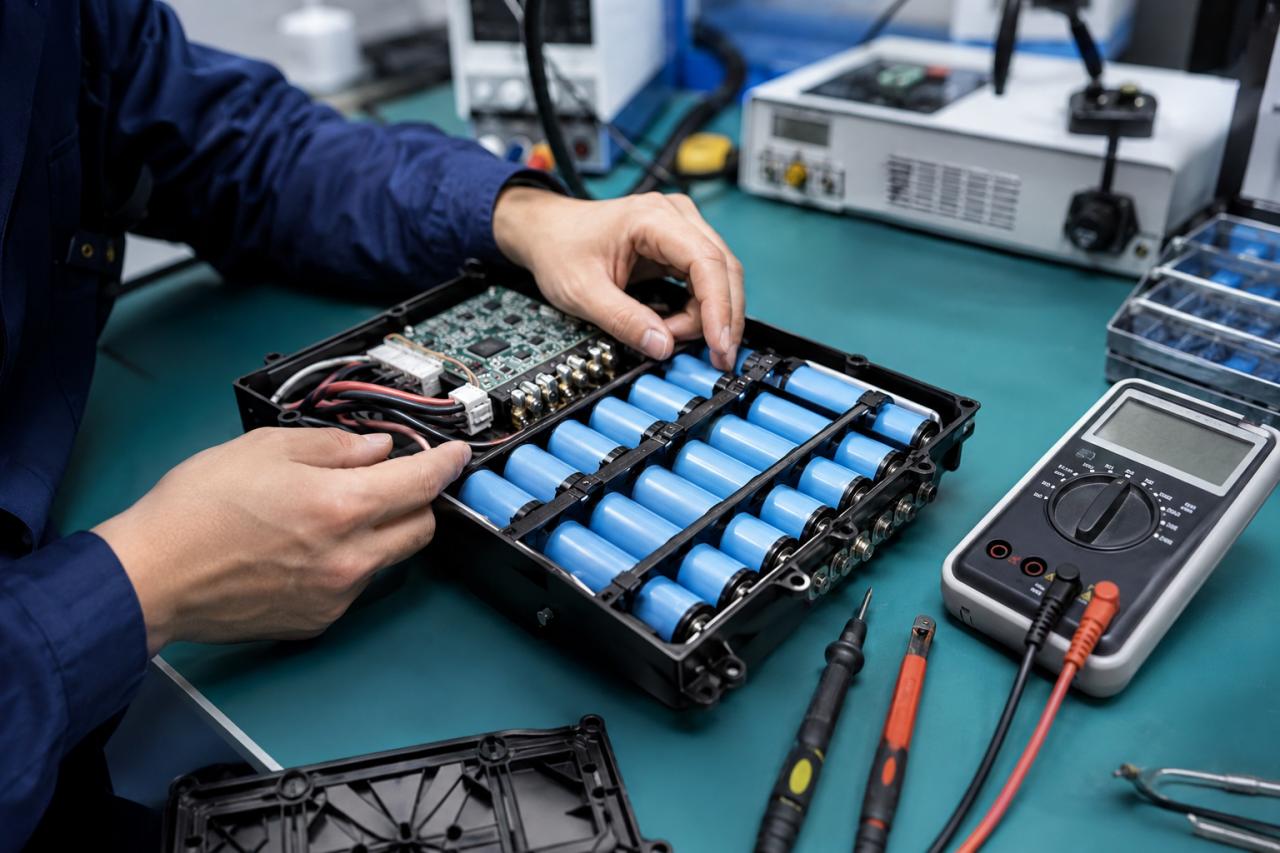
Robots depend on steady power more than most electronic devices. A robot may need to move, turn, lift, sense, process data, communicate, and return to a charging station during one working cycle. That means the battery cannot be selected only by capacity. A high mAh number looks comforting on a spec sheet, but robots are not powered by wishful thinking. The right Cylindrical Battery for robots should match the motor load, runtime target, internal space, safety requirements, and battery pack structure. Small robots may need compact 18650 cells, while larger robots may need 21700 cells for longer runtime and stronger output. The final choice depends on how the robot actually works, not which cell format sounds more powerful.
Robots Should Use a Cylindrical Battery That Matches Motor Load
A robot should use a cylindrical battery capable of handling its actual motor load. This is the first selection point. Motors create changing current demand during movement, startup, turning, climbing, braking, and load handling. If the battery pack cannot support those current changes, the robot may slow down, shut off, overheat, or repeatedly trigger protection. For robot manufacturers, current demand matters as much as capacity. A battery pack with enough capacity may still fail if its discharge capability is too weak. That is why engineering teams should confirm continuous discharge current, peak discharge current, voltage range, and thermal behavior before choosing a cell.
Continuous Current Must Support Normal Operation
Continuous current refers to the current the robot needs during regular operation. This includes movement, sensors, control boards, wireless modules, lights, cameras, and other onboard systems. A warehouse robot, inspection robot, service robot, or cleaning robot may run for hours, so the battery must deliver stable current without overheating. If the cylindrical lithium battery cannot support the normal operating current, the robot may suffer a voltage drop under load. That can affect motor speed, navigation accuracy, sensor stability, and control response. For robots operating in commercial or industrial environments, unstable power can quickly lead to downtime.
Peak Current Must Handle Startup and Load Changes
Robots often draw higher currents during startup or sudden load changes. A mobile robot may require more current when accelerating. A delivery robot may need higher output when climbing a ramp. A robotic arm may create short current spikes when lifting or positioning a load. The battery pack must support these short peaks without triggering overcurrent protection too early. This is where cell selection and BMS settings must work together. A robot battery should not only run the device under a light load. It should handle the worst operating moments that happen during real use.
A Cylindrical Battery for Robots Should Balance Capacity and Weight
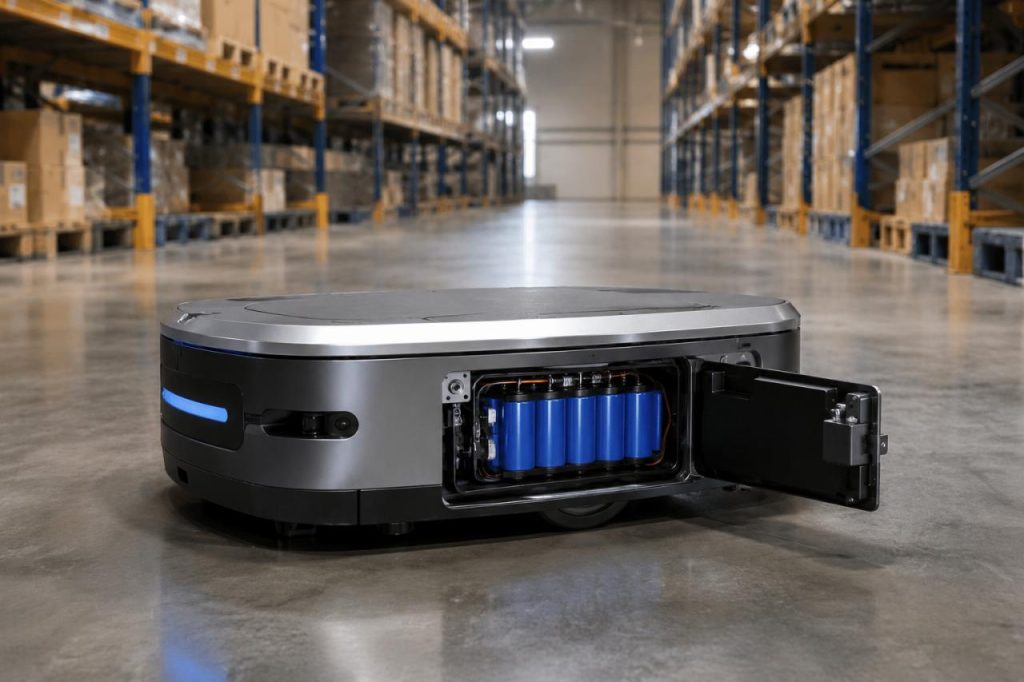
Robots need runtime, but they also need movement efficiency. A larger battery pack can increase capacity, but it also adds weight. More weight forces motors to work harder, which may reduce runtime, increase heat, and place more stress on the frame. This is why a cylindrical battery for robotics must balance capacity and weight. The goal is not to install the largest pack possible. The goal is to provide enough usable energy without making the robot heavier than the design can support.
Small Robots Need Lightweight Cylindrical Cells
Small robots usually have limited internal space and moderate power demand. Educational robots, desktop robots, compact service robots, small inspection robots, and lightweight mobile devices often need a battery pack that stays compact. In these projects, 18650 cells often make sense because they are mature, widely available, and easier to arrange in smaller packs. They can support compact layouts while still providing practical runtime. For robots with limited space, a smaller cylindrical cell can reduce design pressure and simplify integration.
Larger Robots Need Higher-Capacity Cylindrical Cells
Larger robots usually need more runtime and stronger output. Warehouse robots, security patrol robots, delivery robots, industrial mobile platforms, and outdoor robots may operate for longer periods and carry heavier loads. These devices often benefit from higher-capacity cylindrical cells. A high-energy-density cylindrical battery can help increase runtime without adding unnecessary cell count. This matters when the robot has strict limits for pack size, weight distribution, and charging frequency. A longer runtime also reduces interruptions, especially for robots that work across shifts or large spaces.
18650 or 21700 Cylindrical Battery, Depending on Robot Size
Choosing between 18650 and 21700 cells depends on robot size, power demand, runtime target, and available pack space. Neither format automatically wins. Shocking, yes, but engineering rarely rewards lazy answers. An 18650 cylindrical battery works well for compact robots that need a mature and space-efficient solution. A 21700 cylindrical battery works better when the robot needs higher capacity, longer runtime, or stronger output from fewer cells.
18650 Cylindrical Battery Works for Compact Robots
The 18650 format is common in portable electronics, tools, and battery packs because it offers a strong balance between size, capacity, and supply chain stability. For compact robots, this format can deliver sufficient performance without requiring major structural changes. A robot with moderate power demand, limited space, and predictable movement may not need larger cells. In that case, 18650 cells can help keep the pack compact and easier to position inside the housing.
21700 Cylindrical Battery Fits Robots That Need Longer Runtime
A 21700 cylindrical battery usually provides higher capacity than a comparable 18650 cell. That makes it useful for robots that need longer working time or higher power output. Larger mobile robots, robotic carts, patrol robots, and equipment with heavier motor loads may benefit from this format. Zenilove’s cylindrical lithium battery range includes both 18650 and 21700 options to suit different design requirements, so the selection can align with the robot’s actual load and runtime needs rather than forcing a single format across every project.
Larger Cells Need Better Thermal and Space Planning
Larger cells can improve capacity, but they also need better thermal planning and physical arrangement. A robot may have a sealed enclosure, limited airflow, or components packed close together. If heat cannot move away from the pack, battery life and safety may suffer. Engineers should check airflow, enclosure material, pack position, and nearby heat sources before choosing a larger cell format. A larger battery only helps when the robot can support it mechanically and thermally.
Robots Should Use a Cylindrical Battery with Proper Protection Design
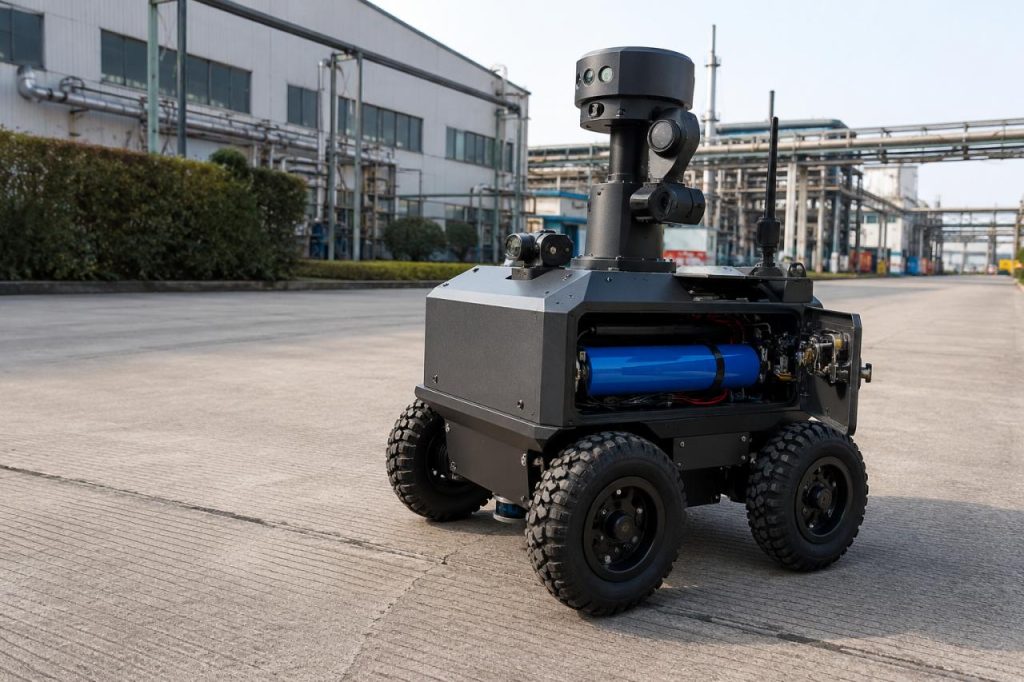
Robots often run continuously and may operate in warehouses, factories, outdoor areas, medical spaces, or commercial environments. That makes battery protection design a required part of the selection process. A cylindrical battery pack for robots should include protection against overcharging, overdischarging, overcurrent, short-circuiting, and overheating. A suitable BMS helps keep voltage, current, and temperature within safe limits during real operation.
BMS Protection Prevents Runtime Failure
A BMS does more than protect the battery from obvious damage. It also helps the robot operate predictably. When current, voltage, or temperature moves outside the allowed range, the BMS can limit or stop operation before a larger failure occurs. For robot projects, the BMS should match the pack structure and load profile. A weak or poorly matched BMS may cause early shutdowns, unstable output, or poor charging behavior.
Temperature Monitoring Helps Prevent Overheating
Robots can create heat through motors, control boards, charging circuits, and enclosed pack spaces. Long working hours increase that risk. A battery pack should include temperature monitoring when the robot operates under high load or in warm environments. Temperature protection is especially important for robots that run continuously, climb slopes, carry loads, or work outdoors. Heat control helps protect both performance and cycle life.
A Cylindrical Battery for Robots Should Fit the Robot Structure
The battery must fit the robot, not the other way around. A pack that performs well electrically can still cause problems if it does not match the device structure. Internal space, mounting points, wire routing, connector type, service access, and charging position all affect the final battery choice. This is where custom battery solutions become useful. A standard battery pack may not match the voltage, shape, connector, or installation method a robot requires. Customization allows the pack to match the robot’s real mechanical and electrical design.
Pack Shape Must Match Internal Space
Cylindrical cells can be arranged in different series and parallel structures. That gives engineers flexibility, but it also requires planning. A long, narrow pack may work for one robot, while another device may need a flat, block-shaped, or split-pack design. The pack must leave room for wiring, insulation, protection boards, mounting brackets, and heat management. If these details are ignored, the battery may fit on paper but fail during assembly.
Connectors and Wiring Must Match the Robot System
Robots often need stable connectors because vibration and movement can loosen weak electrical connections. Wire gauge, connector type, cable length, and strain relief should match the current and mechanical conditions. A lithium battery manufacturer can help align cell selection, pack structure, connector design, BMS configuration, and testing requirements before mass production. That matters because changing the battery after the robot housing is finished can create expensive redesign work.
The Best Cylindrical Battery for Robots Depends on Load, Runtime, and Safety
Robots should use a Cylindrical Battery that matches motor load, runtime target, weight limits, BMS protection, temperature conditions, and internal structure. Small robots can often use 18650 cylindrical cells because they need a compact size and moderate output. Larger robots can evaluate 21700 cylindrical cells when they need longer runtime, stronger power delivery, or higher energy density. The right battery is not the one with the highest capacity. It is the one that keeps the robot moving safely, consistently, and predictably under real working conditions.