
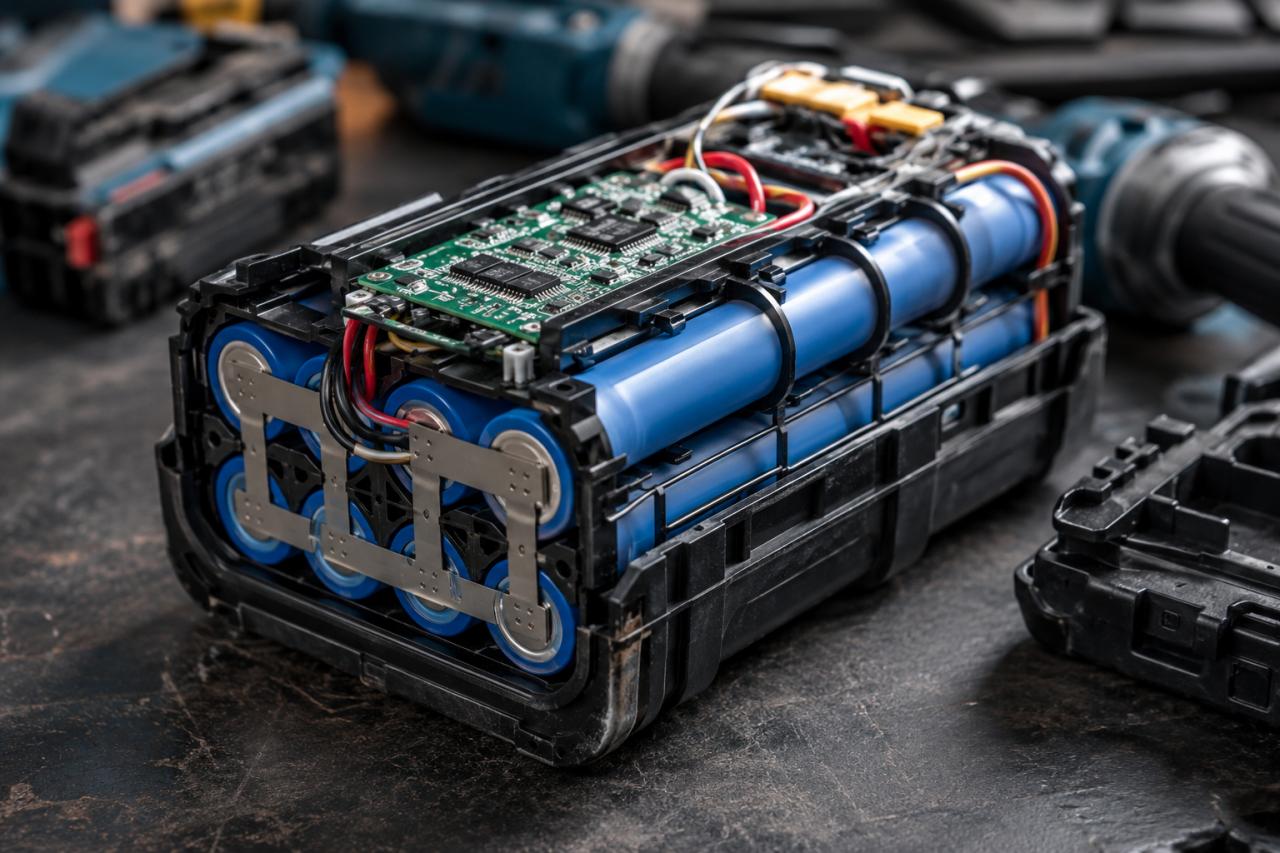
A cordless drill pulling 20A under load generates more thermal stress in 30 seconds than a laptop battery sees in an hour of use. That difference defines what a cylindrical battery for power tools actually needs to do — and why sourcing the wrong cell chemistry creates field failures that no capacity number on a spec sheet predicted. The cell selection process starts at the discharge profile, not the product listing.
Discharge Rate — The Spec That Drives Cylindrical Battery for Power Tools Selection
Capacity in milliamp-hours is the number most procurement teams look at first. It’s also where the most sourcing mistakes originate. A 3,500mAh cell sounds well-specified, yet capacity alone says nothing about whether that cell can sustain the current draw a power tool demands in real use.
The C rating describes how much current a cell can discharge continuously relative to its capacity. A cell rated at 10A continuous handles a light-duty cordless screwdriver without issue. A high-torque impact wrench or angle grinder typically pulls 25–30A in sustained operation — put a 10A cell into that application and voltage sag, heat buildup, and accelerated capacity fade follow within the first 100 cycles.
Cycle life under actual depth of discharge adds another layer. Manufacturers test cycle life at 80% depth of discharge under controlled lab temperatures. Power tool users routinely hit 100% DoD in field conditions. That delta between lab rating and real-world use is where most cylindrical lithium battery disappointments originate — and why discharge rate documentation needs to be part of every initial supplier conversation.
18650 vs 21700 Format for Power Tool Applications
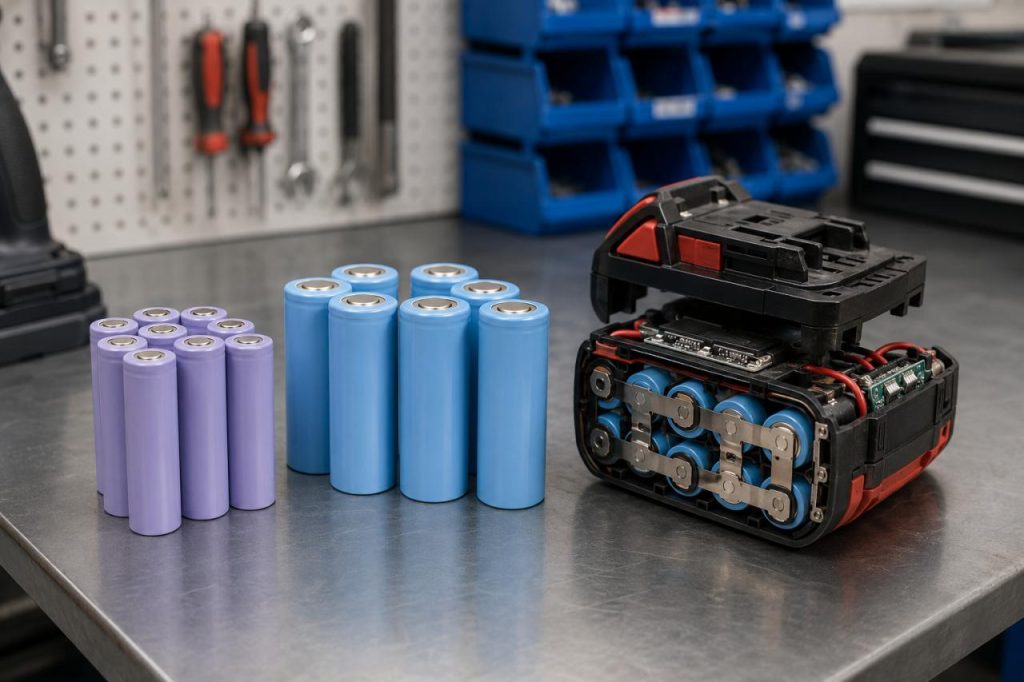
Two cell formats dominate cylindrical battery procurement for power tools: the 18650 and the 21700. Each carries a different performance profile, and the right choice depends on the tool’s discharge demands, thermal environment, and pack design constraints. Understanding those trade-offs before reaching the supplier conversation saves significant time during spec validation.
18650 Cylindrical Battery for Power Tools Performance
The 18650 format — 18mm diameter, 65mm length — remains the most common cylindrical battery for power tools across the mid-range segment. Well-specified lithium battery cells in this format carry continuous discharge ratings of 15A to 30A, capacities from 2,500mAh to 3,500mAh, and internal resistance figures in the 15–25mΩ range.
Internal resistance is the spec that separates good sourcing decisions from poor ones. A cell at 30mΩ shows noticeable voltage sag when the tool demands a current spike — torque drops before the battery indicator reads low. Cells at 15–20mΩ handle the same load without that drop. Request internal resistance documentation as a standard deliverable from any supplier, not a special ask.
Why the 21700 Format Handles Heat Better
The 21700 cylindrical Li-ion battery — 21mm diameter, 70mm length — steps capacity up to 4,000–5,000mAh per cell. More relevant for power tool applications is the thermal management advantage: the larger cell volume gives heat a shorter path to the surface, maintaining performance during extended high-current draw in ways the 18650 geometry can’t match at equivalent discharge rates.
Several major cordless tool platforms shifted to 21700 packs for exactly that reason. For B2B buyers, the trade-off is pack design — fewer cells reach the same voltage, which simplifies BMS and welding requirements and can reduce assembly cost per pack, though per-cell cost is higher than that of 18650 equivalents.
What the Sourcing Process for Cylindrical Battery for Power Tools Actually Involves
B2B sourcing for power-tool battery packs operates on a different timeline than general component procurement. Cell selection, BMS design review, cell matching validation, and pack-level testing are sequential stages. Skipping cell matching is the most costly shortcut — packs assembled from cells with mismatched internal resistance, even a 3–5 mΩ variation within the same production batch, distribute current unevenly. Some cells overwork, others underwork, and the overworked cells degrade first, pulling the entire pack down ahead of schedule.
Quality manufacturers provide cell-matching documentation as part of standard production. If a supplier can’t produce it on request, that gap in process control signals a broader quality risk that warrants serious attention before committing to volume.
Custom cylindrical battery packs for power tools — covering cell selection, BMS configuration, and pack-level testing — can typically support initial sample or pilot production within about 15 days, depending on project complexity. Build that into project timelines before the conversation reaches the pricing stage.
Common Mistakes That Undermine the Cylindrical Battery for Power Tools Performance
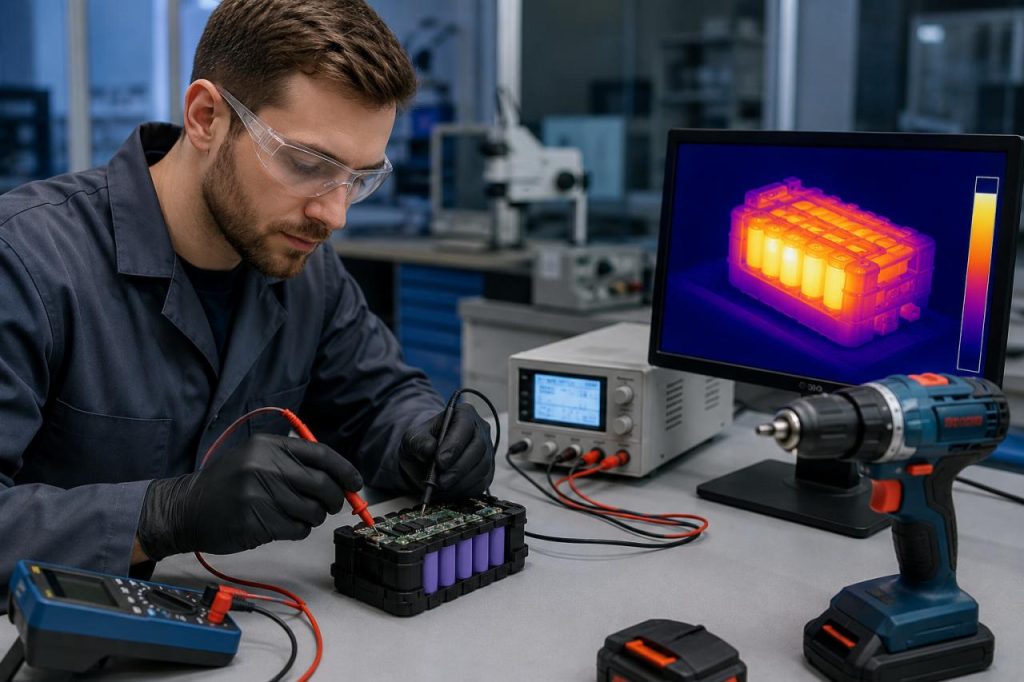
The most frequent failure mode isn’t a sudden event. Gradual capacity fade that accelerates faster than expected is what field teams actually experience — and in most cases, the root cause traces back to treating cell spec and BMS configuration as separate decisions made at separate times.
The BMS controls charge cutoff voltage, discharge floor, and cell balancing. Those parameters need to match the specific cell chemistry and the actual discharge profile of the application. A generic BMS tuned for a different product category quietly allows operating conditions that damage high-drain cells over time — cells get pushed past their safe discharge floor, balancing routines don’t match the actual voltage window, and the pack degrades faster than the cell spec suggested it would.
The fix requires BMS parameter sheets alongside cell documentation, then verifying both against the discharge profile before approving a pack design. Experienced manufacturers treat this as a standard process, not an added service. IEC 62133 certification is one reliable indicator that a manufacturer’s testing protocols meet internationally recognized safety standards for lithium battery cells.
Start With the Discharge Profile, Not the Price
Peak current draw, typical continuous draw, expected cycle frequency — those three numbers define the cell spec for any cylindrical battery for a power tools project. A manufacturer with genuine power tool experience can work backward from that discharge profile to the right cell format, discharge rating, and BMS configuration far more accurately than from a capacity request alone.
Start the technical conversation before the RFQ reaches the pricing stage. The decisions made at the specification stage determine whether the pack performs in the field or generates returns six months after launch.