
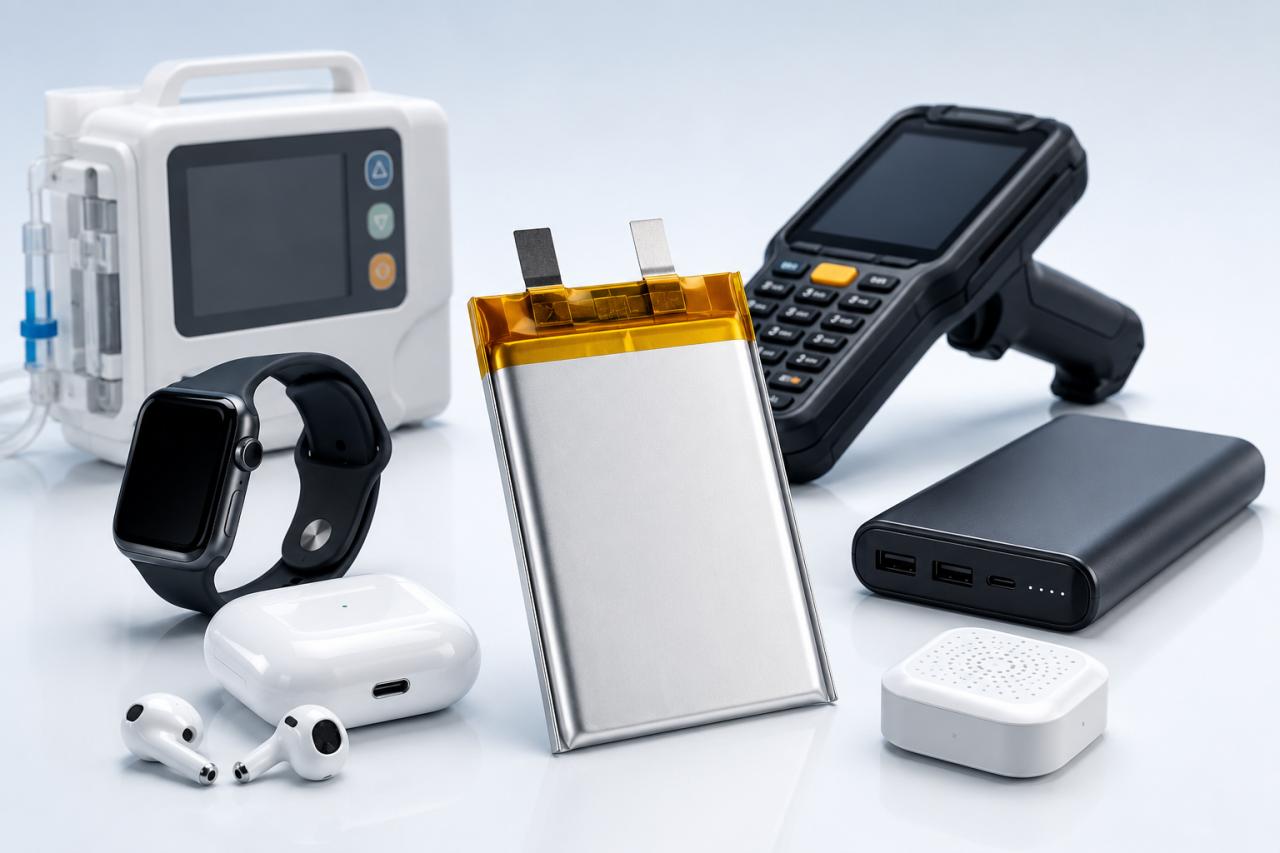
Most sourcing decisions go wrong before the first sample arrives. A product team picks a lithium polymer battery based on capacity and price, ignores form factor and discharge rate, and ends up with a cell that technically works but shortens device life or fails certification. The spec sheet looked fine. The application wasn’t considered. The scenarios below cover the most common use cases. Find yours, check the recommended specs, and you’ll know what to ask for before you contact a supplier.
Lithium Polymer Battery for Wearables and Earbuds
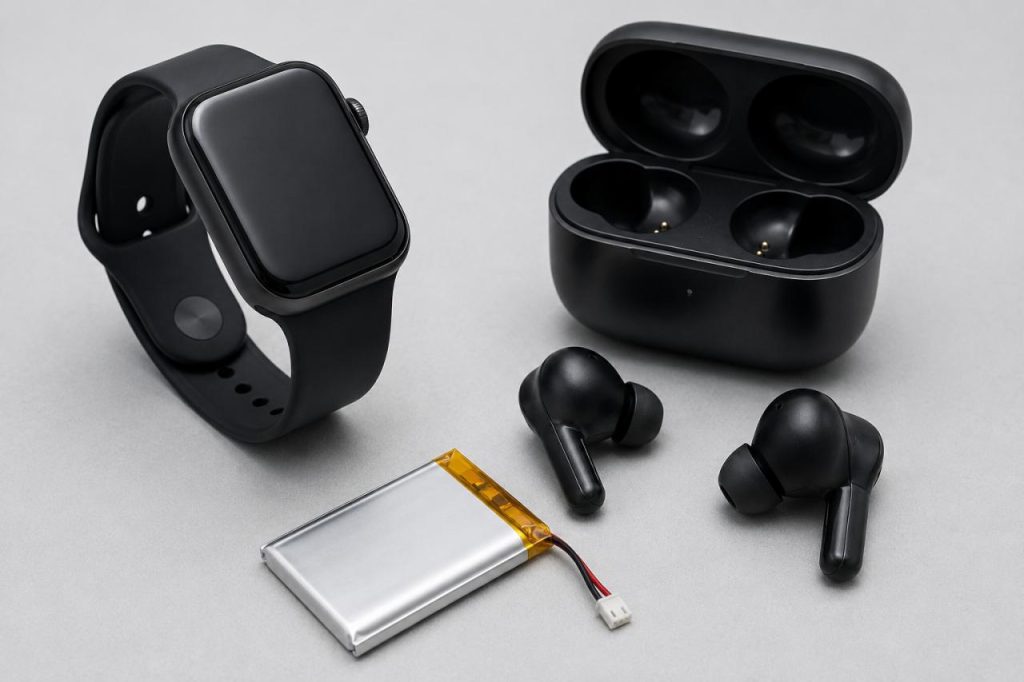
Smartwatches, fitness trackers, and TWS earbuds all share one hard constraint: space. The enclosure is fixed, and the battery has to fit inside it — every millimeter counts. A standard rectangular pouch cell often won’t work here. You need a lithium polymer battery that matches the exact shape of the device cavity. For wrist-worn devices, thickness drives the decision first. Most smartwatch designs cap battery thickness at 4mm or less. Capacity for this category typically runs between 200mAh and 500mAh — enough to cover a 24–48 hour use cycle when the device runs efficient power management.
TWS earbud cells go smaller still. Individual bud batteries typically range from 35 mAh to 100 mAh, while the charging case carries a separate 300–600 mAh pouch cell. Self-discharge rate matters here, too. A wearable sitting on a shelf for 30 days shouldn’t drop more than 2–3% of its charge. Quality polymer cells in this category hold well within that range. The custom polymer battery range supports non-standard geometries for this segment — including L-shaped and curved configurations — with a nominal voltage of 3.7V and capacity options starting from under 100mAh.
Lithium Polymer Battery for Handheld Devices
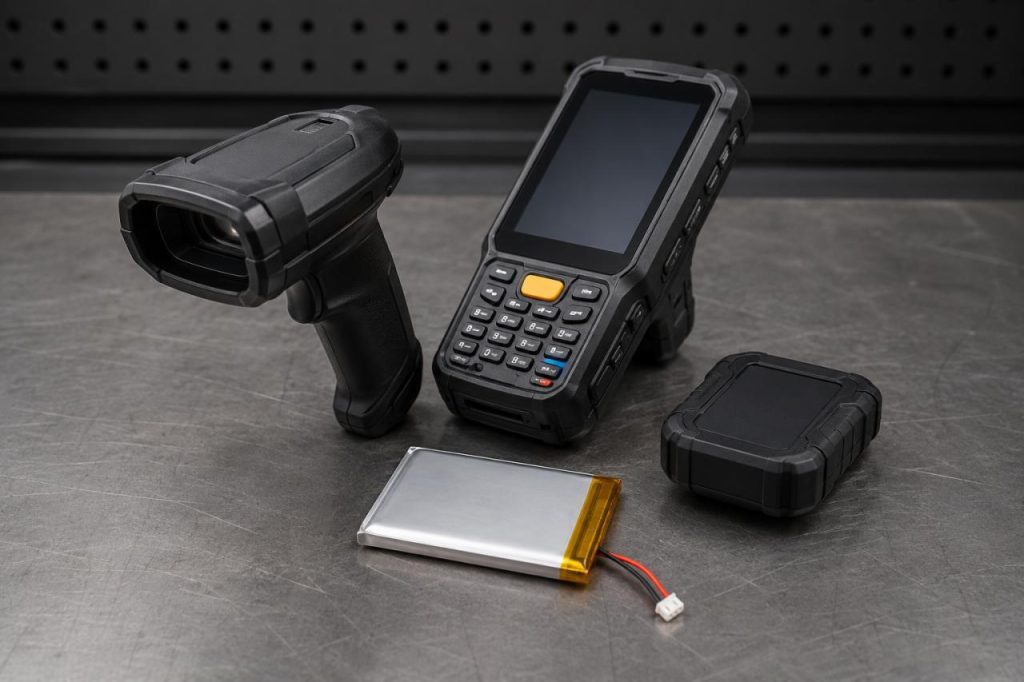
POS terminals, handheld barcode scanners, and GPS trackers operate in conditions that consumer electronics never face: temperature swings, heavy daily cycling, and extended field use without access to charging. You need a lithium polymer battery that holds up over hundreds of charge-discharge cycles without significant capacity loss.
Most handheld commercial devices target a capacity between 1,000 mAh and 3,000 mAh. Watch cycle life closely — budget cells drop to 70% capacity after 300 cycles, while quality polymer batteries stay above 80% past 500 full cycles. For devices running in cold storage or outdoor field conditions, confirm the operating temperature range. A cell rated for –20°C to 60°C covers most demanding deployments.
Keep discharge rate moderate for this segment — 1C to 2C handles the power draw of most handheld electronics without stressing the cell. Higher C-ratings push up heat and accelerate aging, so don’t over-specify unless the device genuinely demands it.
Lithium Polymer Battery for Power Banks and IoT Devices
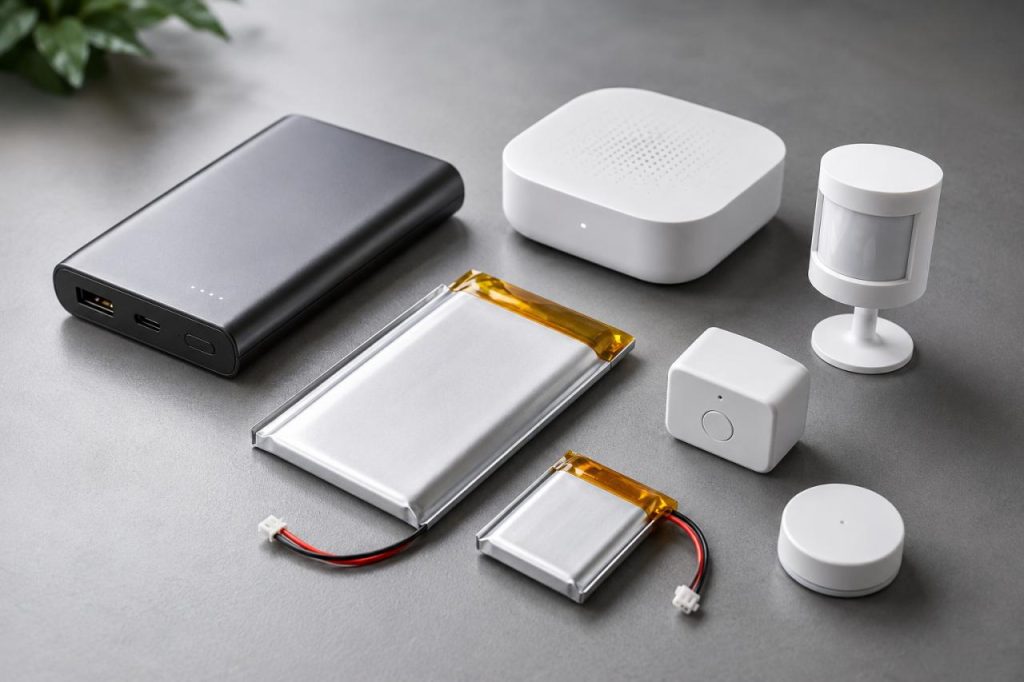
Power banks and IoT devices look different on the surface, but they share the same core requirement: high capacity with low self-discharge. A power bank sits in a bag for weeks between uses. An IoT sensor node runs for months on a single charge. Both need a lithium-polymer battery that holds a charge reliably over time.
For power banks, capacity is the primary selection criterion. The custom lithium battery solutions lineup includes 8,000mAh and 16,000mAh configurations — the 9060100 1S2P pack and the 1260901S2P pack both hit 16,000mAh and cover the high-end portable power segment. These 3.7V nominal cells deliver stable multi-cycle performance in compact form factors.
IoT devices set different priorities. They typically need 500mAh to 2,000mAh, but the operating profile demands minimal self-discharge and consistent performance across long standby periods. A quality pouch cell in this category loses less than 3% of its charge per month at room temperature — and that number matters when you can’t retrieve a deployed sensor for servicing.
Lithium Polymer Battery for Medical Devices
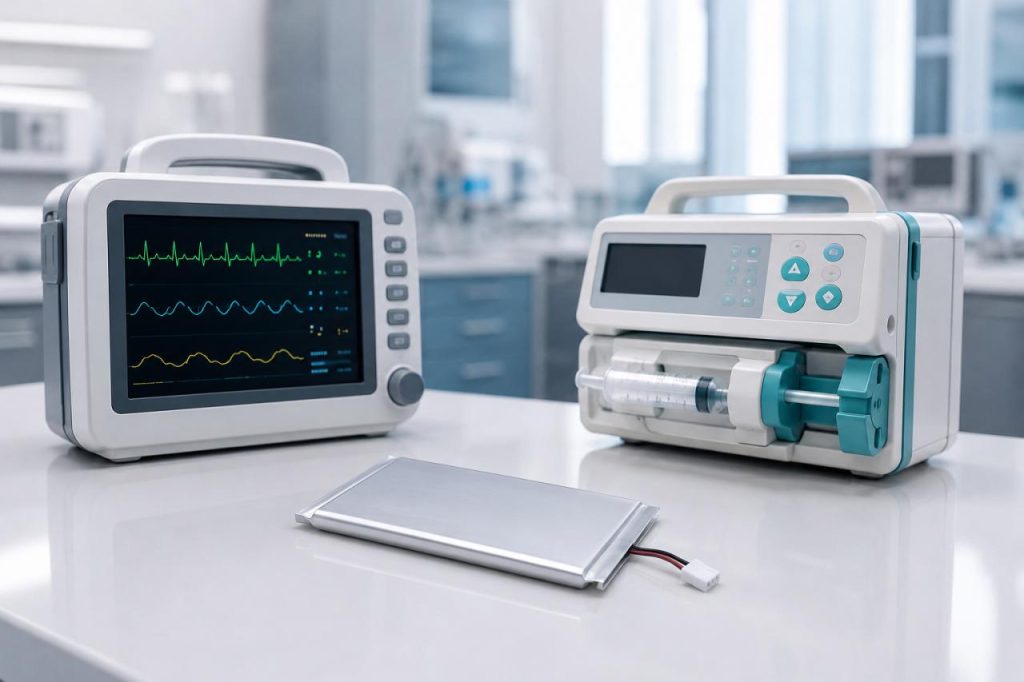
Portable diagnostic equipment, infusion pumps, and patient monitoring devices are subject to stricter requirements than any other category on this list: performance matters, but so do certification, consistency, and the cost of failure.
For medical applications, UN38.3 sets the floor for transport compliance, and IEC 62133 covers safety. Medical-grade device projects may also require ISO 13485-aligned manufacturing documentation from the battery supplier. Skip these certifications and regulatory approvals for the end-device stalls — there’s no workaround.
Cell-level consistency carries more weight here than in any other segment. A capacity variance of ±2% or more across a production batch results in uneven pack performance and complicates BMS calibration. Voltage stability under load matters equally — a cell that sags during discharge causes monitoring equipment to underread, and that’s not acceptable in a clinical setting.
Working with a custom lithium battery manufacturer that offers medical-grade polymer configurations, leakage-resistant gel electrolyte cells, and batch-level documentation makes the certification path significantly shorter. The operating range for this segment is –20°C to 60°C, with stable output across the full span.
The Specs That Matter Most When Sourcing a Lithium Polymer Battery at Scale
Single-sample testing passes. Batch production doesn’t always follow. When volume increases, three metrics distinguish reliable suppliers from risky ones.
Capacity consistency comes first. Test at least 20 cells from the same production run. Any variance beyond ±2% signals a quality control problem — mismatched cells force the BMS to cut off early, and your rated capacity never reaches the end user.
Internal resistance tells you more than capacity figures do. A fresh lithium polymer battery from a quality manufacturer typically reads between 50 mΩ and 150 mΩ, depending on capacity. High resistance at delivery results in faster heat buildup and a shorter usable life. Ask for batch-level internal resistance data before you commit to volume.
Cycle life under real conditions is the spec most suppliers avoid quoting precisely. Ask for test data at 200, 300, and 500 cycles — not just a headline number. A battery rated for 500 cycles should still deliver 80% of its original capacity at cycle 500, when tested at the discharge rate your device actually runs at.
Getting these three numbers before you place a volume order costs nothing. Skipping them can cost a product launch.