
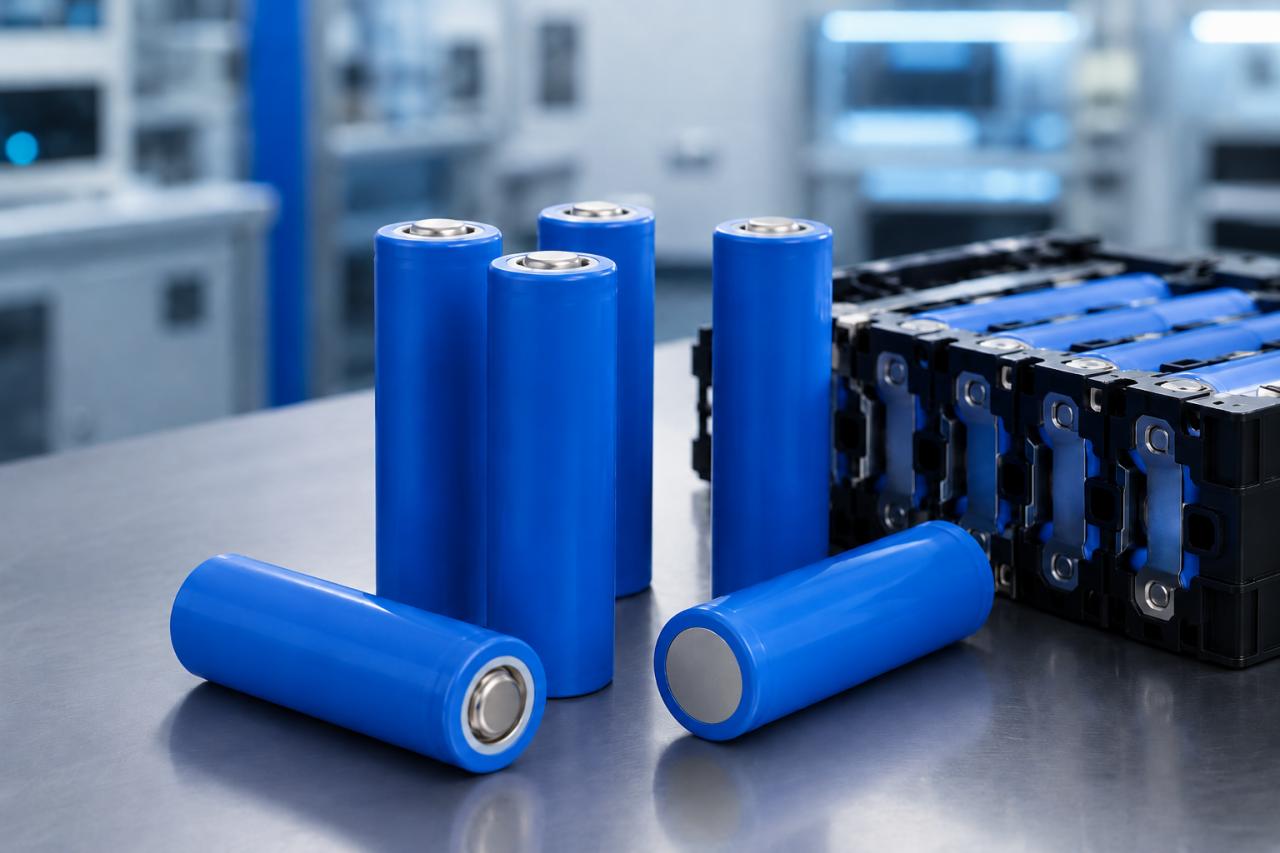
Lithium battery cells have been around for decades, but one format has outlasted nearly every alternative. The 18650 lithium ion battery is now embedded in everything from laptop power packs to industrial robotics — and its staying power has less to do with marketing than with measurable performance. Understanding what it actually delivers is the starting point for any serious sourcing decision.
Why the 18650 Lithium Ion Battery Became the Industry Default
The 18650 format dates to the early 1990s, when Sony standardized it for consumer electronics. The name itself encodes the dimensions: 18mm in diameter, 65mm in length, cylindrical form. That combination turned out to be close to optimal for a wide range of applications — compact enough to package in multi-cell configurations, large enough to hold meaningful capacity.
By the 2010s, demand accelerated hard. Electric vehicle manufacturers, power tool brands, and energy storage developers all converged on the same cell because the global supply chain had already scaled around it. That means consistent availability, competitive pricing, and broad compatibility with existing BMS designs. For procurement teams, those factors matter as much as raw performance.
Core Specs of the 18650 Lithium Ion Battery
The 18650 lithium ion battery has held its ground in competitive markets because its specifications are genuinely practical — not just adequate. Before evaluating suppliers or designing a pack, knowing exactly what this cell delivers at the component level saves time and prevents costly mismatches downstream.
Dimensions and Voltage
The standard 18650 lithium ion battery measures 18.6mm in diameter and 65.2mm in length, with minor tolerances that vary by manufacturer. Nominal voltage is 3.6V or 3.7V, depending on cell chemistry — NMC (nickel manganese cobalt) cells typically sit at 3.6V, while NCA (nickel cobalt aluminum) variants often rate at 3.7V. Fully charged, most cells reach 4.2V; the discharged cutoff is typically 2.5V to 3.0V.
Capacity and Discharge Rate
Capacity ranges from 1,800mAh on lower-cost cells to 3,500mAh on premium high-energy cells. A well-specified 18650 Li-ion battery from a reputable manufacturer — such as Zenilove’s cylindrical cell range — delivers 2,600mAh to 3,500mAh with consistent cycle performance. Discharge rate, measured as C-rating, typically ranges from 1C to 10C for standard cells, with high-drain variants reaching 20C for power tools and similar applications. Cycle life for quality cells exceeds 500 full charge-discharge cycles before capacity drops below 80%.
Where 18650 Lithium Ion Batteries Are Used
The 18650 cell’s combination of energy density, thermal stability, and standardized dimensions makes it a practical choice across a wide range of product categories. Its adoption spans both consumer and industrial markets — not because it’s the only option, but because it consistently meets the performance threshold that most applications require.
Portable Devices and Consumer Electronics
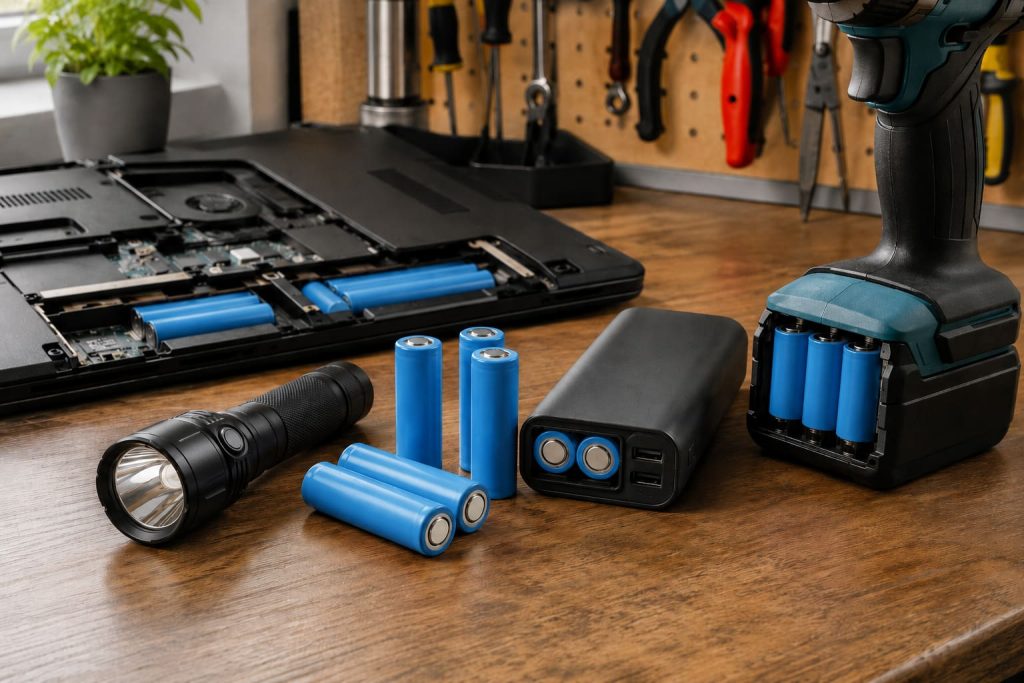
The 18650 cylindrical cell powers laptop battery packs, flashlights, handheld power tools, and portable chargers. In most laptops, three to six cells are connected in a series-parallel configuration to meet the device’s voltage and capacity requirements. That modularity is a core reason the format has endured — the same lithium battery cells work across very different product categories with minimal redesign.
Industrial and High-Drain Applications
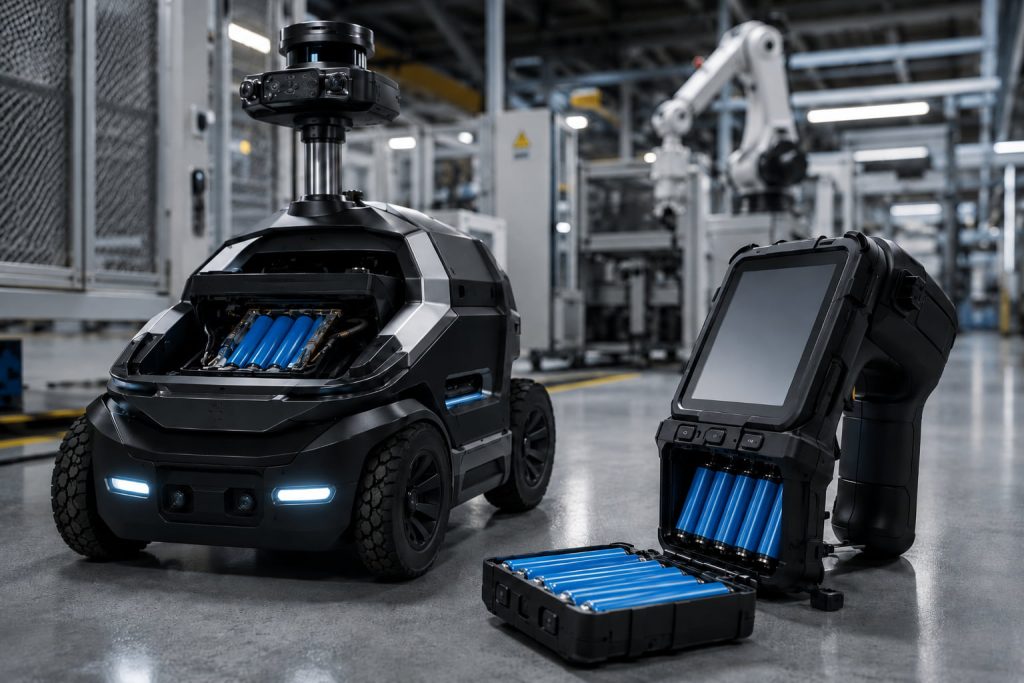
Beyond consumer electronics, 18650 lithium ion batteries serve demanding environments. Medical portable diagnostic equipment, industrial handheld scanners, and backup power systems all rely on them because the chemistry handles temperature variation and sustained discharge better than many alternatives. In robotics, multi-cell packs built from 18650 cells deliver the energy density needed for extended autonomous operation without excessive pack weight.
What to Verify Before Sourcing 18650 Lithium Ion Batteries at Scale
Sourcing lithium ion cell packs at volume introduces risks that a single-sample test won’t catch. Three areas deserve close attention before committing to a supplier.
First, check certifications. UN38.3 is the minimum standard for lithium battery transport — without it, your shipment faces customs risk. MSDS documentation matters too, especially for ocean freight. Second, confirm cell-level consistency. Capacity variance across a production batch should remain within ±2% for reputable manufacturers; wider variance leads to uneven charging in multi-cell packs and shortens overall pack life. Third, verify BMS compatibility if you’re integrating cells into a custom pack. The 18650 cylindrical Li-ion battery’s discharge curve needs to align with your battery management system’s expectations, particularly around the low-voltage cutoff.

Choosing the Right 18650 Lithium Ion Battery Supplier
A supplier’s ability to deliver consistent spec matters more than headline price. Request data sheets that include cycle life test results, not just nominal capacity. Ask for batch consistency reports — any serious cylindrical battery manufacturer tracks cell-to-cell variance as a standard quality metric.
OEM and ODM options give you more control over chemistry and packaging. For projects requiring custom capacity, discharge rate, or form factor, working with a manufacturer that offers in-house cell engineering — rather than just assembling commodity cells — reduces the risk of spec drift across production runs. That’s where the difference between a battery wholesaler and a true lithium battery manufacturing partner becomes visible.
Getting the specification right at the cell level prevents downstream failures that no amount of BMS tuning can fully correct.