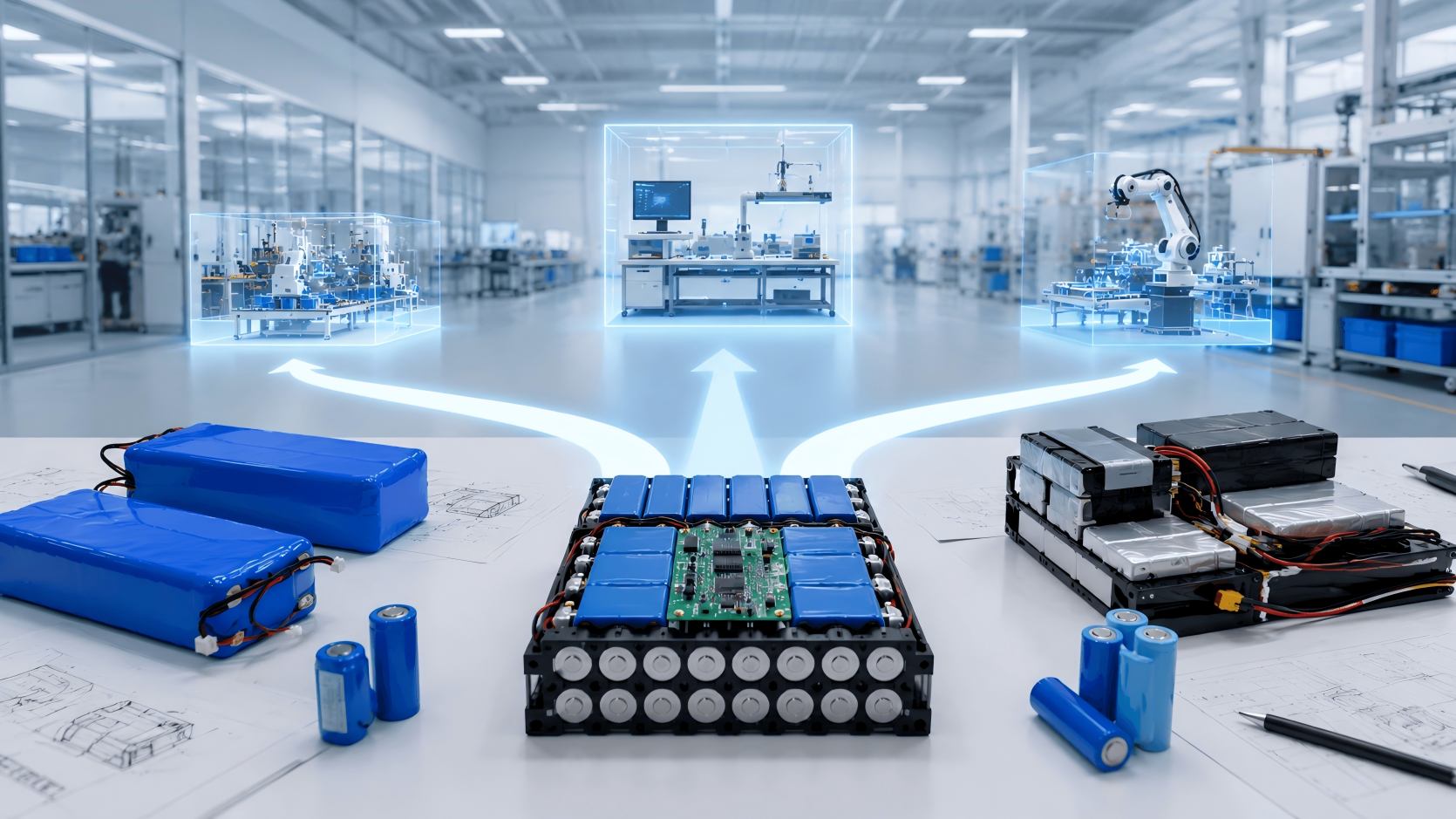
Choosing the right lithium battery manufacturing model means matching the project stage with the right way of working. A project with finished drawings does not need the same support as a project that only has an application idea. A complex new product may need even deeper engineering collaboration before it can move toward production.
This is why OEM, ODM, and JDM should not be treated as simple service labels. They represent different levels of project maturity. OEM is closer to production based on an existing design. ODM is closer to turning requirements into a workable battery solution. JDM is closer to joint development, where both sides define, test, and refine the design together.
When the model matches the project stage, communication becomes clearer and development moves faster. When it does not, even a capable battery manufacturer may spend too much time clarifying requirements, correcting assumptions, or restarting parts of the design process.
A battery project rarely slows down because of one single technical detail. More often, it slows down because the customer and the manufacturer are not working from the same starting point.
What Is a Lithium Battery Manufacturing Model?
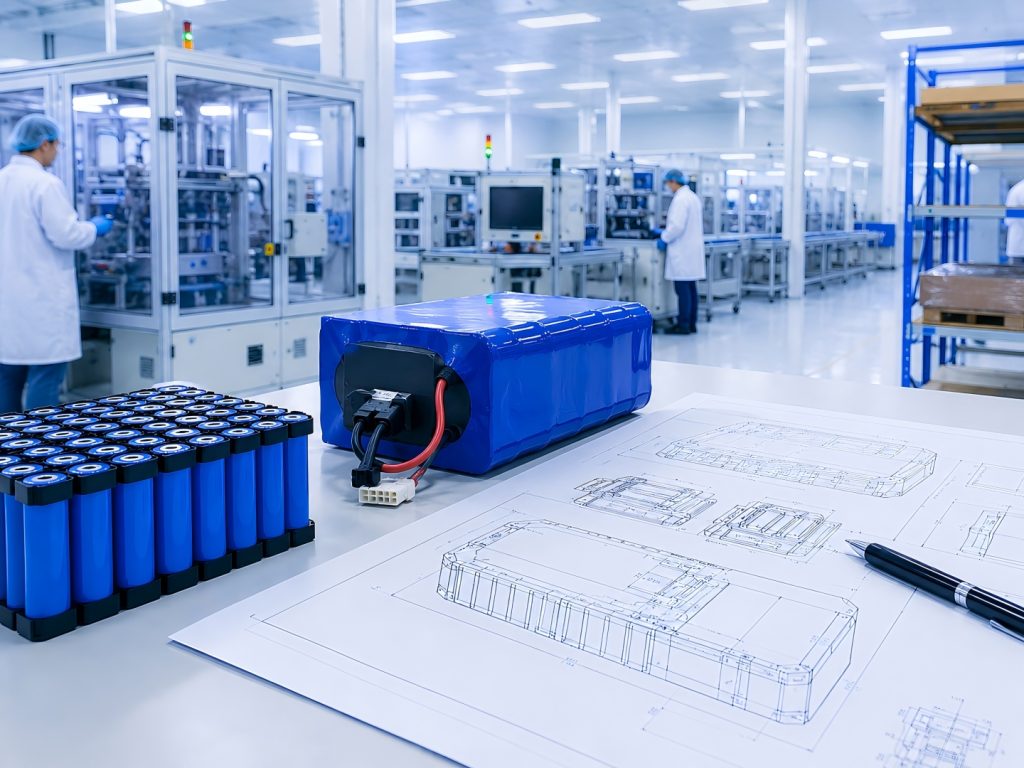
In the battery industry, OEM, ODM, and JDM describe how design responsibility and engineering workload are divided between the customer and the manufacturer.
Each model implies a different starting point and a different type of output. A manufacturer that handles all three still approaches them differently — and a project handled under the wrong model will run into problems that have nothing to do with factory capability.
Start by Identifying Your Project Stage
Before contacting suppliers, be clear about where your project stands:
- Complete drawings and specifications — ready for production
- Defined application requirements, no battery design yet — needs engineering input first
- Complex product requiring early manufacturing involvement — needs joint development
These three situations map directly to OEM, ODM, and JDM. Identifying your project stage first — rather than searching for the lowest-cost supplier — is what determines which model fits and which type of manufacturer to approach.
OEM Lithium Battery Manufacturing for Ready-to-Produce Designs
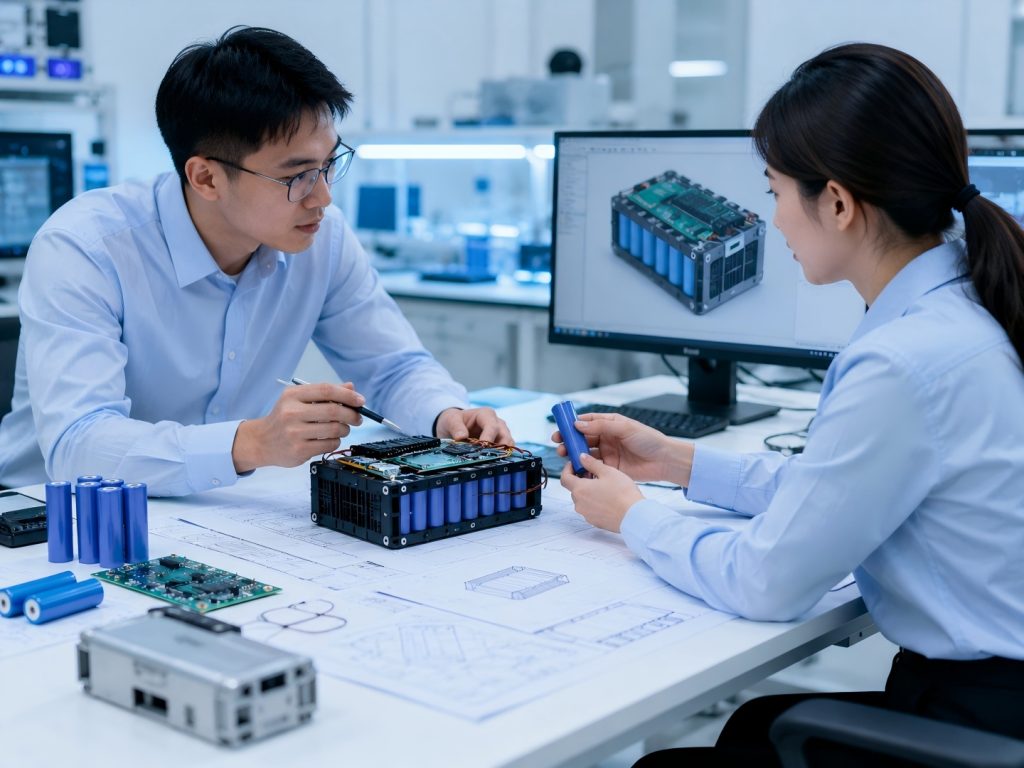
OEM lithium battery manufacturing applies when your design is complete. You bring the specifications; the manufacturer handles production — cell sourcing, pack assembly, BMS integration, testing, and certification. Private label battery production is standard in this model.
OEM is well-suited for mature products entering a new production run, or existing designs being transferred from another OEM battery factory. The key requirement is that your drawings and parameters are frozen. If the spec is still open, OEM is not the right starting point.
ODM Lithium Battery Manufacturing for Custom Battery Solutions
ODM lithium battery manufacturing applies when you understand your application but have not developed the battery design. You define the use case — voltage, runtime, operating environment, form factor — and the manufacturer builds a solution around those inputs.
A typical ODM engagement covers cell selection, BMS design, pack structure, and prototype validation. This model is common in medical devices, industrial equipment, robotics, and portable tools — applications where the battery must be designed around the product.
An ODM battery supplier also concentrates accountability: the team that designs the battery is the same team producing it.
JDM Lithium Battery Manufacturing for Engineering Collaboration
JDM — joint design manufacturing — applies to projects where technical complexity requires both parties to define the solution together. It is not a sequential process where one side specifies and the other responds. Both teams contribute engineering input throughout.
JDM lithium battery manufacturing is more common in high-voltage or multi-module systems, products with proprietary cell configurations, or early-stage hardware where even the product design is still evolving. The overhead is real, but for projects where a standard ODM approach would require too many compromises, joint design manufacturing reduces downstream risk.

The Wrong Manufacturing Model Can Delay Your Project
A customer with only an application brief who expects OEM-style communication will hit a wall immediately — there are no drawings to produce from. Every discussion circles back to parameters that have not been defined. The project loops rather than advances.
The reverse is also a problem. A customer with complete, validated specs who gets pulled into an ODM or JDM process wastes time reviewing engineering proposals that were never needed. Approval cycles extend, costs increase, and the timeline slides.
Neither scenario reflects a factory capability problem. It is a model mismatch — and it is avoidable.
OEM, ODM, and JDM: A Quick Comparison
| Criteria | OEM | ODM | JDM |
|---|---|---|---|
| Project entry point | |||
| Complete drawings provided | ✓ | — | — |
| Application requirements only | — | ✓ | △ |
| Early-stage R&D collaboration | — | — | ✓ |
| Engineering responsibility | |||
| Customer owns full design | ✓ | — | — |
| Manufacturer leads design | — | ✓ | △ |
| Jointly defined solution | — | — | ✓ |
| Typical use cases | |||
| Mass production of proven design | ✓ | — | — |
| Medical / industrial / robotics | — | ✓ | △ |
| High-voltage / complex systems | — | △ | ✓ |
| Process | |||
| Development cycle | Short | Medium | Long |
| Engineering collaboration depth | Low | Medium | High |
| Private label / branded output | ✓ | ✓ | ✓ |
✓ primary fit · △ conditional · — not applicable
Choosing the Right Model Before Choosing the Supplier
OEM, ODM, and JDM each suit a different project stage and a different depth of collaboration. For international projects, lithium battery transport requirements should be considered before production planning, especially when the product will be shipped by air or sea. Selecting the right lithium battery manufacturing model before evaluating suppliers makes every subsequent step more efficient — from RFQ scope to sample agreements.
The clearest indicator of which model fits is straightforward: how much of the battery design work still needs to happen, and who is expected to do it.