
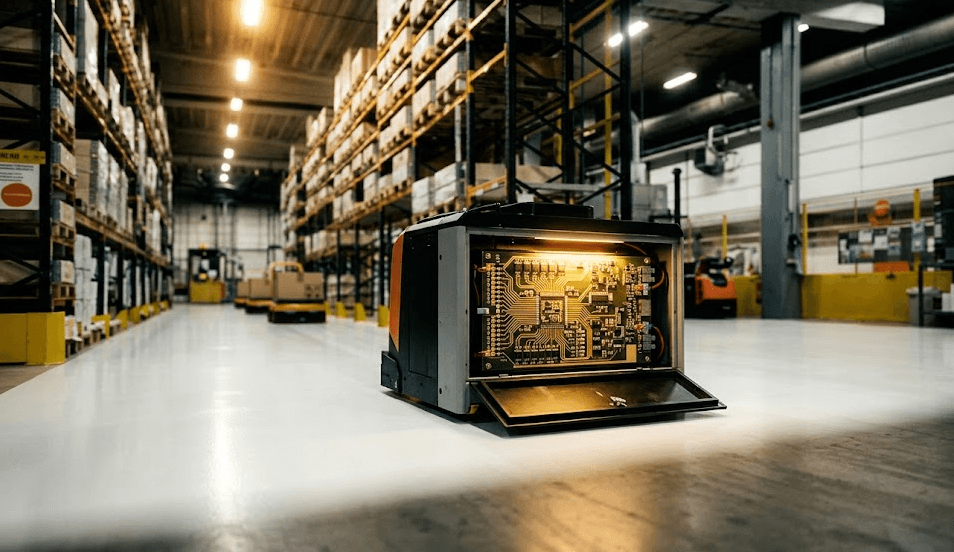
The 12V LiFePO4 battery pack is reshaping how industrial facilities approach stored energy. Basically, lead-acid has powered industrial systems for decades — but that track record is its only remaining advantage. Therefore, procurement managers, AGV manufacturers, and industrial IoT engineers across North America are accelerating the transition, and the engineering and financial case makes the decision straightforward.
What is a 12V LiFePO4 Battery Pack?
A 12V LiFePO4 battery pack is a high-performance energy storage system made of Lithium Iron Phosphate cells. It provides a stable 12.8V nominal voltage, offering up to 10x longer cycle life, 50% lighter weight, and superior thermal safety compared to traditional lead-acid batteries, making it the ideal power source for B2B industrial applications.
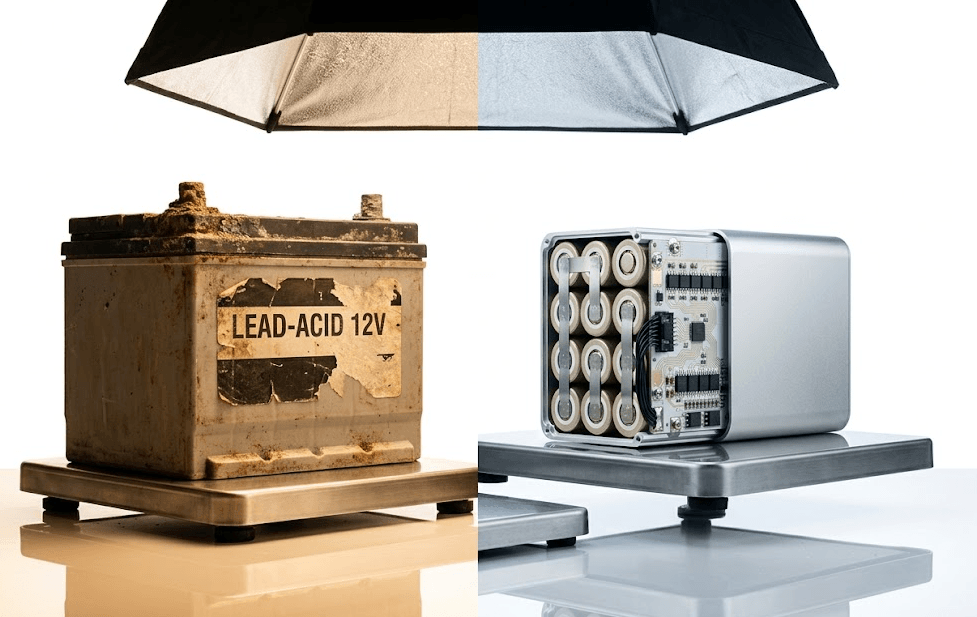
Why Industrial Facilities Are Replacing Lead-Acid with 12V LiFePO4 Battery Packs
The core issue with sealed lead-acid (SLA) is structural. Lead-acid limits usable Depth of Discharge (DoD) to 50% of rated capacity. So 100Ah SLA battery delivers only 50Ah of usable energy per cycle. This lithium iron phosphate pack supports 80–100% DoD consistently — delivering nearly double the usable energy from the same nominal capacity rating. Consequently, facilities that switch often downsize the battery bank without reducing runtime, compressing capital cost and physical footprint simultaneously.
Energy density compounds the advantage. LiFePO4 prismatic cells achieve 120–160 Wh/kg, compared to 30–50 Wh/kg for lead-acid. So, a 12V LiFePO4 battery pack delivering equivalent energy weighs 50–70% less than its SLA counterpart.
| Feature | 12V LiFePO4 Battery Pack | 12V SLA (Lead-Acid) |
|---|---|---|
| Cycle Life | 3,000 – 5,000+ cycles | 300 – 500 cycles |
| Weight (100Ah) | Approx. 12 kg (Lightweight) | Approx. 30 kg (Heavy) |
| Depth of Discharge (DoD) | 100% (Fully usable) | 50% (Damage occurs if drained fully) |
| Maintenance | Zero maintenance (Smart BMS) | Requires frequent checks & topping up |
Weight and Space Efficiency: Why LiFePO4 Outperforms Lead-Acid in AGV Applications
AGV performance is a direct function of energy-to-weight ratio. A standard 12V 100Ah SLA battery weighs 28–32 kg. The equivalent 12V LiFePO4 battery pack in a prismatic cell configuration weighs 11–14 kg. That 18 kg reduction allows AGV manufacturers to increase rated payload, reduce drive motor sizing, or extend operational range. Furthermore, LiFePO4 packs require no ventilation clearance for off-gassing — recovering usable chassis volume that SLA installations require for safety compliance.
Total Cost of Ownership: The 10-Year Financial Case for LiFePO4 Technology
A single 12V LiFePO4 battery pack replaces 6–10 SLA units over a 10-year horizon. Each SLA replacement carries technician labor, terminal cleaning, and system downtime. In AGV fleets of 20–50 units running three shifts, that maintenance burden reaches hundreds of labor hours per year. LiFePO4 eliminates equalization charging and water top-up entirely. The Battery Management System (BMS) monitors cell voltage balance, state of charge, temperature, and current in real time — enabling predictive maintenance that eliminates unplanned downtime.
UN38.3 Certification and Thermal Safety for Industrial Deployment
Thermal runaway is the failure mode that industrial safety managers associate with lithium chemistry. However, LiFePO4 chemistry is fundamentally different from NMC. The iron-phosphate bond stays chemically stable at temperatures where NMC begins exothermic decomposition. The requirements of the international UN 38.3 standard have been recorded in the United Nations Transport Safety Database, and UN 38.3 certification is a mandatory qualification criterion.
Series and Parallel Configuration: Scaling the 12V LiFePO4 Battery Pack
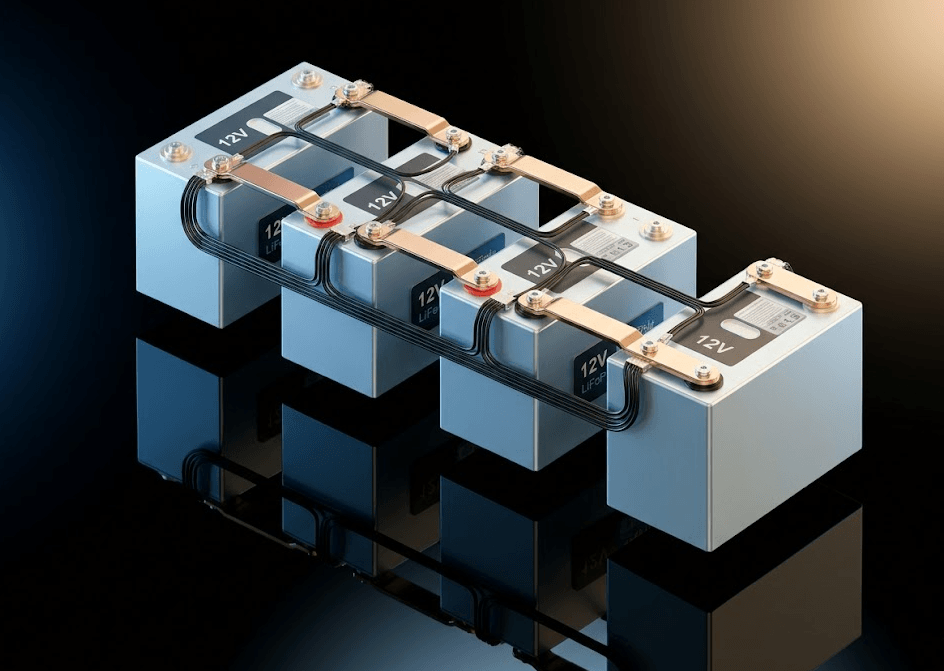
Two 12V LiFePO4 batteries in series produce 24V nominal — the standard bus voltage for many AGV drive systems. Four packs produce 48V — the dominant standard for industrial UPS and telecom backup power. Parallel configuration increases capacity while maintaining voltage.
Two 12V 100Ah packs in parallel produce a 12V 200Ah bank, doubling runtime without changing system voltage. Each pack’s integrated BMS continues operating independently, maintaining cell-level protection across the parallel bank.

Frequently Asked Questions: How does the BMS prevent thermal runaway in a 12V LiFePO4 battery pack?
The BMS monitors cell voltage, temperature, and current continuously. It opens the protection circuit if any parameter exceeds safe limits — cutting charge or discharge before thermal conditions escalate. LiFePO4 chemistry is inherently stable, and the BMS adds electronic protection. Together, they make thermal runaway effectively non-existent under normal industrial operating conditions.
What is the real Depth of Discharge (DoD) difference between LiFePO4 and SLA?
A 12V LiFePO4 battery pack supports 80–100% DoD without accelerating degradation. SLA is limited to 50% DoD to maintain an acceptable cycle life. Therefore, a 100Ah LiFePO4 pack delivers 80–100Ah of usable energy per cycle. The equivalent SLA delivers only 50Ah — practically half the usable capacity from the same nominal rating.
Can I connect a 12V LiFePO4 battery pack in series for a 24V or 48V system?
Yes. Two packs in series produce 24V nominal. Four packs produce 48V. Each pack must carry a compatible BMS, and the series string requires a system-level balancing solution to manage inter-pack voltage balance.
Conclusion
The outperforms lead-acid across every metric that matters in industrial procurement — cycle life, weight, usable energy, thermal safety, and total cost of ownership. The BMS, UN38.3 Certification, and LiFePO4’s inherent thermal stability deliver a reliability profile that SLA cannot match. For AGV manufacturers, industrial IoT engineers, and procurement managers building systems across decade-long operational horizons, the LiFePO4 battery pack is the correct engineering and financial decision.