
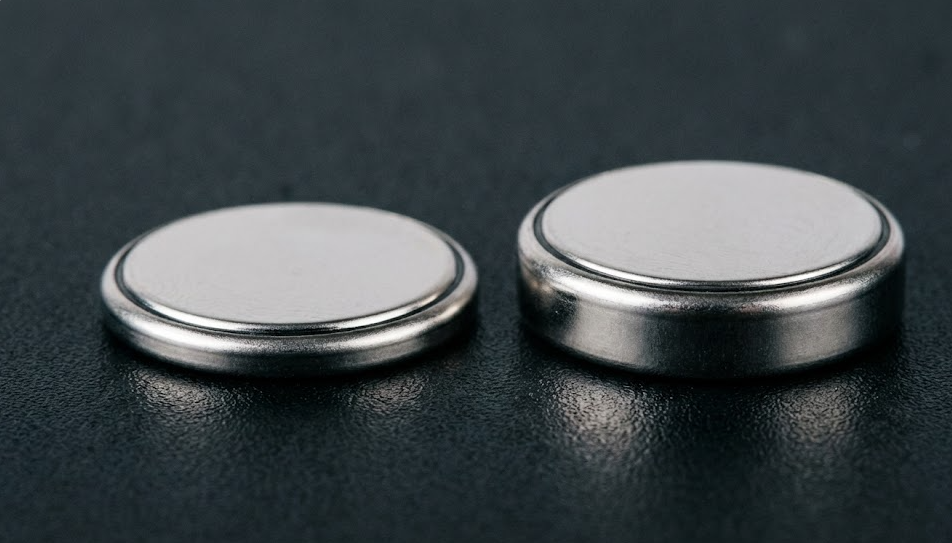
A CR2025 and a CR2032 look identical in the hand. Same silver casing, same 20mm diameter, same 3V output. The thickness is where they split—2.5mm against 3.2mm. That 0.7mm gap sounds trivial until the spring contact on your device can’t reach the cell, or the housing won’t close. Whether the swap works is a physical question before it’s an electrical one.
| Spec | CR2025 | CR2032 |
|---|---|---|
| Diameter | 20mm | 20mm |
| Thickness | 2.5mm | 3.2mm |
| Voltage | 3V | 3V |
| Capacity | 160–170mAh | 220–240mAh |
| Weight | ~2.3g | ~3.0g |
| Shelf Life | 8–10 years | 8–10 years |
What Makes CR2025 and CR2032 Coin Cell Batteries Different?
The number on the battery is actually telling you the size. “CR” is the chemistry. “20” is how wide it is. The last two numbers are, specifically, how thick—in tenths of a millimeter. So CR2025 is 2.5mm thick, and CR2032 is 3.2mm thick. That’s it. IEC 60086 is the international standard that locked in this naming system for lithium coin cells.
The CR2032 is thicker, so there’s more material inside, more electrode, more electrolyte. As a result, it holds more charge. CR2032 gets you 220–240mAh. CR2025, by comparison, is around 160–170mAh. If your device runs all day, every day, you’ll go through CR2025s noticeably faster. If it’s a remote you pick up twice a week, however, you probably won’t care either way.
Both batteries behave the same way when draining. Voltage stays at 3V almost the whole time, then suddenly drops when the cell is nearly done. No warning, no slow fade. That predictability is, in fact, exactly what watches and computer memory chips depend on—they need stable voltage, not a gradual decline.
Can CR2025 Replace CR2032 in Your Device?
Sometimes yes, sometimes no. The battery tray decides.
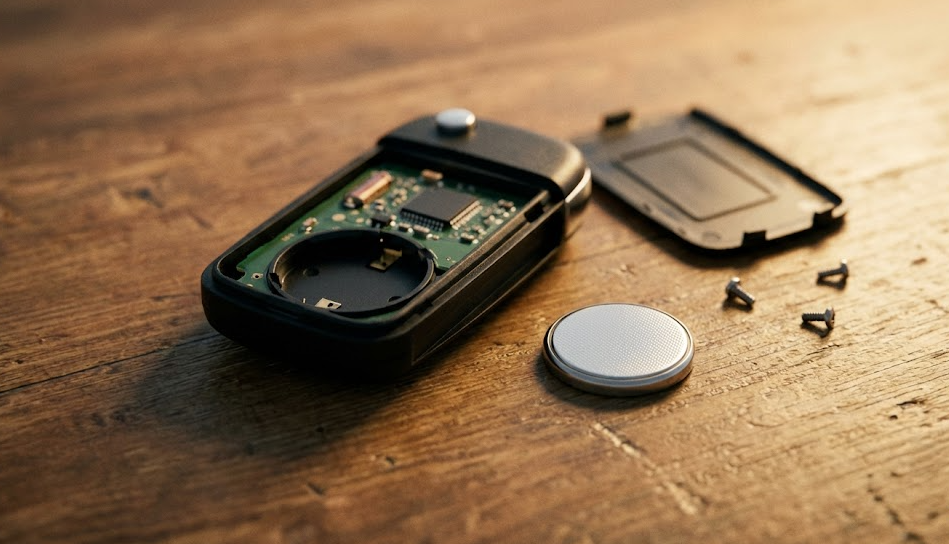
If the tray was built for a 3.2mm cell and you drop in a 2.5mm cell, the spring might not reach. You’ll get nothing, or it cuts in and out. If, on the other hand, there’s a bit of extra room in the tray, the CR2025 will work fine—it just won’t last as long.
Going the other way is trickier. A CR2032 going into a CR2025 slot usually won’t let the cover close. If you force it, moreover, you bend the contacts. Once the contacts are bent, no battery fixes that.
Stick with what the device manual says. If you’re stuck and only have a CR2025 for a device that takes CR2032, and it fits, it’ll get you through. For a car key, a medical device, or anything you rely on daily, however, go get the right battery.
Which Device Takes Which Battery?
It comes down to what the product designer decided when they built the thing.
CR2032 goes into devices that draw real current on a regular basis.
Car key fobs are a good example—every button press fires a short radio burst, and that burst needs stable voltage. Motherboards, similarly, use CR2032 to keep the clock ticking and hold BIOS settings when the machine is off. Medical devices like glucose monitors and cardiac monitors specify it too, because an unexpected power drop in that context is simply not an option.
CR2025, by contrast, ends up in products where the housing is tight. Slim watches, thin calculators, card-sized remotes—the engineers designed the product around a 2.5mm cell. You can’t swap in a CR2032 there. The back panel physically won’t sit flush.
If you’re buying these in bulk for manufacturing, furthermore, sort this out before you finalize the design. Changing the cell type after the molds are cut is an expensive problem. Pull up the datasheet, measure the compartment depth, and confirm it before the BOM goes out.
How Long Do CR2025 and CR2032 Batteries Last?
It depends almost entirely on what the device is doing, not which cell you picked.
On a steady low-drain load—the kind a small sensor draws—CR2032 runs about 500–600 hours. CR2025, under the same conditions, gets roughly 350–400 hours. That’s, therefore, a meaningful gap for anything that’s always on.
Key fobs, however, tell a different story. Each press is a millisecond of current draw. Both batteries handle that easily for years. CR2032 technically has more capacity, but if you press the button five times a day, either one will outlast your interest in that particular car.
For storage, both are nearly identical. Leave them in a drawer at room temperature and they’ll still have most of their charge ten years from now. What kills them early, though, is heat—a hot car, a sunny shelf, a drawer next to the stove. Keep them in the original packaging somewhere cool until you actually need them.
Which Battery Should You Choose?
Check two things: does it physically fit, and how often does the device need power?
CR2032 is the better pick if the compartment fits it. More capacity, better with current bursts, longer between swaps. CR2025 isn’t worse—it’s just built for devices where 2.5mm is all the space available. Jamming the wrong cell in damages the contacts, and that’s a hardware problem no battery solves.
At Zenilove, we carry both and also handle custom lithium battery solutions for OEM and industrial projects. If the off-the-shelf options don’t fit your spec, send us the compartment dimensions and we’ll work from there.
Use what the device was made for. Everything else is a workaround.