
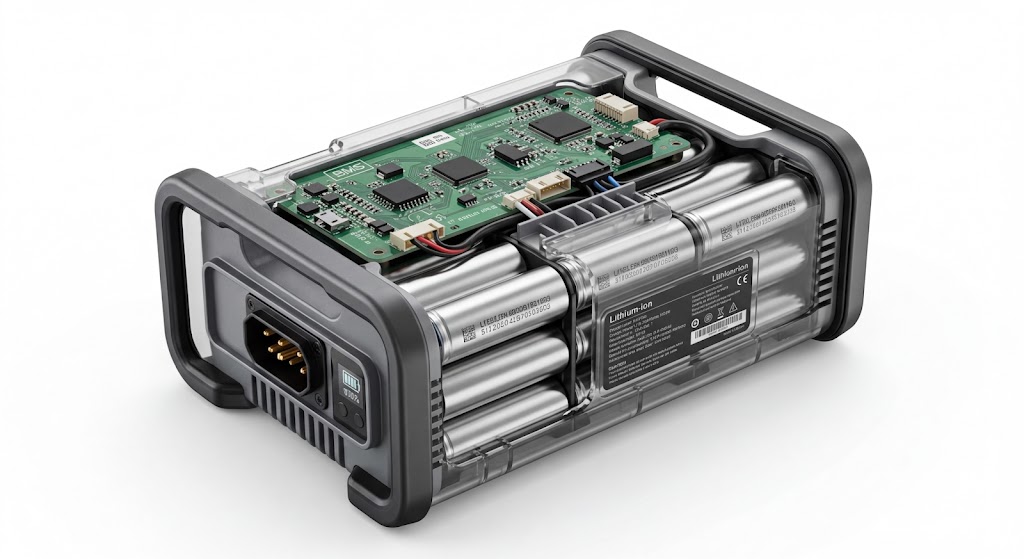
A pack lithium ion battery is not just a group of cells. It is a system — and understanding how that system works helps you buy the right one.
When most people hear “lithium ion battery,” they picture a single cell — a small cylinder or pouch. But a pack lithium ion battery is something different. It takes individual cells and turns them into a working power system with a specific voltage, capacity, and built-in protection. That process involves more than just stacking cells together. We use 18650 cells as the foundation.

How a Pack Lithium Ion Battery Is Built
Every lithium ion battery pack starts with individual cells. These cells are arranged in two ways: series and parallel.
Series means cells are connected end to end. Each cell adds its voltage to the total. For example, four 3.7V cells in series give you 14.8V.
Parallel means cells are connected side by side. In this case, each cell adds its capacity to the total. Two 3,000mAh cells in parallel give you 6,000mAh — at the same voltage.
Most real packs use both. A 4S2P pack has four groups in series and two cells in parallel per group. As a result, you get higher voltage and higher capacity at the same time. The cell configuration is the first design decision — and it drives everything else.
The BMS: What Keeps Every Cell in Check
Raw lithium-ion cells are sensitive. They can overheat, overcharge, or over-discharge, and each of those conditions causes permanent damage or worse. That is where the BMS comes in.
BMS stands for Battery Management System. It is the electronic board inside every lithium-ion battery pack. Its job is to watch every cell and cut power if something goes wrong.
A BMS monitors three things in real time: voltage, current, and temperature. If any cell drifts outside its safe operating range, the BMS responds immediately, cutting charge, limiting discharge, or shutting the pack down entirely. In practice, this happens faster than any external protection circuit could react.
Beyond protection, a good BMS also balances the cells. In any pack, individual cells age at slightly different rates. Over time, that gap widens. Without balancing, the weakest cell limits the entire pack, reducing usable capacity and shortening overall life. The BMS corrects for this by redistributing charge across cells during every cycle.
For industrial applications, the BMS also handles communication. It reports state of charge, state of health, cycle count, and fault history to the host device. That data matters for predictive maintenance, warranty tracking, and system integration. A pack without this visibility is a black box, and in a production environment, black boxes are a liability.
What the BMS does
The BMS monitors three things: voltage, current, and temperature. If a cell charges past its safe limit, the BMS cuts the charging current. A cell that drains too low gets disconnected before damage happens. Overheating triggers a full shutdown.
It also balances the cells. No two cells are identical from the factory. Over time, small differences grow, and an unbalanced pack loses capacity fast. The BMS either drains the stronger cells (passive balancing) or moves energy from stronger to weaker ones (active balancing). Both methods keep the pack running evenly.
According to Synopsys, lithium-ion cells can be unforgiving when operated outside their safe operating range; the BMS keeps them within it.
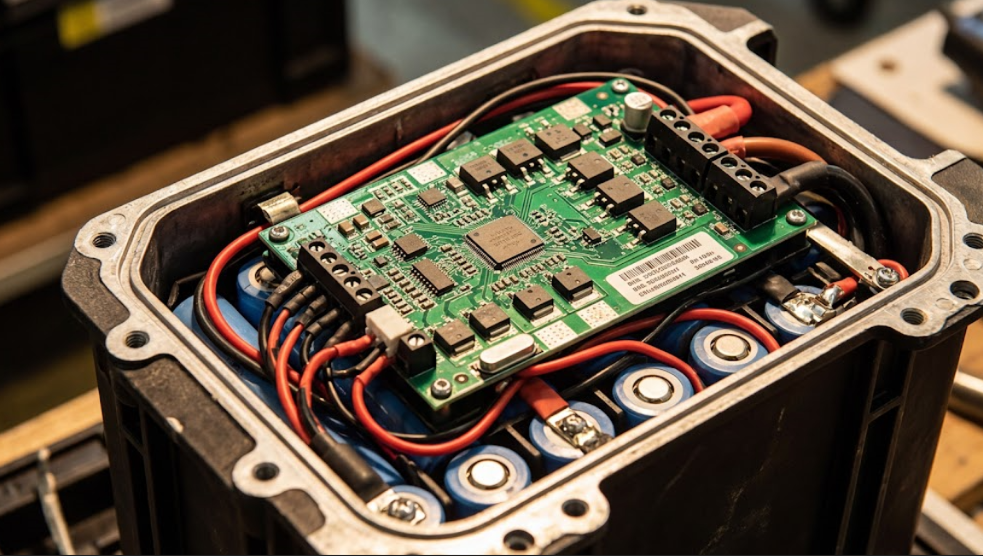
Housing, Connectors, and Thermal Management
Cells and BMS get most of the attention, but a complete Li-ion battery pack is more than that.
Housing: The outer casing holds everything in place and protects the cells from vibration, moisture, and physical damage. For industrial use, this often means an IP-rated enclosure, with IP54 for dust and splash resistance and IP67 for full submersion protection.
Connectors and terminals. The output connector must match the device it powers. A mismatch here causes voltage drops, heat, and unreliable connections. The application determines the right connector spec — not just what physically fits.
Thermal management: Heat is the main enemy of lithium-ion cell lifespan. Basic packs rely on passive airflow through the housing for cooling. High-drain applications require active cooling, such as fans or liquid-cooling plates, to keep cells within their optimal temperature range.
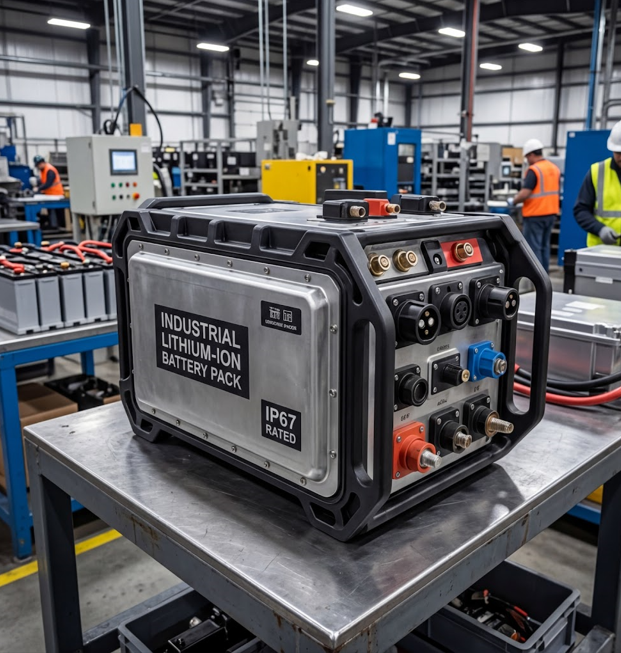
A Pack Lithium Ion Battery Delivers Power — When It Is Designed Right
The cells set the energy. The BMS keeps it safe. The housing protects it. The connectors deliver it. Every part plays a role, and a weak link in any one of them affects the whole system.
A well-designed battery pack lasts longer, performs more consistently, and costs less over its full service life than one built around cheaper components or a weak BMS. The upfront price difference between a proper pack and a cut-rate one is small. The difference in field performance over two or three years is not.
If you are sourcing a pack for an industrial or commercial application, the right starting point is the cell chemistry and BMS spec, not the price per unit. Get in touch, and we will match the right pack to your application.