
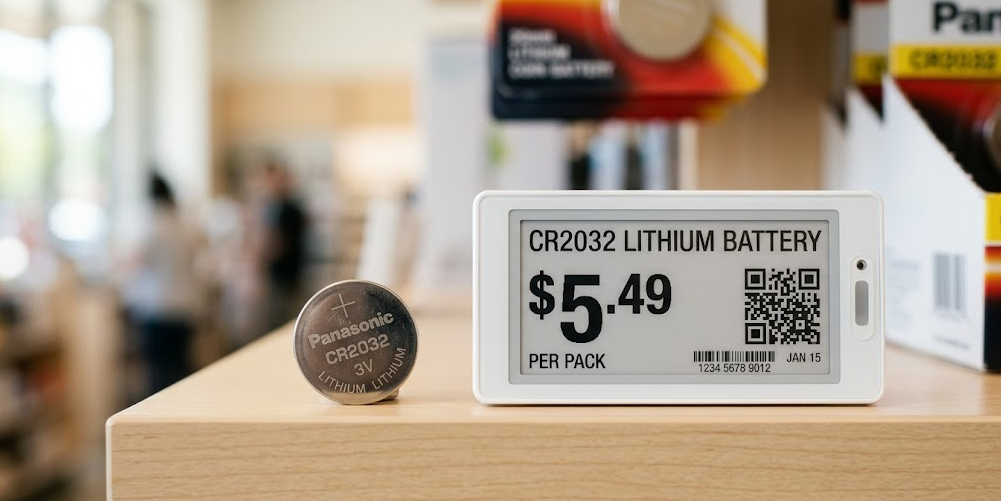
The CR2032 delivers 3V nominal voltage, 220–240 mAh capacity, and a 20mm diameter in a 3.2mm profile — making it the dominant power source for smart tracking tags and electronic shelf labels. In fact, no competing coin cell matches this combination of energy density, form factor, and supply chain availability at scale.
CR2032 for Smart Tags vs. CR2025 vs. CR2016: Which Coin Cell Fits Your Device?
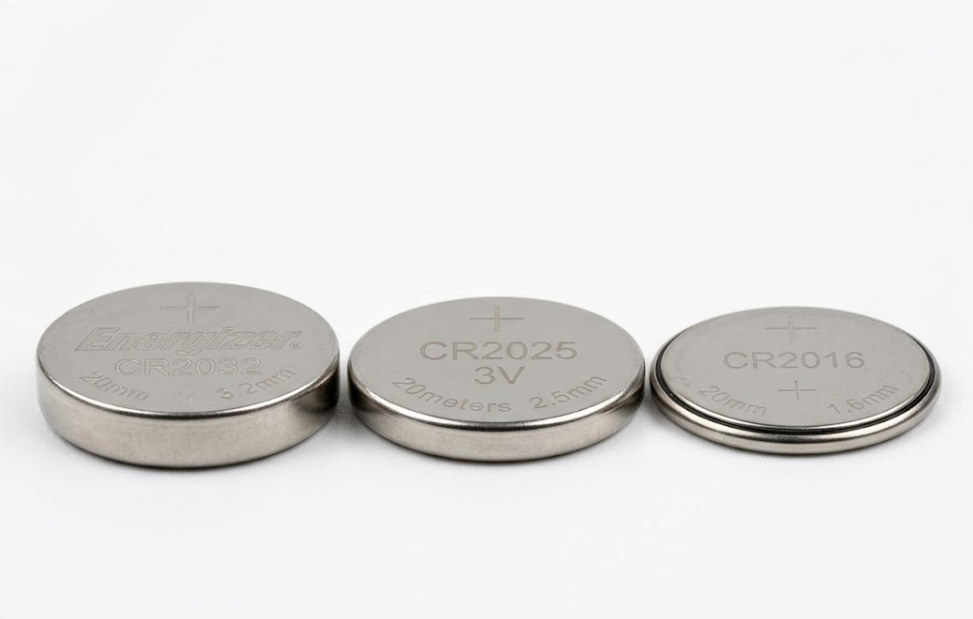
Not all CR20-series cells are interchangeable. Here is how they compare:
| CR2032 Recommended | CR2025 | CR2016 | |
|---|---|---|---|
| Diameter | 20 mm | 20 mm | 20 mm |
| Thickness | 3.2 mm | 2.5 mm | 1.6 mm |
| Capacity | 220–240 mAh | 160–170 mAh | 75–90 mAh |
| Voltage | 3V nominal | 3V nominal | 3V nominal |
| Service life ESL / Smart Tag |
3–5 years | 2–3 years | 1–1.5 years |
| Shelf life | 10 years | 10 years | 10 years |
| Best use case | Smart tags, ESLs, IoT sensors, medical wearables | Low-drain remotes, basic key fobs | Slim watches, calculators, backup memory |
| OEM suitability | High | Medium | Low |
In practice, the extra 0.7mm of thickness in the CR2032 versus the CR2025 translates to roughly 40% more capacity. For devices that transmit data over Bluetooth Low Energy or NFC every few seconds, that difference ultimately determines whether your replacement cycle runs two years or four. In other words, the CR2032 is not simply a larger cell — it is a longer service interval built into the hardware spec.
Based on the technical data above, it’s clear why CR2032 is the high-performance choice for IoT sensors.
Why CR2032 Outperforms Other Coin Cells in Smart Tag and ESL Deployments
While many standard coin cells look identical on the surface, the actual performance of a CR2032 for smart tags and ESLs depends on how the battery handles complex electronic demands. From pulse signal transmission to extreme environmental stability, here is why a high-quality custom CR2032 battery is the backbone of reliable IoT infrastructure
Pulse Discharge Performance
Smart tracking tags and ESLs do not draw current continuously. Instead, they wake up, transmit a BLE or NFC signal, and return to sleep — a pattern that generates brief, high-demand current spikes. Specifically, the CR2032’s lithium manganese dioxide chemistry handles these pulses without significant voltage drop. As a result, cells with lower internal resistance maintain stable output during each transmission event, which directly affects read range and update reliability.
When a coin cell cannot sustain voltage during a pulse, the device resets or misses its update window. Consequently, in a retail environment running 5,000 ESLs across a floor, even a 2% failure rate during a price-sync event is operationally unacceptable. In short, pulse performance is not a secondary spec — it is a deployment reliability issue.
Cold-Chain and Low-Temperature Stability
Retail freezer sections, cold storage warehouses, and refrigerated logistics hubs operate between −20°C and +5°C. Under these conditions, most alkaline cells lose 30–50% of their rated capacity below 0°C. By contrast, the CR2032’s lithium chemistry retains over 80% of rated capacity at −20°C, making it the only practical option for ESLs mounted inside refrigerated display cases. Moreover, this performance advantage holds consistently across repeated freeze-thaw cycles — a real-world condition that standard datasheets rarely address.
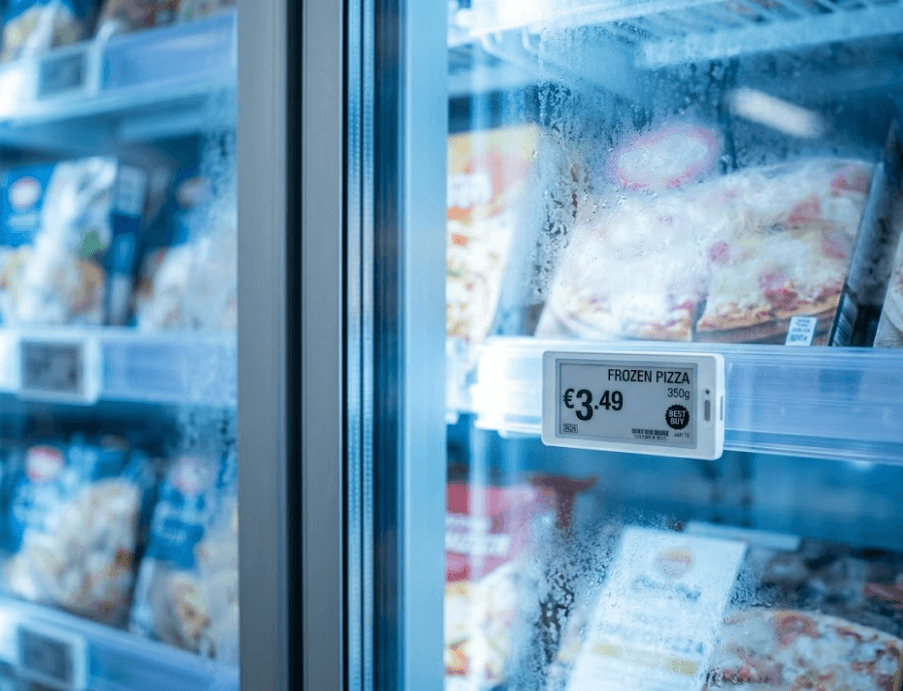
Therefore, procurement teams specifying batteries for cold-chain applications should request low-temperature discharge curves from their supplier — not just the standard 23°C datasheet. Otherwise, rated capacity figures give a misleading picture of actual field performance.
Shelf Life as a Logistics Advantage
A CR2032 from a quality manufacturer carries a 10-year shelf life. For OEM buyers purchasing in bulk and holding safety stock, this consequently eliminates the write-off risk that comes with shorter-shelf-life chemistries. Furthermore, it simplifies inventory management: one SKU covers both active deployments and reserve stock. As a bonus, longer shelf life also reduces the frequency of procurement cycles, lowering administrative overhead for large programs.
Certifications That Procurement Teams Should Require
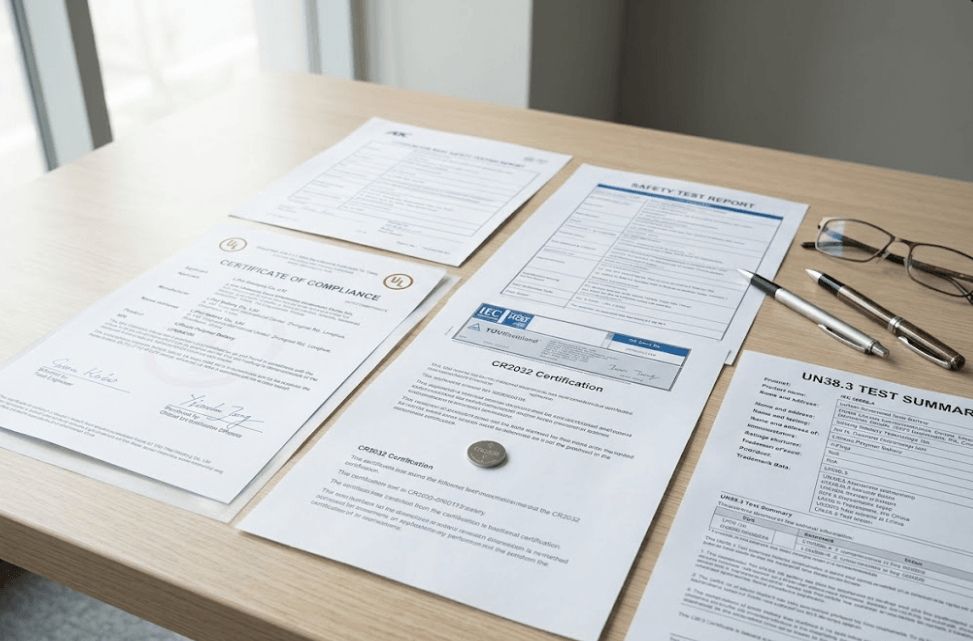
Sourcing coin cells for IoT or retail deployment means moving product across borders. As a result, the following certifications are non-negotiable for most enterprise procurement and import compliance:
- UN38.3 — Required for air freight. Specifically, it confirms the cell passed altitude simulation, thermal cycling, vibration, shock, and short-circuit testing.
- IEC 60086 — The international standard governing primary lithium battery performance and safety. In particular, it confirms rated capacity, discharge characteristics, and dimensional compliance.
- MSDS / SDS — Required by most enterprise buyers, 3PLs, and customs authorities for hazardous goods documentation. Without this, shipments face delays at customs.
- RoHS and REACH — Required for products sold into the EU and, additionally, increasingly expected by North American enterprise buyers with ESG commitments.
In short, a manufacturer that cannot provide current, batch-specific documentation for all four is a supply chain liability, not a partner. In contrast, a fully certified supplier removes compliance risk from your procurement process entirely.
FAQ:Can CR2032 be replaced by CR2025 in smart tags?
Physically, a CR2032 fits the same 20mm diameter footprint. However, the thinner profile of a CR2025 means it may not make reliable contact in a holder designed for a 3.2mm cell. Moreover, the 40% capacity reduction shortens service life significantly. Therefore, for devices spec’d around CR2032 runtime, substituting a CR2025 is not a like-for-like replacement — it is a downgrade that affects replacement frequency and total cost of ownership. In addition, repeated use of an undersized cell can accelerate holder wear, introducing a secondary maintenance issue over time.
How long does a CR2032 last in an ESL?
Under typical ESL operating conditions — periodic price updates over BLE or sub-GHz radio, low-power sleep states between transmissions, ambient retail temperatures — a quality CR2032 lasts 3 to 5 years. That said, deployments in freezer sections or high-update-frequency applications trend toward the lower end of that range. For this reason, OEM buyers should request application-specific discharge modeling from their battery supplier rather than relying on generic datasheet figures. Otherwise, service life estimates will not reflect real deployment conditions.
What are the benefits of custom pins for CR2032 in IoT devices?
Standard CR2032 cells use flat terminals. By comparison, devices with vibration exposure, compact PCB layouts, or automated assembly requirements benefit from cells with pre-welded nickel tabs or custom pin configurations. In turn, these allow direct solder attachment to the PCB, eliminating the battery holder as a potential failure point and reducing overall device height. Additionally, for high-volume IoT production, custom-pin CR2032s simplify pick-and-place assembly. As a result, unit assembly time and error rates both decrease at scale.
What should buyers check when qualifying a CR2032 supplier for OEM programs?
Verify that the supplier can provide batch-level documentation rather than generic certificates. In addition, confirm production capacity relative to your forecast volume, not just current catalog availability. Request discharge curves at both 23°C and −20°C. Finally, ask specifically about lead time on custom configurations — tabs, pins, shrink wrap, or private labeling — and whether tooling costs apply at your order volume.