
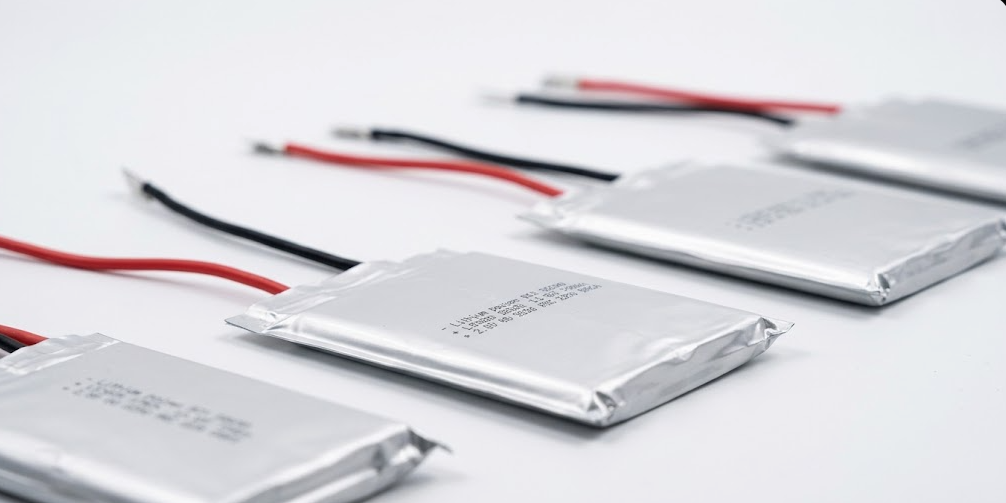
Pick up your phone. That battery inside — flat, thin, fits perfectly in the case — that’s a lithium ion polymer battery. Not a coincidence. It’s the reason your phone isn’t twice as thick. In 2026, the global LiPo market is growing at 18% CAGR, and that number makes sense once you understand what makes this cell different from everything else.
What Is a Lithium Ion Polymer Battery?
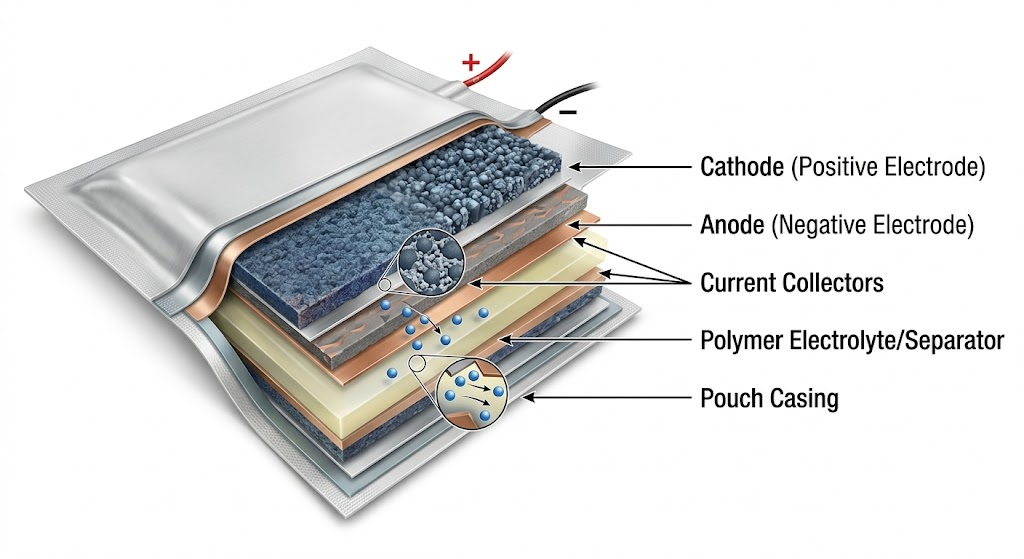
A lithium-ion polymer battery. LiPo, li-polymer, call it what you want. swaps out the liquid electrolyte in a standard lithium-ion cell for a gel or solid polymer. To be more specific, ditching the liquid means no rigid metal shell is needed — so the cell goes into a thin, flexible aluminum-plastic pouch instead. Lighter. Thinner. Shapeable.
Quick Answer: A lithium-ion polymer battery (LiPo) is a rechargeable power cell that uses a highly conductive gel or solid polymer electrolyte instead of a liquid. This chemistry allows the battery to be enclosed in a flexible, lightweight aluminum-plastic pouch rather than a rigid metal cylinder, making it ideal for ultra-thin wearables, medical devices, and compact IoT sensors.
How Does It Actually Work?
How it functions is standard chemistry. Ions travel from anode to cathode to hold and release a charge. However, it’s the middle part that changes the game.
The Polymer Electrolyte
Standard cells have flammable liquids requiring steel tubes for safety. Gel conducts the ions fine, yet it does not spill. For this reason, the rigid casing becomes completely obsolete.
Why the Pouch Format Matters
Without a rigid shell, you fit the battery to the device rather than the other way around. For instance, watch straps can have batteries hidden in them. Oddly shaped IoT trackers can fit them too. Also, removing liquid improves safety against skin. In fact, that is a big deal for medical monitors. Besides, less metal means less weight. A drone might stay in the air four minutes longer just by switching cell types.
Where Is a Lithium Ion Polymer Battery Used?
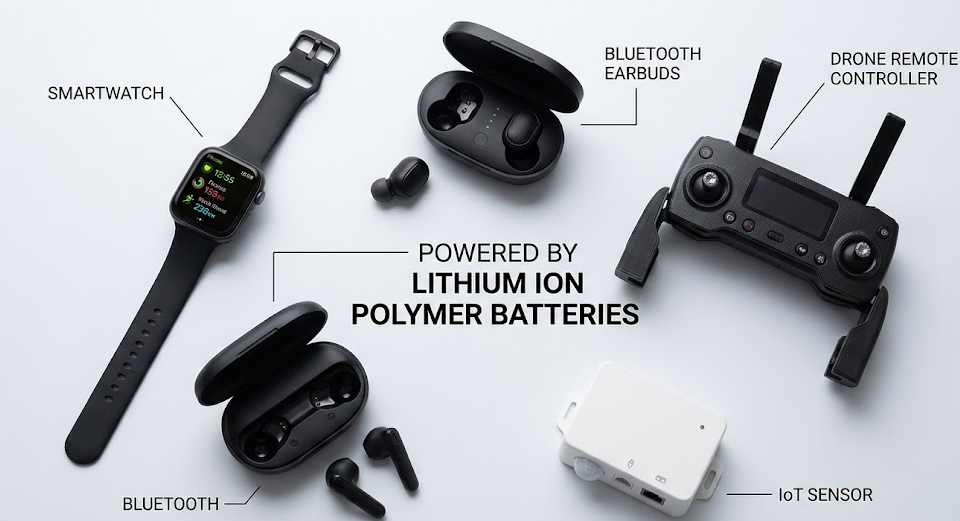
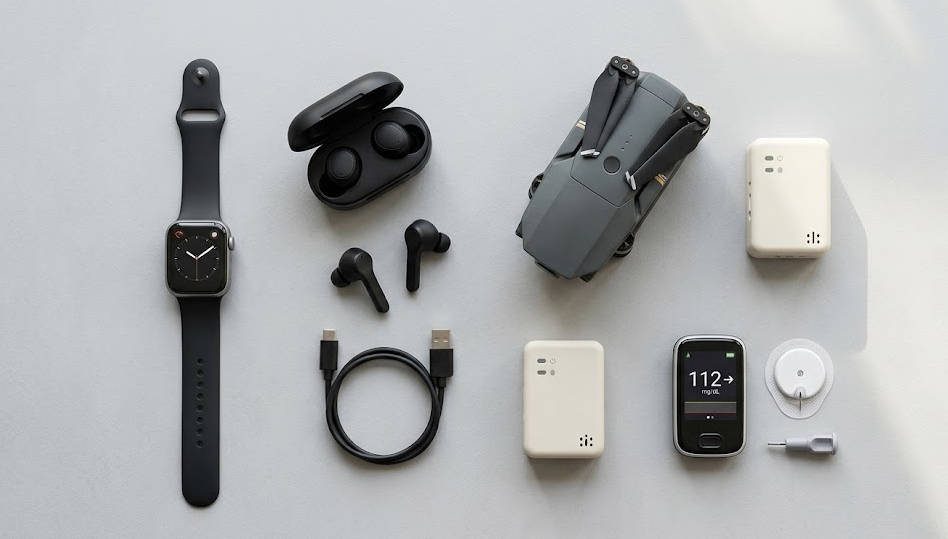
Applications are everywhere now. Consumer gadgets use them to save millimeter-level space. Wearables depend on them to bend around a wrist safely. Meanwhile, industrial IoT uses them because of the low self-discharge rate. Sensors can sit in the field for months. Drones need high discharge, while medical gear needs safety.
Consumer electronics first. Smartphones, earbuds, tablets — the pouch format lets engineers reclaim every cubic millimeter of internal space. That’s not a small thing when you’re designing a device 7mm thick. Similarly, wearables live and die by the battery. A smartwatch needs to curve, stay light, last all day, and sit safely on skin. LiPo handles all of that. A cylindrical cell doesn’t.
Common Questions About LiPo Cells
Not marketing answers. Actual answers, based on current specs and what 2026 shipping rules actually require. If you’re sourcing LiPo cells or specifying them for a product, these are the questions worth having straight answers to before you finalize anything.
LiPo vs Standard Li-Ion: What’s Different?
Liquid vs gel is the main trade-off. Liquid with a metal shell takes more physical abuse. Gel in a pouch is thinner, but you have to protect it from punctures. Choose based on your hardware housing.
How long does a lithium ion polymer battery last?
Cycle life is typically 300 to 500. Of course, draining them to zero constantly kills them faster. Keep them cool and stored at half charge to make them last longer.
Are LiPo Cells Safe to Use and Ship?
They are inherently safer from leaks, although punctures remain a risk. Finally, shipping requires IATA 30% state of charge rules. Good suppliers handle the UN38.3 paperwork for you, so customs does not hold your shipment. The market demands thin and safe devices, which means LiPo is staying exactly where it is.
A lithium-ion polymer battery isn’t a scaled-down version of something else. It’s a purpose-built design for a world where thin, light, and safe stopped being optional a long time ago. The devices driving demand — wearables, IoT sensors, medical hardware — aren’t going anywhere. Neither is LiPo.