
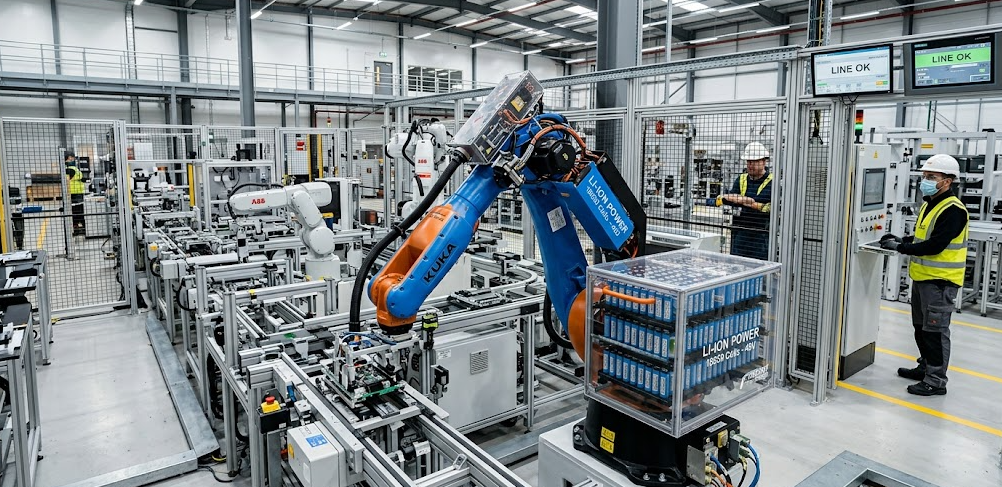
Cylindrical battery industrial equipment solutions aren’t just about voltage—they’re about surviving the field. In fact, I’ve spent a decade as a manufacturer watching factories struggle because they bought generic cells. To be honest, standard batteries are worthless in a real industrial setting. For instance, I’ve personally seen outdoor industrial equipment installations freeze at -20°C and engine bays bake at 60°C. Consequently, that’s exactly where the cheap stuff fails, and your production stops.
Moreover, you need rugged cylindrical battery industrial equipment built for -40°C discharge and 85°C thermal stability. To achieve this, we use specialized electrolyte formulations compliant with UN38.3. As a result, at Zenilove, we don’t just ship boxes. We torture-test every single batch of our industrial battery solutions at these temperature extremes. Ultimately, in your facility, the cylindrical battery either works or the line sits idle. No exceptions.
Why Does Industrial Equipment Need Cylindrical Battery Solutions?
Simply put, this is a principle of physics.Why opt for a cylindrical shape? Ultimately, it boils down to physics—specifically, thermodynamics. Compared to flat designs, a rounded surface structure allows heat to dissipate far more efficiently. Furthermore, a metal casing enables the battery to maintain its structural integrity even when subjected to mechanical stress, vibration, or even impact from drops. Flat pouch-style batteries, however, lack this capability; they simply cannot withstand such rigorous conditions. Consequently, they are prone to swelling and delamination, often culminating in catastrophic failure during critical production windows. Trust me, I’ve seen enough “swollen” pouches to know they just aren’t built for the factory floor.
By contrast, what about prismatic batteries? While they do indeed offer superior space utilization and allow for more compact arrangements, they are not the magic bullet they seem to be. In reality, they are also more susceptible to heat accumulation, prone to failure in high-vibration environments, and typically cost twice as much as their cylindrical counterparts. To achieve better reliability, you usually have to over-engineer the cooling system, which kills your margins. Ultimately, unless you are building a smartphone where every millimeter counts, the extra cost for prismatic cells just does not translate to better performance in an industrial setting. I have personally watched these packs fail where a standard cylindrical battery kept right on working.
Moreover, the energy density of cylindrical batteries continues to rise. Modern ternary lithium battery technology now achieves energy densities ranging from 250 to 280 Wh/kg. This means we can now package the robust power typically associated with laptop-grade batteries into a rugged, industrial-grade casing.
How Do You Choose Cylindrical Battery Industrial Equipment Formats?
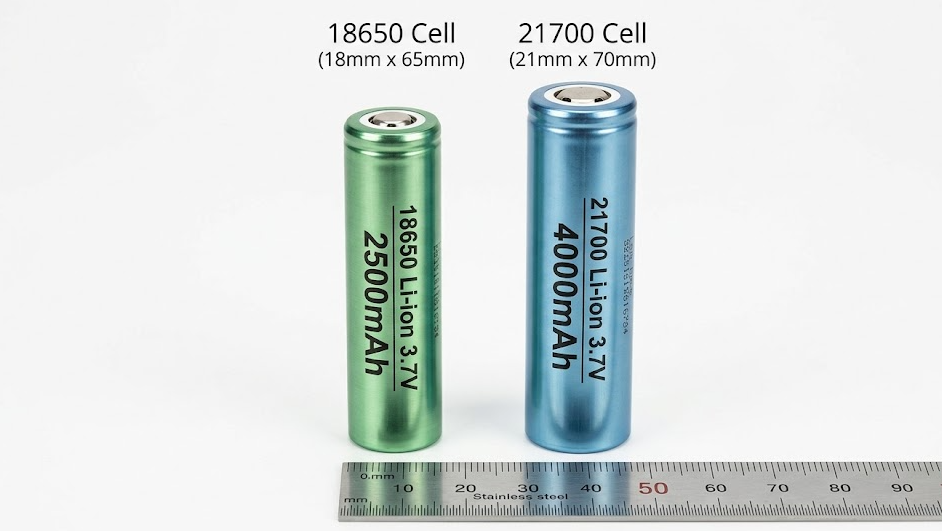
For a full decade, 18650 cells dominated the industrial sector. In fact, virtually every manufacturer utilized them, creating a deeply optimized supply chain. Consequently, sourcing these batteries was easy, with a dozen suppliers offering seamless, plug-and-play replacements. Then, when the 21700 specification emerged, it completely upended the landscape.
Although its size appeared only slightly larger on paper, its performance improvement was enormous. Therefore, the 21700 has become the new benchmark for modern cylindrical battery industrial equipment. Ultimately, it comes down to your practical trade-offs. To be honest, you must choose between legacy 18650 stability or the extended runtime of the 21700. Personally, I have seen enough field tests to know that once a facility switches, they rarely look back.
| Feature | 18650 | 21700 |
|---|---|---|
| Diameter | 18mm | 21mm |
| Typical Capacity | 2600-3500mAh | 4000-5000mAh |
| Energy Density | 250 Wh/kg | 270 Wh/kg |
| Best Use Case | Legacy systems, space-constrained designs | New equipment, high-power tools |
| Supply Chain | Mature, widely available | Growing rapidly |
| Cost per Wh | Higher | Lower |
Just look at this leap in capacity. With only a marginal increase in physical dimensions, energy density has surged by 35%—I recall that when this technology first hit the market, many dismissed it as nothing more than a marketing gimmick. Today, for power tools, this translates to a 30% extension in runtime on a single charge. Meanwhile, for wireless sensors, it means maintenance cycles can be extended from quarterly to semi-annually. Most critically, this translates into tangible cost savings—specifically regarding labor expenses.
What About Extreme Temperature Applications?
Cold kills batteries. Meanwhile, heat accelerates aging.
Standard consumer cells operate 0°C to 45°C. Obviously worthless for industrial equipment. For example, I’ve seen outdoor installations hit -20°C winters. Similarly, engine compartments reach 60°C under load.
You need industrial-rated cells tested to -40°C low-temperature discharge and 85°C thermal stability according to UN38.3 transportation safety standards. Specialized electrolyte formulations, modified separators, thermal management across brutal temperature swings.
At Zenilove, we test every batch at temperature extremes before shipping. No exceptions.

Which Industries Benefit Most from Cylindrical Cells?
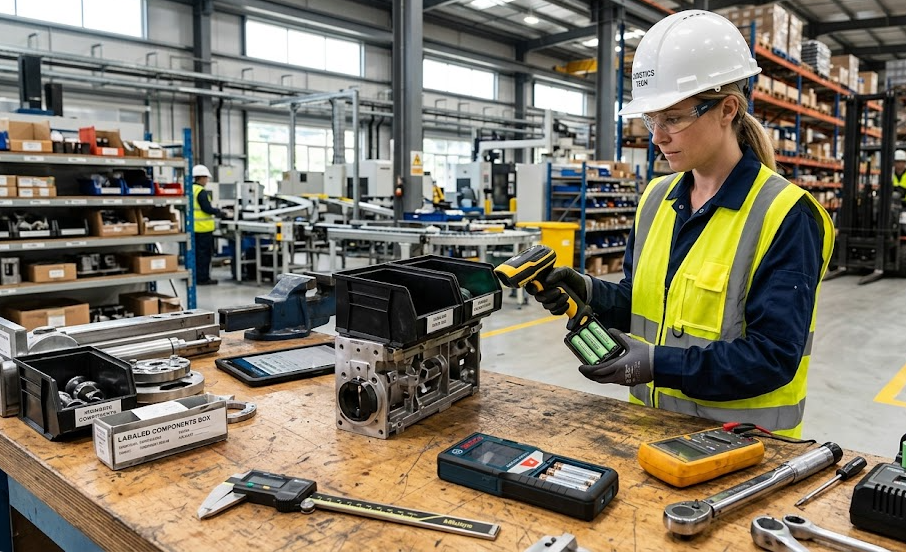
Manufacturing facilities run on them. For example, handheld scanners. Plus portable measurement tools. And wireless sensors monitoring production.
Meanwhile, logistics operations devour cylindrical batteries. Every warehouse robot, scanner, portable printer. In fact, Amazon deploys millions annually.
Similarly, medical equipment manufacturers specify them for portable diagnostics, patient monitoring, emergency devices. After all, no defibrillator can fail because someone saved $3 per unit.
Likewise, energy utilities use them for remote monitoring, portable testing, emergency backup systems. These sit unattended for months. Ultimately, the battery either works or doesn’t.
Our industrial battery solutions serve all these sectors with custom configurations.
How Long Should Industrial Batteries Last?
Consumer math says 300-500 cycles. Industrial reality? I’ve seen everything from 200 cycles to 2000+ cycles. Obviously, shallow cycling extends life dramatically. For instance, a battery discharged to 50% instead of 20% delivers 1000+ cycles versus 500. In other words, smarter charge management effectively doubles lifespan.
However, temperature management matters more than cycle count, trust me. For example, every 10°C above 25°C cuts cycle life by 50%, according to Battery University. Simply put, keep batteries cool, they last years. Let them bake, you’re replacing quarterly. And I’ve had customers learn this the expensive way.
Smart industrial equipment monitors battery health in real-time. I’m talking voltage curves. Internal resistance. Temperature profiles. As a result, these predict failure weeks ahead. So you can replace proactively during scheduled maintenance.
Plan for 2-5 years with proper thermal management. The cheapest battery dying in 18 months costs more than premium cells lasting 4 years.
Getting Cylindrical Battery Industrial Equipment Right
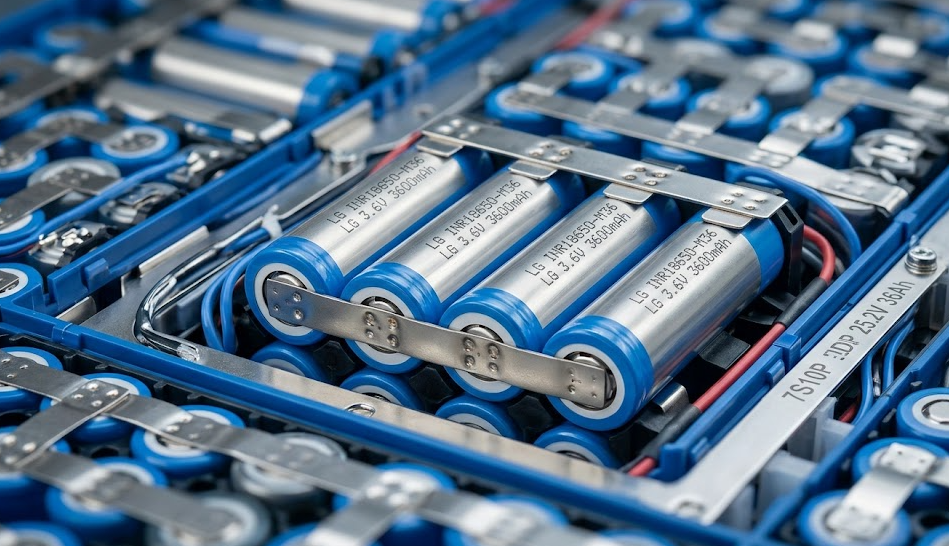
Look, stop treating batteries as commodities. To be honest, I see this mistake constantly in the field. Sure, the voltage might match, but internal construction and protection circuit design are what actually separate industrial-grade cells from consumer rejects. First, source from manufacturers with real industrial experience. Then, demand actual cycle life data at your specific operating temperatures—not just marketing fluff. Next, verify the thermal testing results for yourself. Finally, request sample testing in your equipment under realistic duty cycles. On the other hand, the wrong battery wastes more in emergency replacements than you ever saved buying cheap cells. Ultimately, the right cylindrical battery industrial equipment delivers years of reliable service.