

We talk to buyers every week who got burned by the wrong supplier. Most of them asked the wrong questions — or didn’t ask at all. Picking a cylindrical lithium battery manufacturer isn’t hard. Picking the right one, that’s where most buyers run into trouble. We’ve seen it happen more times than we’d like: a supplier looks great on paper, the sample passes, and then the bulk order arrives with cells that don’t match what was agreed. Capacity short. Consistency off. Delivery late. It’s frustrating, and it’s avoidable.

What a Cylindrical Lithium Battery Manufacturer Quote Doesn’t Tell You
A price quote is not a contract; it serves merely as a starting point. Most buyers focus on the headline price. That number rarely tells the full story.Tooling fees, line changeover charges, and certification costs are often excluded. They add up fast.MOQ requirements can also force you into volumes you didn’t plan for. That’s a cash flow problem before production even starts.
The Minimum Order Quantity (MOQ) is one of the first matters that must be determined. Some manufacturers simply will not accept orders for fewer than 10,000 battery cells, while others are willing to accept orders as small as 500 units. Neither approach is inherently good or bad; however, if your specific application calls for small-batch production, then selecting a supplier with a high MOQ constitutes a fundamental error right from the start. Similarly, if you are targeting markets in the EU, North America, or Japan, it is essential to inquire in advance about the certifications held by the manufacturer—such as UN38.3, CE, IEC 62133, and UL. These are by no means optional “add-ons,” but rather mandatory “hard requirements.” If they don’t have the right certifications, you’ll either pay to get them yourself — or sell without them. Neither is a good option.
Therefore, before inquiring about the price, make sure to ask for the total landed cost. The cheapest quote often turns out not to be so cheap after all.
What Your Cylindrical Lithium Battery Manufacturer Datasheet Won’t Show You
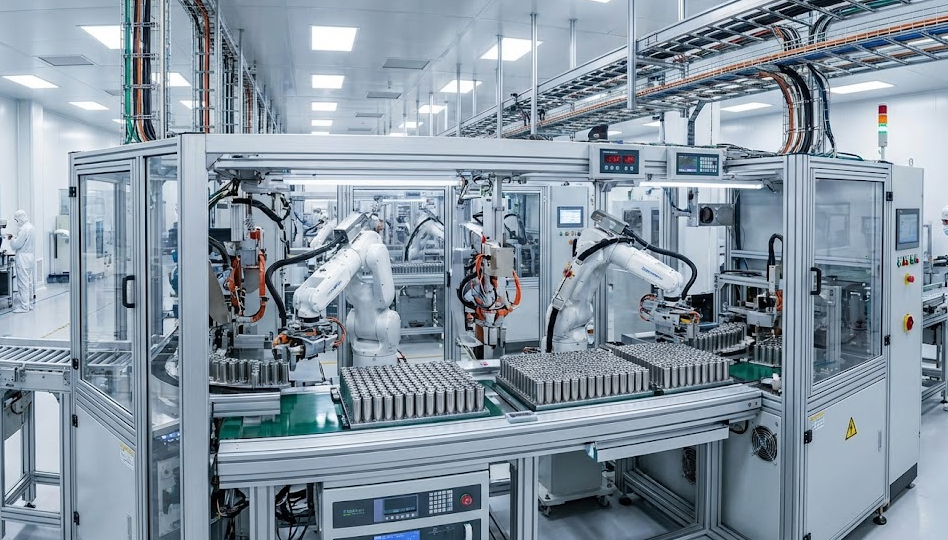
A datasheet merely indicates the performance a cell can achieve under ideal test conditions; it does not reveal the actual consistency of that performance within a mass production batch of 50,000 cells. Yet, in industrial applications, it is precisely this consistency that is truly critical.
Two battery cells with identical rated capacities may, in fact, possess vastly different internal resistances. This discrepancy can lead to uneven discharge, heat accumulation, and a shortened battery pack lifespan—issues that are entirely unreflected in product data sheets.
As noted in the journal Nature Communications, quality control serves as the critical differentiator between top-tier and inferior cell manufacturers, particularly within the context of mass production. The most exceptional manufacturers individually test and grade every single cell prior to shipment, whereas their counterparts do not.
Please request a production consistency report—specifically, data regarding the capacity distribution and internal resistance dispersion of recent product batches. An excellent manufacturer should be able to provide this data at any time; if they appear evasive when asked, it is highly likely that they have not subjected their battery cells to proper grading.
What to Check Before the First Order
Three key considerations: First is certification. You must not only confirm that a certification exists but also verify that it remains valid and specifically covers the exact battery cell model you have ordered. A certificate issued three years ago for a different model offers you absolutely no guarantee. Second is traceability. Can the manufacturer accurately identify the specific production batch from which your cells originated, and provide the corresponding test results for that batch? If they are unable to furnish this information, you will have no recourse should any issues arise. Third is BMS compatibility.
If you’re building a pack, confirm the manufacturer has experience integrating cells with a BMS. Purchasing cells and a BMS separately—while merely hoping that the two will be automatically compatible,is a practice that frequently leads to operational failures in real-world applications.
The document most buyers forget to request
Ask for the outgoing inspection report. Most manufacturers have it. Few buyers ask.It covers capacity, voltage, and internal resistance — and flags any rejected cells.If a manufacturer is unable to provide this report, it should be a cause for concern. We include it with every order as standard — you’ll never have to ask for it twice.

Don’t Skip the Sample Stage. Here’s Why It Matters.
We fully understand that the prototyping process can indeed be time-consuming.and the pressure of tight deadlines can certainly be a headache. However, skipping the prototyping stage in an effort to expedite progress will ultimately end up costing you even more time. A sample isn’t just about fit. It’s proof that the manufacturer can actually deliver what they quoted — and that their process is under control.