
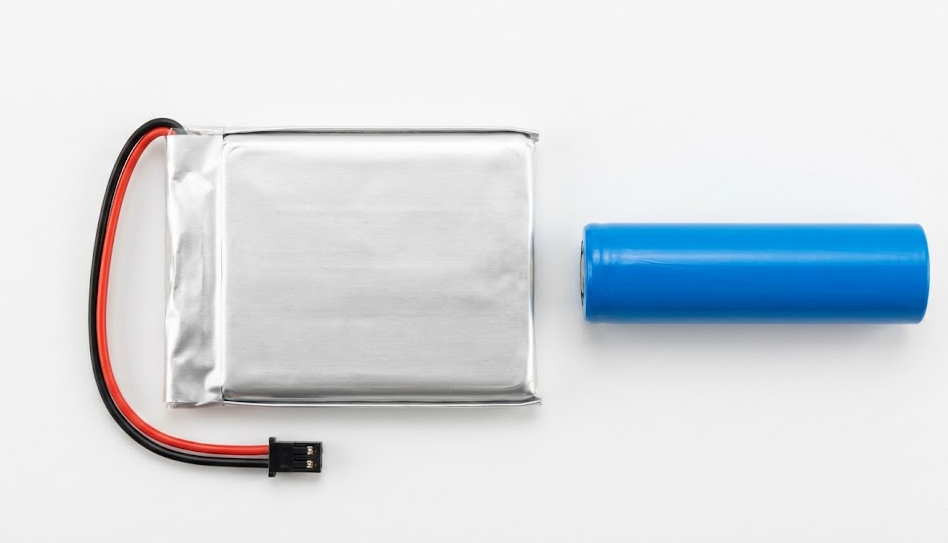
While standard Li-ion and LiPo batteries share the same CC/CV charging algorithm (4.2V max per cell), you should not use a basic Li-ion charger for multi-cell li-ion polymer battery packs. LiPo cells lack a rigid metal shell and require strict cell balance charging to prevent swelling, overcharging, and catastrophic fire risks.
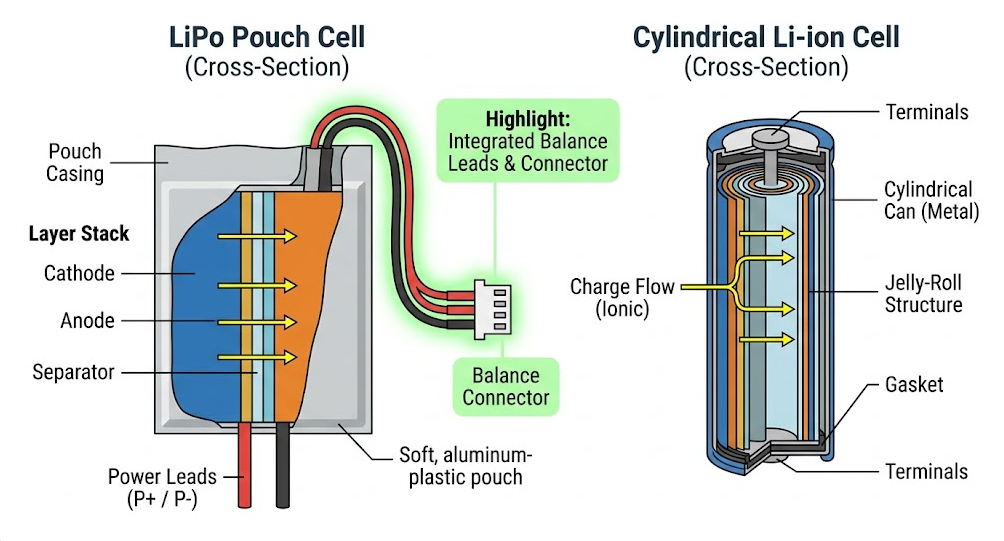
Li-Ion Polymer Battery vs. Standard Li-Ion Charging Difference?
On the surface, both battery types use CC/CV charging and top out at 4.20V per cell. However, that is where the similarity ends. A standard Li-ion charger reads pack voltage — not individual cell voltages. For a robust 18650 pack with an embedded BMS, that works fine. For a multi-cell Li-ion polymer battery in a drone, a wearable, or an industrial sensor unit, however, it creates a silent failure point that most buyers never see coming.
| Charging Metric | Standard Li-Ion (e.g., 18650) | Li-Ion Polymer Battery (LiPo Pouch) |
|---|---|---|
| Charging Algorithm | CC/CV (Constant Current/Voltage) | CC/CV (Constant Current/Voltage) |
| Max Voltage (per cell) | 4.20V | 4.20V (HV LiPo: up to 4.35V) |
| Cell Balancing Need | Managed by internal BMS | Critical — via dedicated balance leads |
| Overcharge Reaction | Vents gas safely through metal shell | Swells, puffs, risks immediate fire |
| Form Factor | Rigid cylindrical can | Flexible aluminum-plastic pouch |
| Short-Circuit Containment | Metal casing absorbs pressure | No containment — direct heat exposure |
3 Hidden Dangers of Using the Wrong Charger
Using the wrong charger on a li-ion polymer battery pack is not a minor compatibility issue. In fact, it is a liability risk. Below are the three failure modes that engineers and procurement managers need to understand before specifying a charging solution.
The Swelling (Puffing) Effect
A LiPo pouch has no metal shell. As a result, when you overcharge it, the gas produced has nowhere to go — the cell swells. Fast.
Once a li-ion polymer battery puffs, the separator is already damaged. Moreover, one more charge cycle can trigger thermal runaway. Internal temperature exceeds 150°C. Consequently, flammable gases release faster than any enclosure can handle. The battery does not recover from this. Neither does the device around it.
Voltage Imbalance in Multi-Cell Packs
Cells age at different rates. Over time, in a 3S or 4S pack, capacity drifts across the string over dozens of cycles. Meanwhile, a charger without balance leads sees only total pack voltage — not individual cells.
The weakest cell fills first. The charger, however, keeps pushing. That cell hits 4.35V, 4.50V. Ultimately, one overcharged cell is all it takes to short the entire pack. In a medical device or UAV payload, that is not a battery problem. That is a product failure.
Bypassing the Internal BMS
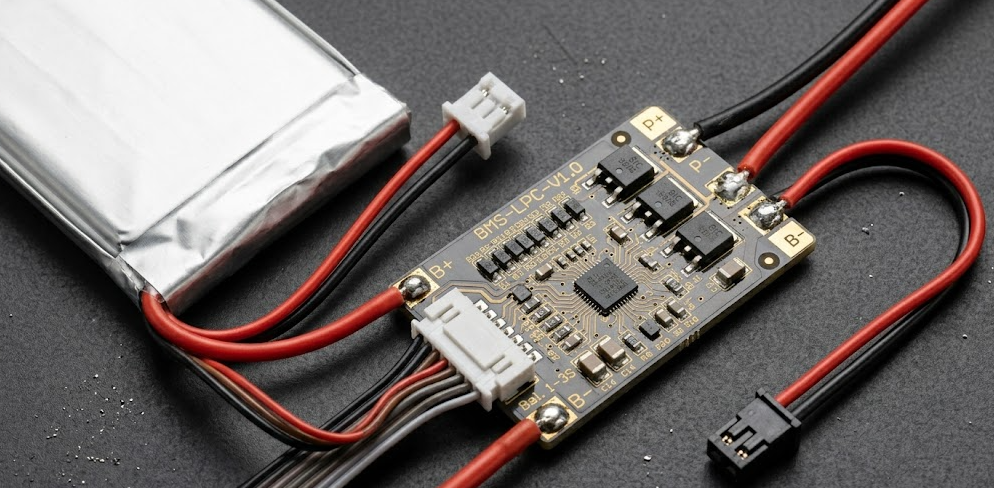
Smart BMS firmware checks cell temperature, state of charge, and cycle history before accepting current. A generic charger, on the other hand, skips all of that. It pushes current regardless of what the BMS reports.
As a result, the pack overheats. The protection event never triggers. The logs show nothing. And ultimately, no one can explain why a $4,000 piece of equipment failed.
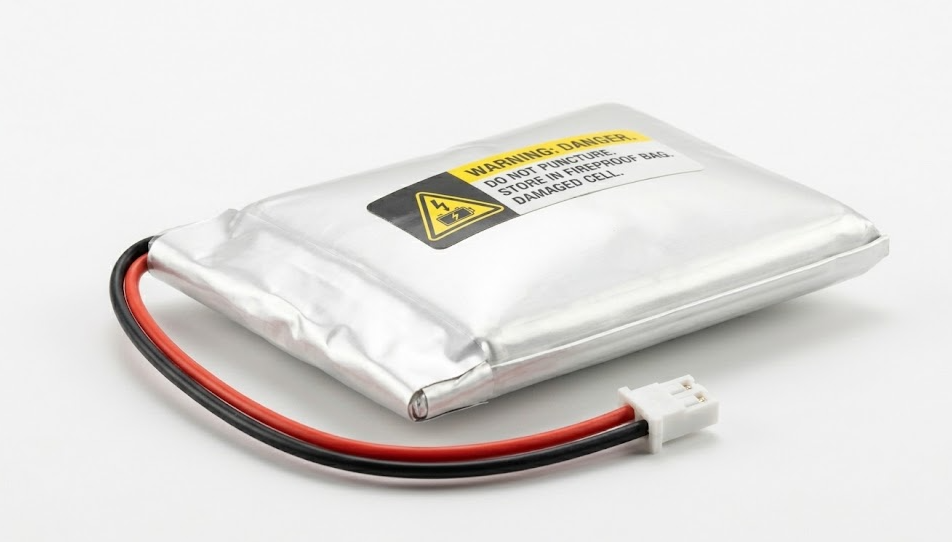
How to Safely Charge a Li-Ion Polymer Battery Pack
The fix is simple. Specifically, match the charger to the pack.
Single-cell (1S) packs — use a dedicated LiPo charger IC with CC/CV profile and 4.20V cutoff. A chip like the TP4056 handles this well. A raw 5V USB input, however, does not.
Multi-cell (2S and above) — balance charger only. Every cell in the string must land within 10–20mV of each other at full charge. Without balance leads, there is no safe charge.
OEM and industrial applications — source a pack with a custom BMS already built in. In doing so, cell balancing, temperature cutoff, and short-circuit protection are all handled before the charger even connects. Builds packs with application-specific BMS for wearables, industrial IoT, and medical devices. For configurations and MOQ, see custom lithium battery.
Furthermore, the international standard for lithium battery safety is IEC 62133. Any li-ion polymer battery pack destined for consumer electronics or regulated industries should carry this certification — and any supplier worth working with can produce the test report on request.
Can I charge a 3.7V LiPo battery with a 5V charger?
No. A raw 5V input will push the cell past 4.20V almost immediately. Without a charge management IC to regulate and cut off at the correct voltage, the cell overcharges, swells, and risks fire. Always, therefore, use a dedicated LiPo charger circuit.
What happens if you overcharge a LiPo battery?
First, the cell swells. Then, the separator fails. If charging continues, thermal runaway follows — temperatures above 800°C, flammable gas, no way to stop it. As a result, remove any puffed battery from service immediately.
Do I need a special charger for a li-ion polymer battery?
Yes. Single-cell packs need CC/CV with 4.20V cutoff. In addition, multi-cell packs need balance charging via balance leads. A generic charger that skips balance will silently overcharge individual cells until something fails.
The chemistry of a li-ion polymer battery and a standard cylindrical cell is similar. The failure mode when things go wrong, however, is not. A LiPo pouch has no metal shell to contain a runaway reaction — which means charger selection, BMS specification, and balance charging are the only things standing between normal operation and a fire. Get the charging system right, and a li-ion polymer battery pack outlasts most of the devices it powers.