
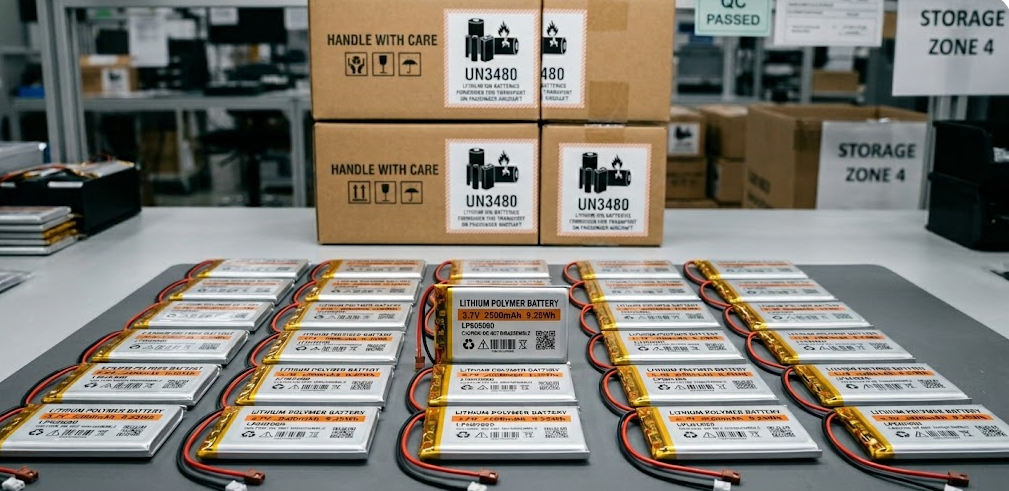
Can you ship lithium polymer batteries internationally? Yes, however, shipping them in 2026 requires strict adherence to the latest IATA 67th Edition regulations. Therefore, the most critical rule is that all lithium polymer cells must be shipped at a State of Charge (SoC) not exceeding 30% of their rated capacity.
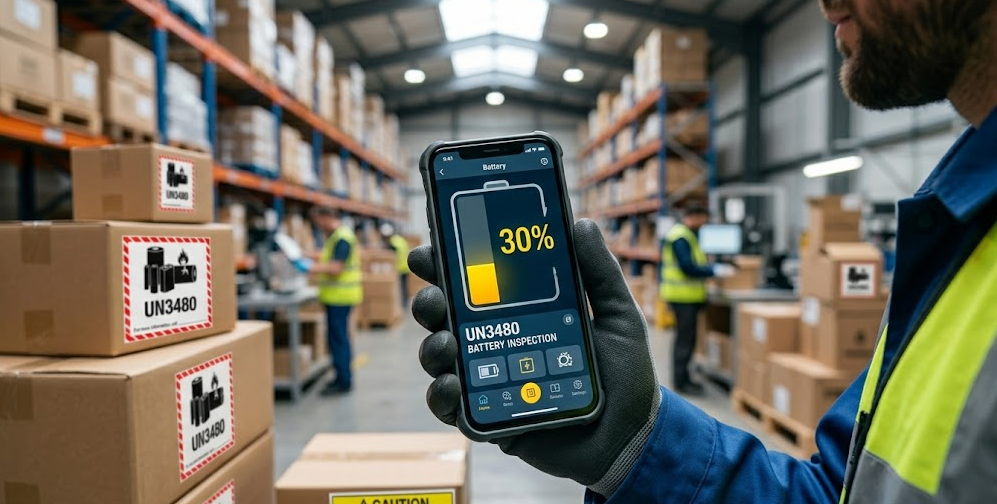
How Is a Lithium Polymer Battery Classified for Shipping?
Most people don’t think twice about the chemistry inside their battery — until customs does. A lithium polymer battery, sometimes called a LiPo or Li-ion polymer battery, uses a gel or solid polymer electrolyte instead of liquid.
That’s what makes it thin, light, and easy to fit into wearables or IoT sensors. Nevertheless, under international transport law, it is still a Class 9 dangerous good — shipped under UN 3480 alone, or UN 3481 when packed with equipment.
2026 Update: IATA Shipping Regulations for Lithium Polymer Battery
When shipping custom lithium battery solutions to North America or Europe, compliance is non-negotiable. The International Air Transport Association (IATA) classifies lithium polymer batteries as Class 9 Dangerous Goods.
Here is the 2026 shipping checklist every purchasing manager must know:
Watt-hour (Wh) Limits: Batteries exceeding 100Wh require special Class 9 hazard labels and UN-approved packaging.
30% SoC Limit: The state of charge must not exceed 30% to prevent thermal runaway during transit.
UN38.3 Certification: Every custom battery pack must pass the UN38.3 testing protocols (including drop, high altitude, and thermal tests).
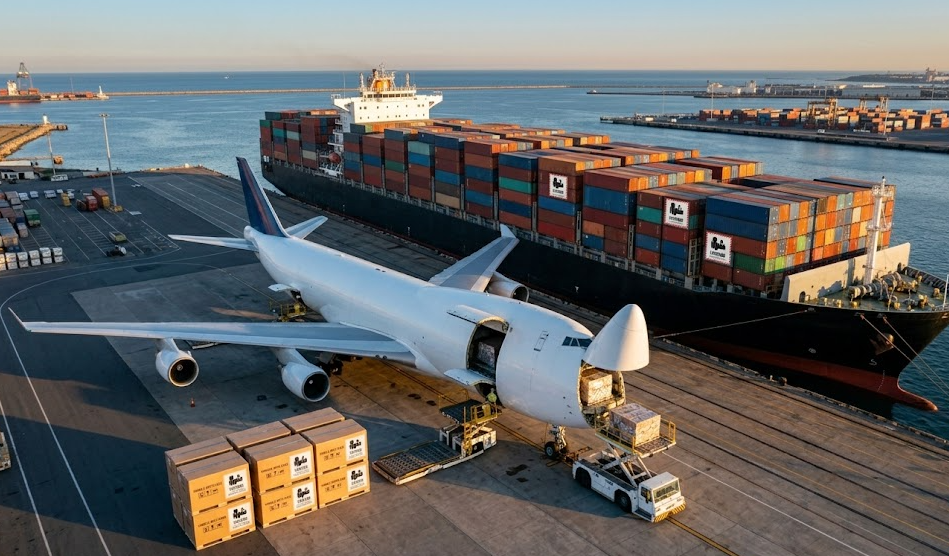
Air vs. Sea: Which Shipping Rules Apply to Your Shipment?
Air freight and sea freight adhere to entirely distinct sets of regulations. In other words, your Watt-hour (Wh) rating determines not only the UN Number but also the entire pathway of the compliance process. Before booking your freight services, we recommend consulting the comparison provided below.
| Battery Wh Rating | UN Number | Air (IATA 67th Ed.) | Sea (IMDG Amend. 42-24) |
|---|---|---|---|
| ≤ 2.7 Wh | UN 3481 | Allowed – Section II | Allowed – limited qty |
| > 2.7 Wh, ≤ 100 Wh | UN 3480 / 3481 | 30% SoC limit (mandatory 2026) | Class 9 – full DG declaration |
| > 100 Wh | UN 3480 | Cargo Aircraft Only (CAO) | Special provisions apply |
| Damaged / Defective | UN 3480 / 3481 | Prohibited on passenger aircraft | Specialized container required |
Air Freight Requirements (IATA 67th Edition)
Can you ship a lithium polymer battery by air? Yes — but it’s tightly controlled. First, the battery must be at 30% SoC or below before handover. In addition, the outer packaging needs the Lithium Battery Mark (minimum 100 mm × 100 mm) and a UN38.3 test summary. On top of that, anything above 100 Wh is Cargo Aircraft Only.
Sea Freight Requirements (IMDG Amendment 42-24)
Sea freight is more forgiving, but the rules are real. For instance, batteries at or below 100 Wh move as limited quantity with Class 9 labeling.
However, those above 100 Wh need a full dangerous goods declaration. Similarly, damaged batteries require specialized containment and separate stowage. Regardless of size, every package needs the lithium battery mark and correct UN number.
Packaging Requirements for Safe Transit
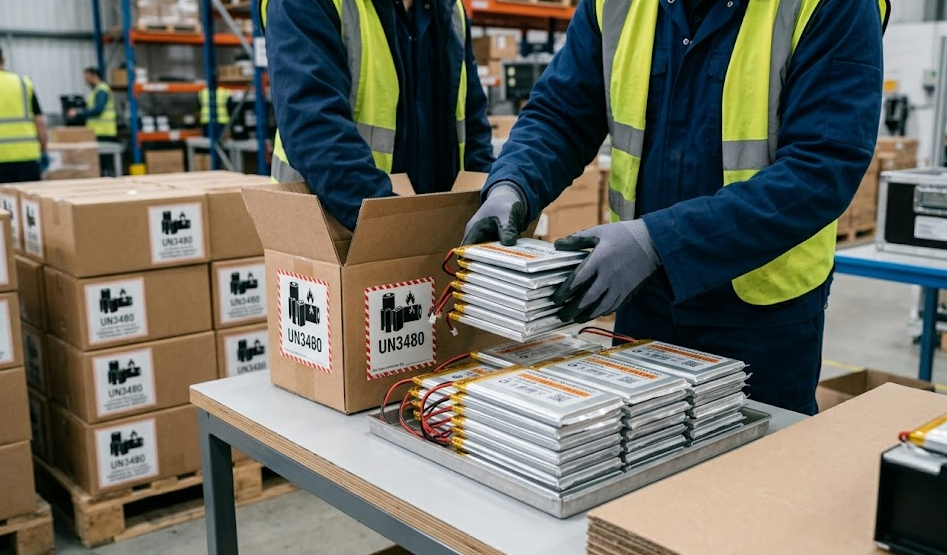
PProper packaging prevents short circuits and ensures smooth customs clearance.
Labeling: UN3480 (batteries shipped alone) or UN3481 (batteries packed with equipment) labels must be clearly visible and accurately applied.
Inner Packaging: Each lithium polymer cell must be individually enclosed in non-conductive materials (such as blister packs).
Outer Packaging: Use sturdy, drop-tested corrugated boxes.
The Importance of Compliance to Lithium Polymer Battery Manufacturers
Compliance starts before the shipment — it starts at the factory. Produces custom lithium polymer batteries with full UN38.3 documentation, correct labeling, and SoC pre-set to meet 2026 IATA requirements. As a result, every batch ships ready for handover without delays.
FAQ: Lithium Polymer Battery Shipping Regulations
These are the questions that come up most often when B2B buyers work through lithium polymer battery compliance. Each answer is based on the IATA 67th Edition DGR and IMDG Amendment 42-24, in effect as of January 1, 2026.
What happens if batteries are shipped over the 30% SoC limit?
Shipping above the 30% SoC limit directly violates IATA regulations. The shipment will be rejected by airlines, and the sender may face severe fines or customs seizure.
Do small polymer batteries for wearable devices need UN38.3?
Yes. Regardless of size or capacity, all lithium polymer cells and battery packs must pass UN38.3 testing before they are cleared for international shipping.
Does sea freight require the same SoC limit as air freight?
No. The 30% SoC rule is an air transport requirement under IATA. In contrast, the IMDG Code for sea freight doesn’t currently set a state-of-charge limit, although all labeling and packaging rules still apply in full.
What UN number applies to a lithium polymer battery pack?
A standalone pack is UN 3480. On the other hand, pack it with equipment and it becomes UN 3481. Getting this wrong is one of the most avoidable causes of rejection.
Shipping a lithium polymer battery in 2026 is more compliance-heavy than ever. From the 30% SoC rule to UN38.3 batch documentation, the margin for error is slim. When you work with a manufacturer who handles this before the shipment leaves, everything downstream gets easier.