
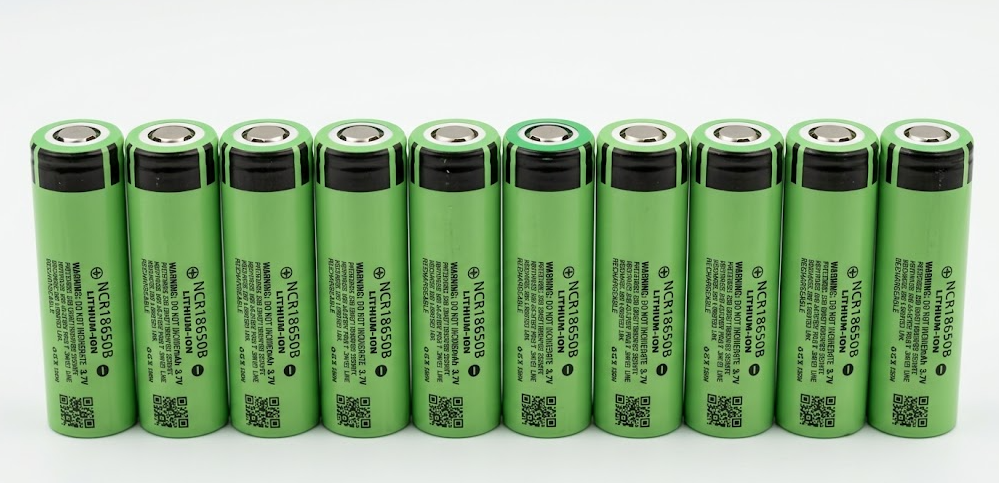
The 18650 lithium ion cell is everywhere — laptops, power tools, industrial robots, grid storage. In fact, it’s one of the most produced battery formats on the market, and has been for decades. Still, most buyers pick a cell based on capacity alone. That’s usually where the trouble starts. Once you understand the specs, though, sourcing gets a lot easier. Take a look at our 18650 cylindrical battery range to see the formats we supply.
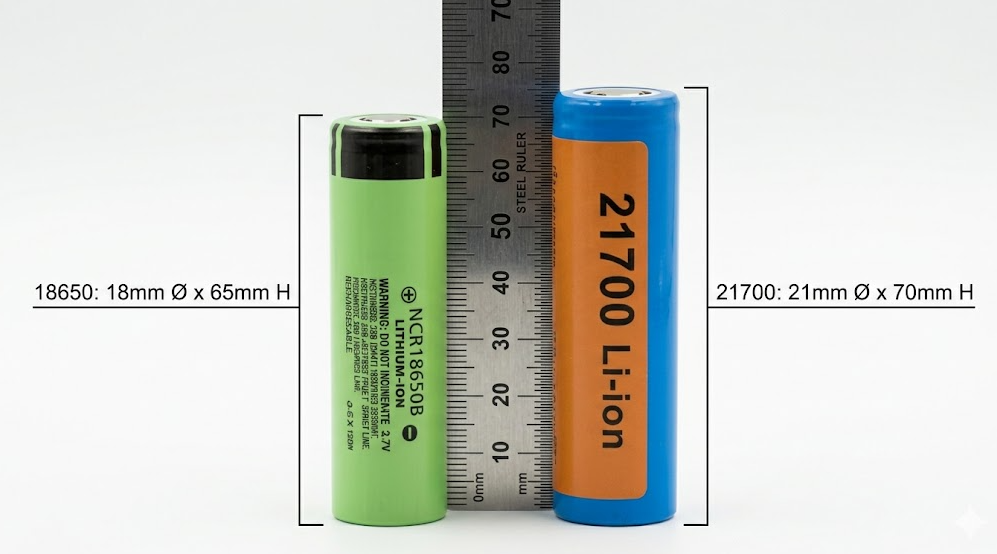
18650 Lithium Ion: What the Name Tells You
The “18650” is just a set of numbers, not some fancy product name. 18mm wide, 65mm tall—it’s that simple. That trailing zero? It just confirms you’re looking at a cylinder.
Why should you care? Because this standardization is a lifesaver for your supply chain. Since the size is fixed, any 18650 cell should theoretically fit your housing, no matter who manufactured it. You can jump from one supplier to another without even touching your pack design.
But here’s the real kicker: If you buy cells with a built-in protection circuit, they usually end up being 67 or 68mm. That extra bit of length is easy to overlook until you realize they won’t fit the tray. If your setup already has an external BMS, just stick with the “unprotected” ones. Those are the true-blue 65mm cells that won’t give you any headaches during assembly.
18650 Lithium Ion Specs: What the Numbers Mean
Every 18650 lithium ion cell comes with a datasheet. The numbers that matter most are capacity, discharge rate, voltage, and cycle life.
Capacity (mAh). This is how much energy the cell stores. For standard 18650 cells, capacity ranges from 1,800mAh to 3,600mAh. Higher capacity means longer runtime ,but it often comes at the cost of a lower discharge rate. A 3,500mAh cell is typically not the right choice for high-drain applications like power tools.
Discharge rate (C-rating). Think of it as how hard you can push the cell. A 2,000mAh cell at 10C can push out 20A continuously. That’s a lot. Power tools, drones, robotics — these need cells that can handle that kind of load. If you pick a high-capacity cell with a low C-rating for a high-drain device, it’ll overheat. Every time. Figure out your peak current first, then find a cell that covers it.
Nominal voltage. Standard 18650 lithium ion cells run at 3.6–3.7V, charge to 4.2V, and cut off safely around 3.0V. According to Battery University, going below 2.5V causes permanent damage. Don’t do that.
Cycle life. Standard NMC cells hit 300–500 cycles before dropping to 80% capacity. LFP variants can reach 2,000 cycles or more — but with lower energy density. Pick based on your application, not just the bigger number.
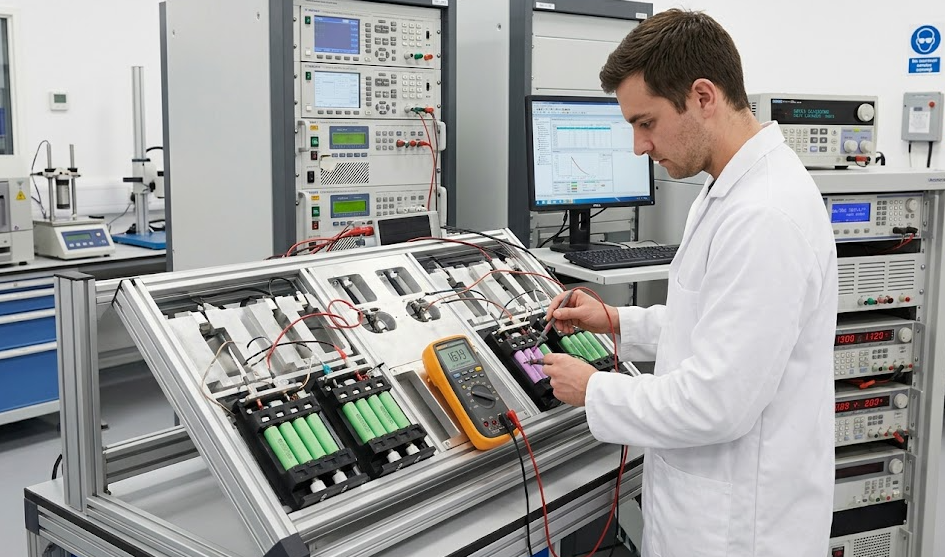
Which is more important: capacity or discharge rate?
Here’s what most people get wrong: they treat capacity like it’s the main spec. It’s not. Capacity and discharge rate pull in opposite directions — and your application decides which one wins.
Energy cells are built for runtime. They store more per cell and work well for laptops, medical devices, and portable instruments. Power cells are built for current. They give up some capacity to handle the burst loads in power tools, drones, and robotics. Same 18650 format, very different behavior.
Start With Current, Then Choose Capacity
For industrial applications, start with discharge rate — not capacity. First, figure out your system’s peak and continuous current. Then pick a cell whose C-rating covers that comfortably. Finally, size the pack for the runtime you need at that rate. Do it in that order and you avoid most sourcing mistakes.
Not All 18650 Cells Are What They Claim to Be
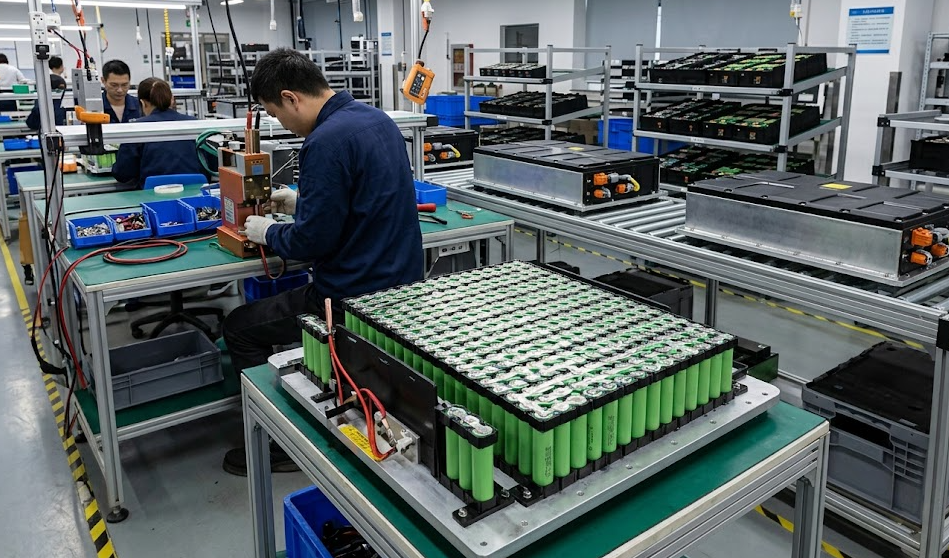
The 18650 supply chain is deep — which is good for pricing and availability. But that same depth makes it easy for low-quality and counterfeit cells to blend in, especially on online marketplaces where anyone can list anything.
Genuine cells from Panasonic, Samsung SDI, LG, and Sony/Murata come with datasheets, lot traceability, and certifications. If a supplier can’t hand you that documentation, the risk is real — regardless of how good the specs look. As a lithium battery manufacturer with direct supply chain access, we verify cell quality before it gets to you. Get in touch and we’ll help you source the right cell. The right 18650, from the right source, is a solid foundation for any battery system.