
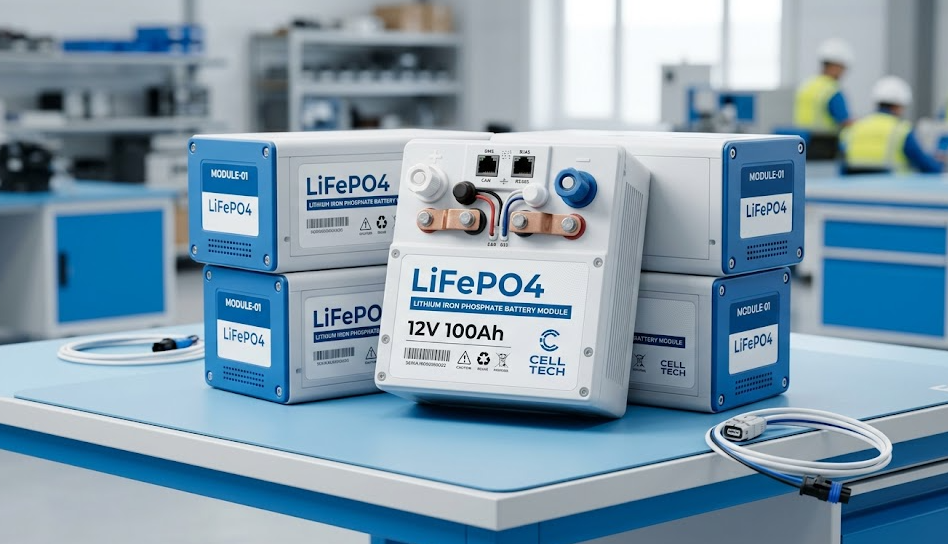
A plain-English guide to lithium phosphate battery technology what makes LFP different, where it excels, and why industrial buyers are switching.
Ten years ago, if you asked a battery engineer which lithium chemistry was best for industrial storage, the answer depended heavily on the application. Today, that conversation has gotten a lot shorter. For the majority of stationary storage, heavy-duty industrial, and fleet applications, lithium iron phosphate LFP has become the default answer.
That shift didn’t happen because LFP is the highest-performing chemistry on every metric. It happened because LFP hits the right combination of safety, cycle life, and cost that industrial buyers actually care about. This guide explains the chemistry behind that, where LFP genuinely wins, and where it still has limitations worth knowing. Explore our lithium phosphate battery range to see available formats and specifications.
What Is a Lithium Phosphate Battery?
A lithium phosphate battery, also written as LFP or LiFePO4, is a type of lithium-ion battery that uses lithium iron phosphate as the cathode material. The cathode is where most of the interesting chemistry happens, and the choice of cathode material is what distinguishes LFP from other lithium-ion chemistries like NMC (nickel manganese cobalt) or NCA (nickel cobalt aluminum).
In a standard lithium-ion battery, lithium ions move between the anode and cathode during charge and discharge. What makes LFP different is the stability of the phosphate bond in the cathode structure. That bond is significantly stronger than the metal-oxide bonds found in NMC and NCA chemistries. In practical terms, this means the cathode is much harder to destabilize even under conditions of overcharge, high temperature, or physical damage.
That structural stability is the root cause of most of LFP’s advantages. Everything else, the long cycle life, the thermal safety, the predictable performance, flows from the same place.
LFP and Other Lithium Chemistries: Where the Differences Actually Matter
Most comparisons between lithium chemistries focus on energy density, where LFP loses. NMC batteries pack more energy into the same weight,typically 200–300 Wh/kg versus LFP’s 95–172 Wh/kg. For weight-critical applications, that gap matters.
For most industrial and stationary applications, total lifecycle cost, safety, and reliability matter more. On those metrics, LFP looks very different.
LFP batteries deliver 2,000 to 4,000 cycles before reaching 80% capacity retention,roughly twice the service life of NMC, which generally lands in the 1,000 to 2,300 cycle range. For daily-cycling applications, that difference translates directly to battery investment.
Safety is another factor. NMC and NCA cathodes release oxygen when they decompose under heat or abuse, making thermal runaway dangerous. LFP cathodes do not release oxygen under the same conditions. As a result, LFP batteries are significantly less prone to thermal runaway — and when they do fail, the consequences are far less severe.
Finally, LFP uses iron and phosphate,abundant, inexpensive materials. NMC and NCA rely on cobalt and nickel, which are expensive and supply-constrained. LFP cell costs have dropped to around $70–100 per kWh, roughly 30% lower than comparable NMC cells.

Where LFP Technology Is Replacing Other Chemistries
The industrial sector’s transition to Lithium Iron Phosphate (LFP) technology is demonstrating a robust, widespread trajectory. The following are several key areas where this transition is making its greatest impact.
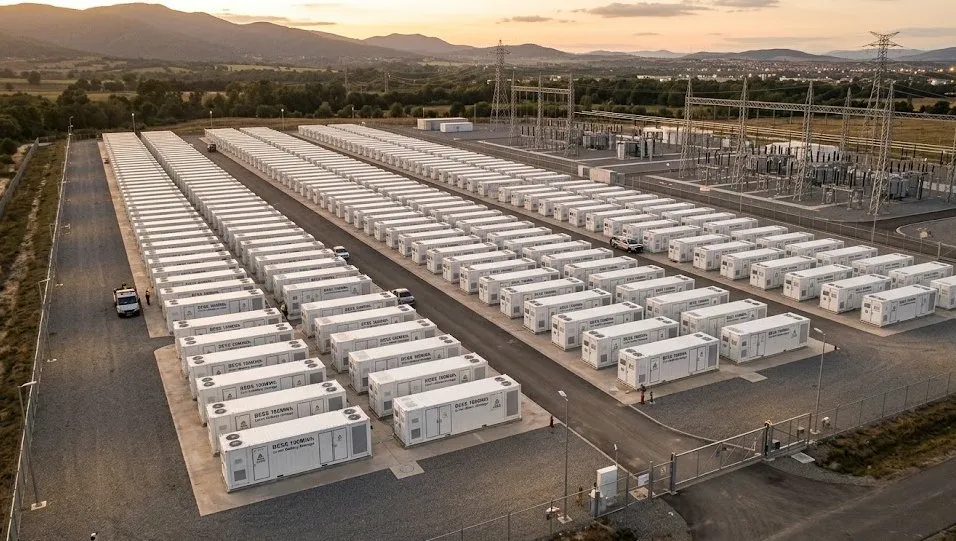
The Energy Storage Sector. According to the 2024 Annual Technology Baseline Report published by the National Renewable Energy Laboratory (NREL), Lithium Iron Phosphate has emerged as the preferred battery chemistry for stationary energy storage deployments. Thanks to a multitude of advantages including a long cycle life, high thermal stability, and continuously declining costs LFP has become the logical choice for energy storage systems that require daily charging and discharging cycles over an operational lifespan of 10 to 15 years.
Over the past decade, sectors such as forklifts, Automated Guided Vehicles (AGVs), and floor-cleaning equipment have largely completed their transition from lead-acid to LFP batteries. The rationale is clear: LFP batteries offer a cycle life that is three to four times longer than that of lead-acid batteries, charge faster, weigh less, and require virtually no maintenance.
Backup power systems for telecommunications base stations and data centres place extremely high demands on battery performance: they must not only ensure reliable operation during prolonged periods in standby mode but also deliver full power output instantly upon receiving a command.
Off-grid and hybrid photovoltaic (PV) power systems are a perfect match for Lithium Iron Phosphate battery chemistry. The daily charge-discharge cycling pattern which often involves deep discharge represents precisely the operating condition in which LFP batteries excel.

What Buyers Get Wrong About Lithium Phosphate Battery Specs
The most common mistake is treating LFP as a single, uniform product. It isn’t. Cell quality, BMS design, and manufacturing consistency vary and those differences show up in real-world performance.
Specifically, two cells with identical nominal specifications can have very different cycle life at elevated temperatures, different capacity retention after 500 cycles, and different behavior under high discharge rates. The datasheet cycle count is measured under laboratory conditions. Your application probably runs hotter, cycles harder, and doesn’t get the benefit of ideal test parameters.
The second mistake is ignoring the BMS. An LFP cell is only as reliable as the battery management system controlling it. A well-designed BMS prevents overcharging, balances cells, implements thermal protection, and extends the overall pack life. Sourcing cells and BMS together from one supplier reduces the risk of field failures considerably.
Is a Lithium Phosphate Battery Right for Your Application?
LFP makes the most sense when cycle life, safety, and total cost of ownership matter more than energy density. That covers most industrial storage, fleet, telecom, and renewable energy applications.
It’s a harder fit when weight is a primary constraint, such as in mobile applications, aerospace, or handheld devices, where every gram counts. In those cases, NMC or NCA chemistries still hold an energy density advantage that LFP can’t close.
For most buyers reading this, the application profile lines up with LFP’s strengths. The chemistry has matured, the supply chain is deep, and the cost trajectory continues to move in the right direction. If you’re specifying a new system or evaluating a switch from lead-acid or NMC, talk to our team to get a recommendation tailored to your specific cycle requirements and operating conditions.